

Tackling Greenhouse Gases in Semiconductor Processes with Catalyst Technology
2025.12.17
Heesung Catalysts’ PFC Decomposition Catalyst Development Story
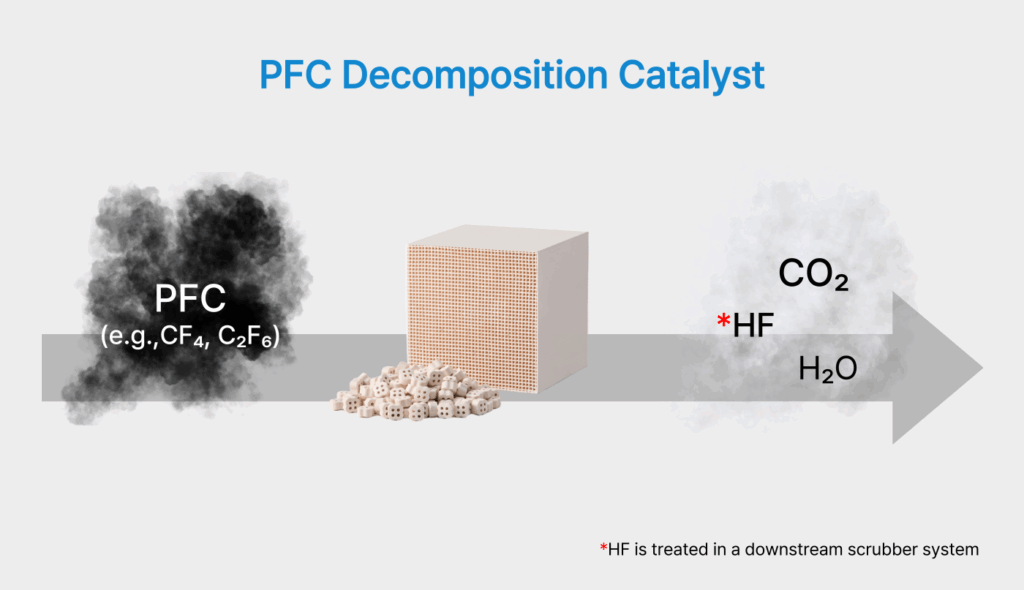
Driven by advances in artificial intelligence (AI) and the surge in data demand, the semiconductor industry continues to grow rapidly. Behind this growth, however, lies a critical challenge that cannot be overlooked. During semiconductor manufacturing processes such as etching, fluorinated gases with high global warming potential—such as perfluorocarbons (PFCs)—are generated. These substances have global warming potentials (GWP) that are thousands of times higher than that of carbon dioxide, making them a critical issue in efforts to address the climate crisis.
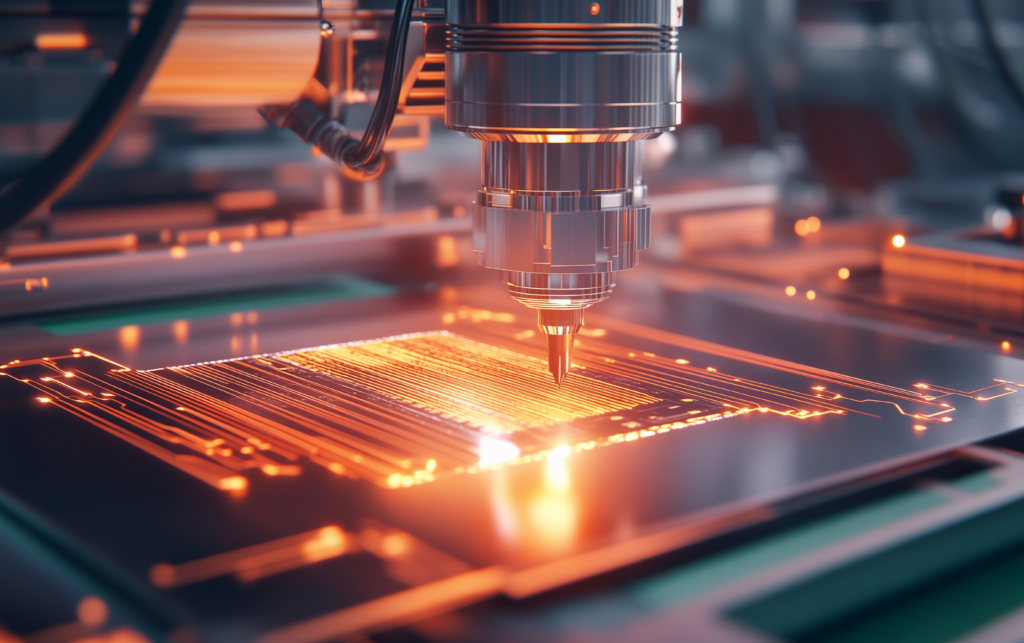
At the forefront of solving this environmental challenge, Heesung Catalysts has successfully developed a PFC decomposition catalyst capable of dramatically reducing greenhouse gas emissions from semiconductor processes. Commercial supply of this technology began in December 2022, marking not just a product launch but a meaningful milestone toward a more sustainable semiconductor industry.
Translating Industry Trends and Customer Needs into Technology
As environmental regulations tightened and demand grew within the semiconductor industry for effective exhaust gas reduction, Heesung Catalysts recognized that greenhouse gas treatment technologies would become a decisive factor in process competitiveness. In particular, we focused on the difficulties faced by major semiconductor customers in reducing PFC emissions and designated the development of a PFC decomposition catalyst as a top R&D priority. From the early stages of research and development in 2020, Heesung Catalysts maintained close technical communication with customers, conducting detailed analyses of process conditions and developing tailored solutions. This approach enabled the company to proactively advance technology development in alignment with market needs and timing.
Securing High-Durability Technology through Joint Development
Heesung Catalysts established a joint development framework with customers, collaboratively analyzing the causes of performance degradation under actual semiconductor process conditions to enhance the completeness of its PFC decomposition catalyst technology. Close collaboration continued throughout all stages of development—from design and validation to evaluation—supported by repeated experimentation and data analysis to identify optimal catalyst structures and compositions.
Notably, by thoroughly reflecting real-world process conditions from the early development phase, the company secured a level of technological maturity that allows application without additional process modifications. This field-proven, collaborative development approach earned positive feedback from customers, with the PFC decomposition catalyst consistently achieving decomposition performance exceeding 97% in customer validation tests. These results verified both effective greenhouse gas reduction and enhanced reliability of semiconductor process operations.
Building on this achievement, Heesung Catalysts has filed three joint patent applications, reinforcing technological credibility while exploring opportunities to expand application into a wider range of semiconductor processes and deepen strategic partnerships.
Next-Generation Catalyst Development for Sustainability and Climate Action
Stable catalyst performance plays a critical role in extending replacement cycles and significantly improving operational efficiency for customers. At the same time, high-efficiency performance enables substantial reductions in greenhouse gas emissions, delivering both cost savings and environmental benefits.
To further enhance performance stability and versatility, advanced research is underway on catalyst structures and reaction characteristics. Design technologies that minimize pressure drop increases and performance degradation during long-term operation are being developed to improve overall process efficiency. In parallel, efforts are focused on expanding applications beyond the semiconductor industry into other industrial sectors.

Park Jeong-je, Principal Research Engineer of the Climate & Environmental Catalyst Development Team, who played a key role in the PFC decomposition catalyst development, shared his reflections and future aspirations:
“Developing a PFC decomposition catalyst was a critical challenge that required achieving both industrial sustainability and effective climate action. While the development process involved numerous technical challenges, close collaboration with our customers enabled us to deliver a highly durable and high-efficiency catalyst. Going forward, we will continue to leverage catalyst technology to address a wide range of environmental challenges in semiconductor processes and actively contribute to the transition toward eco-friendly manufacturing.”
In line with this commitment, Heesung Catalysts will continue advancing catalyst technologies that respond to rapidly changing industrial environments and support customers in strengthening their sustainable production competitiveness.
➡️ Related Reads
🔗 Greenhouse Gas Reduction Catalysts
