

Catalyst Q&A Series – Part 8. What Role Do Catalysts Play in Reducing PFC, N₂O, and Methane Emissions?
2026.10.26
Reducing greenhouse gas emissions from industrial operations is essential to achieving carbon neutrality and building sustainable manufacturing environments. From semiconductor and display manufacturing to the chemical industry, gas engines, and power generation facilities, different greenhouse gases are emitted depending on the processes and fuels used.
Effective emissions reduction requires technologies tailored to the chemical properties of each gas and the actual operating conditions of industrial equipment. Catalyst technologies play a key role in this effort by promoting the decomposition of perfluorocarbons (PFCs) and nitrous oxide (N₂O), as well as the oxidation of unburned methane (CH₄).
Q1. What types of greenhouse gases are emitted from industrial operations?
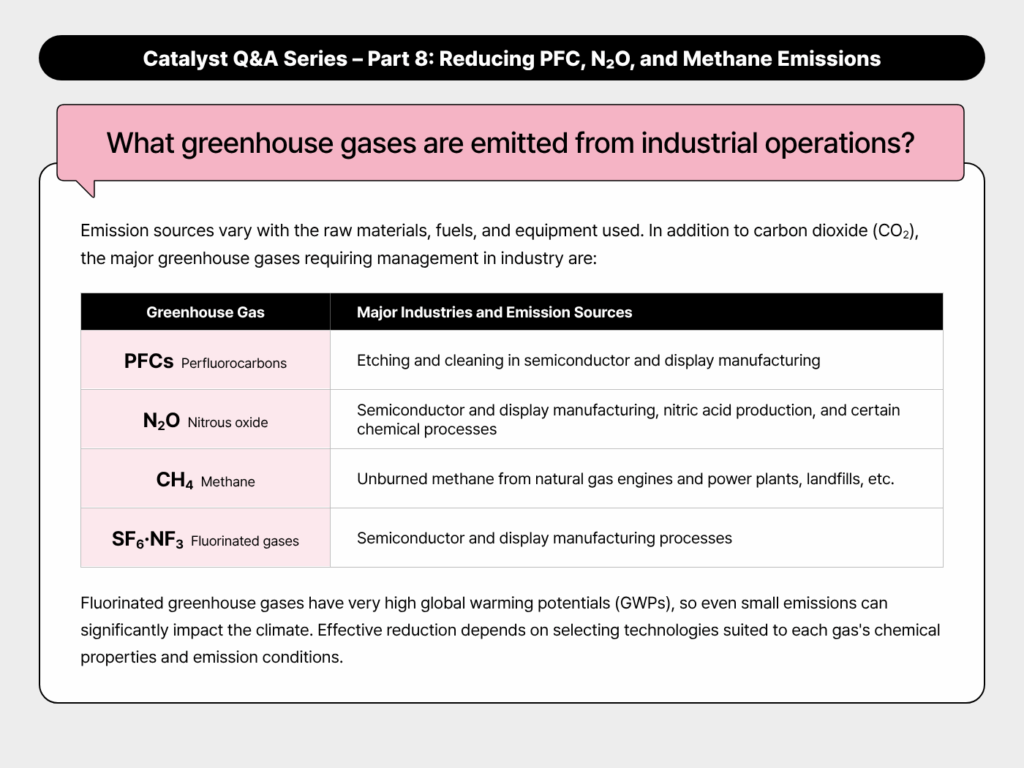
The types of greenhouse gases emitted vary depending on the raw materials, fuels, manufacturing processes, and equipment used. In addition to carbon dioxide (CO₂), major greenhouse gases requiring management include perfluorocarbons (PFCs), nitrous oxide (N₂O), and methane (CH₄).
| Greenhouse Gas | Key Industries and Emission Sources |
|---|---|
| PFCs | Etching and cleaning processes in semiconductor and display manufacturing |
| N₂O | Semiconductor and display manufacturing, nitric acid production, and other chemical processes |
| CH₄ | Unburned methane from natural gas engines and power generation equipment, landfills, etc. |
| SF₆, NF₃ | Semiconductor and display manufacturing (NF₃ chamber cleaning), insulating gas in electrical power equipment (SF₆) |
Fluorinated greenhouse gases, including PFCs, sulfur hexafluoride (SF₆), and nitrogen trifluoride (NF₃), have particularly high global warming potentials (GWPs), meaning even small emissions can have a significant impact on climate change. N₂O and CH₄ are also major greenhouse gases that require careful management. Effective emissions reduction depends on selecting technologies suited to the chemical properties and emission conditions of each gas.


Q2. How are greenhouse gases such as PFCs and N₂O reduced in semiconductor and display manufacturing?
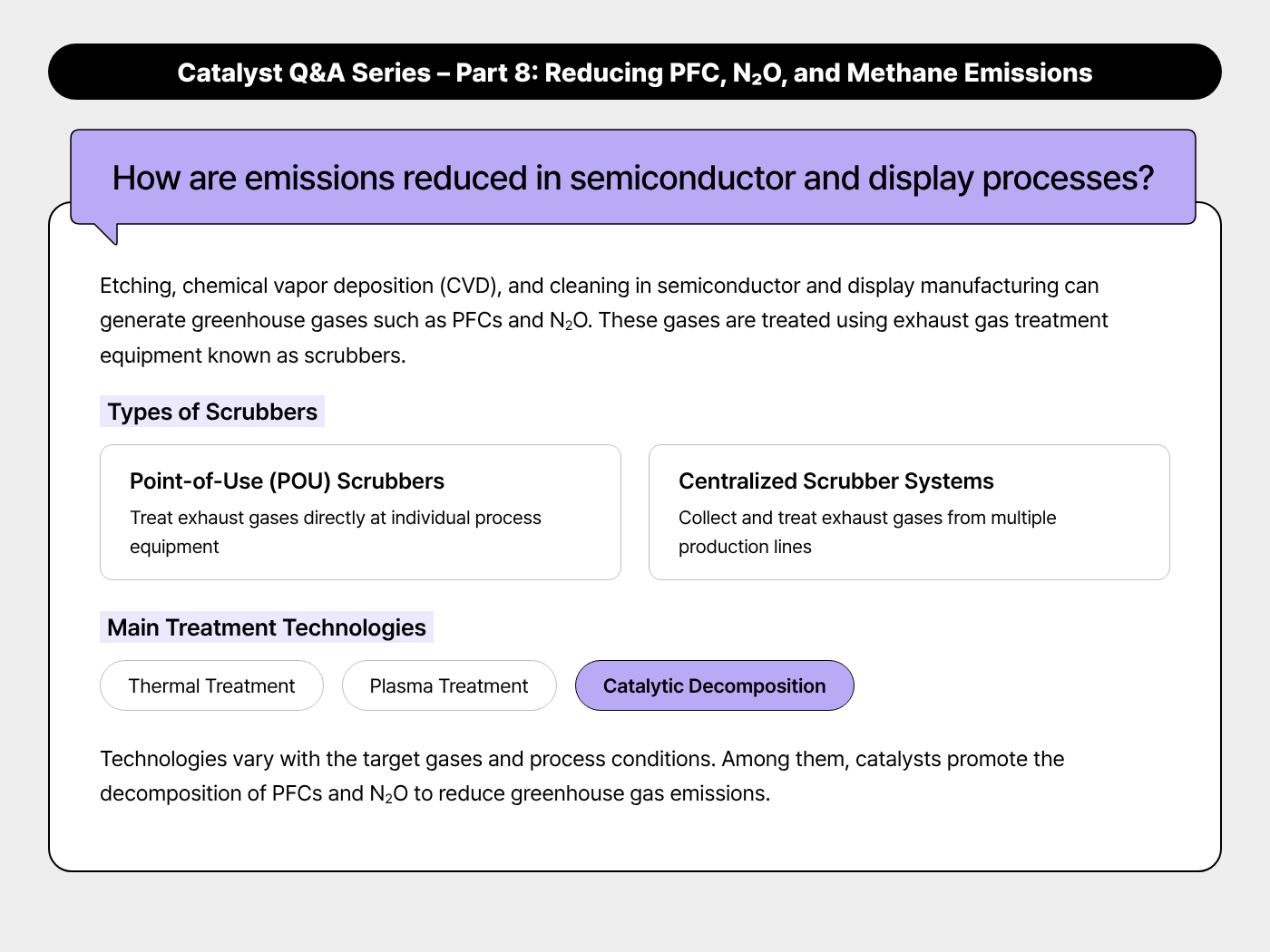
Semiconductor and display manufacturing processes, including etching, chemical vapor deposition (CVD), and cleaning, can generate greenhouse gases such as PFCs and N₂O.
These gases are treated using exhaust gas treatment equipment known as scrubbers. Depending on their treatment capacity and installation location, scrubbers can be classified into point-of-use (POU) scrubbers, which treat gases directly at individual process equipment, and larger centralized systems that collect and treat exhaust gases from multiple production lines.
Various treatment technologies are used depending on the properties of the target gases and process conditions, including thermal treatment, plasma treatment, and catalytic decomposition. Among these, catalysts promote the decomposition of PFCs and N₂O to reduce greenhouse gas emissions.
1. PFC Decomposition Catalysts
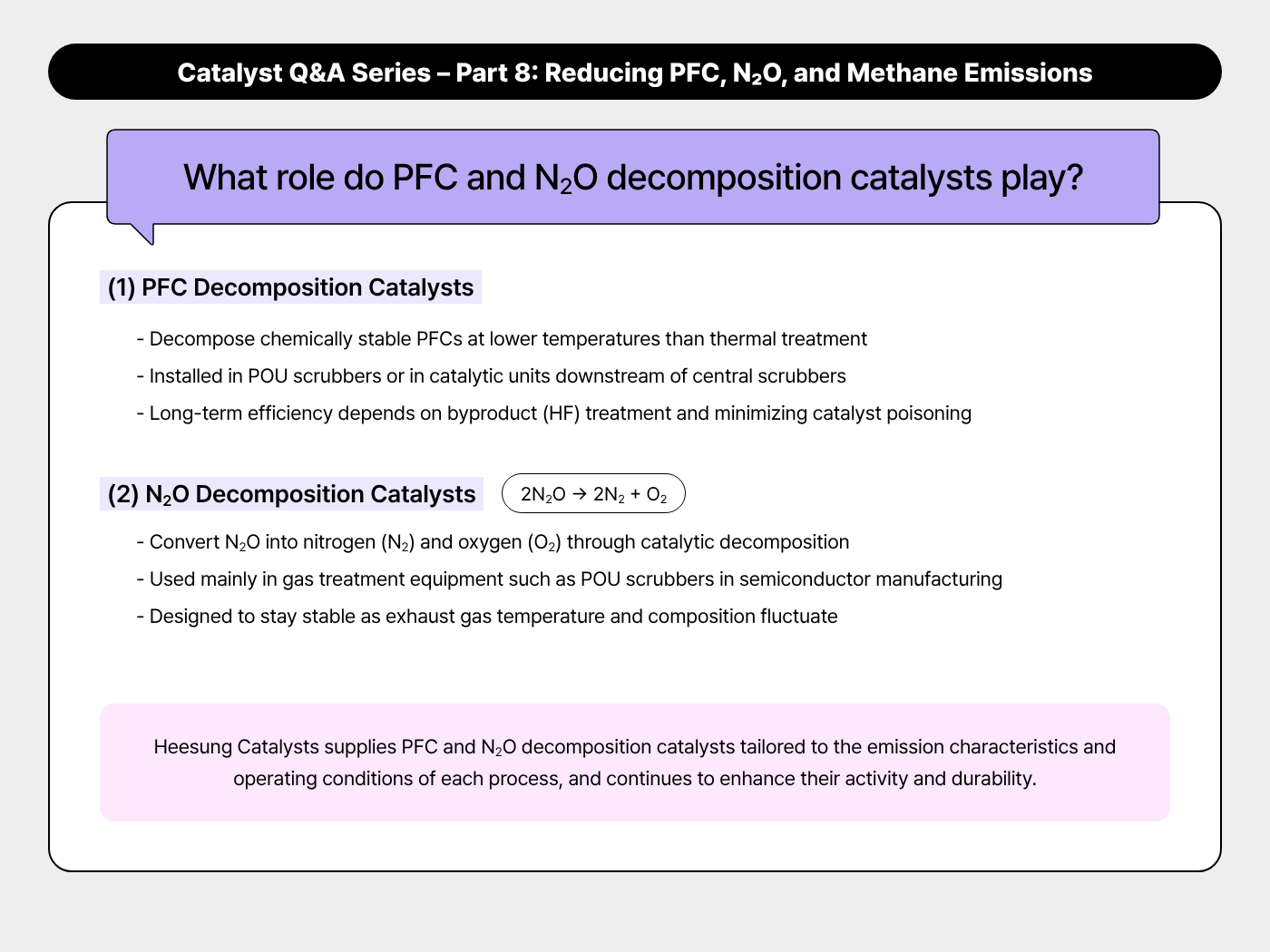
PFCs have highly stable chemical structures, making them difficult to decompose. Conventional thermal treatment generally requires high temperatures, while catalytic treatment can promote decomposition reactions at relatively lower temperatures.
PFC decomposition catalysts are used in exhaust gas treatment systems for semiconductor and display manufacturing. Depending on the system design, they can be installed in POU scrubbers or in catalytic treatment units downstream of central scrubbers.
Decomposing fluorinated gases can generate secondary byproducts such as hydrogen fluoride (HF). Therefore, catalyst durability and downstream byproduct treatment must be considered together. Maintaining stable long-term performance also requires minimizing catalyst poisoning and deactivation caused by fluorine-containing compounds and other process impurities.
2. N₂O Decomposition Catalysts
Nitrous oxide (N₂O) can be decomposed into nitrogen (N₂) and oxygen (O₂) through catalytic reactions. N₂O decomposition catalysts promote this reaction and are used in exhaust gas treatment equipment, including POU scrubbers in semiconductor manufacturing.
N₂O concentrations, flow rates, and gas compositions vary depending on process conditions. Catalyst selection must therefore account for actual exhaust gas temperatures and compositions. The catalyst must also be designed to maintain stable decomposition performance under fluctuating operating conditions.
Heesung Catalysts supplies PFC and N₂O decomposition catalysts tailored to the emission characteristics and operating conditions of different manufacturing processes. The company continues to enhance catalyst activity and durability to support effective greenhouse gas reduction.
✅ Greenhouse Gas Reduction Catalysts: N₂O Decomposition Catalysts
Q3. How are methane emissions from gas engines reduced?
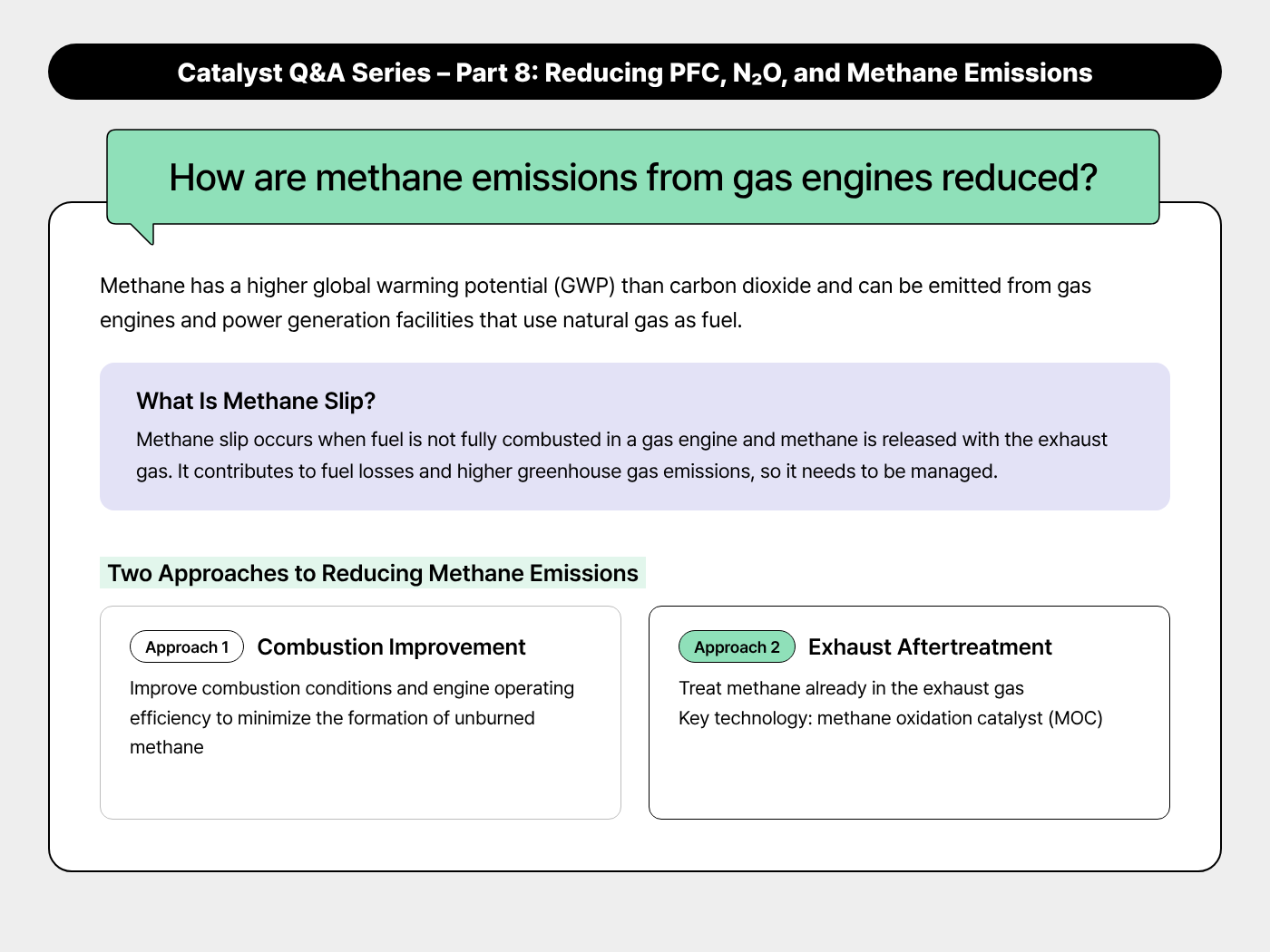
Methane has a higher global warming potential than carbon dioxide and can be emitted from gas engines and power generation facilities that use natural gas as fuel. When methane is released with exhaust gases without being fully combusted, the phenomenon is known as methane slip. This can contribute to fuel losses and increased greenhouse gas emissions, making methane slip management an important consideration.
There are two main approaches to reducing methane emissions. The first is to improve combustion conditions and engine operating efficiency to minimize the formation of unburned methane. The second is to treat methane in the exhaust gas using aftertreatment technologies.
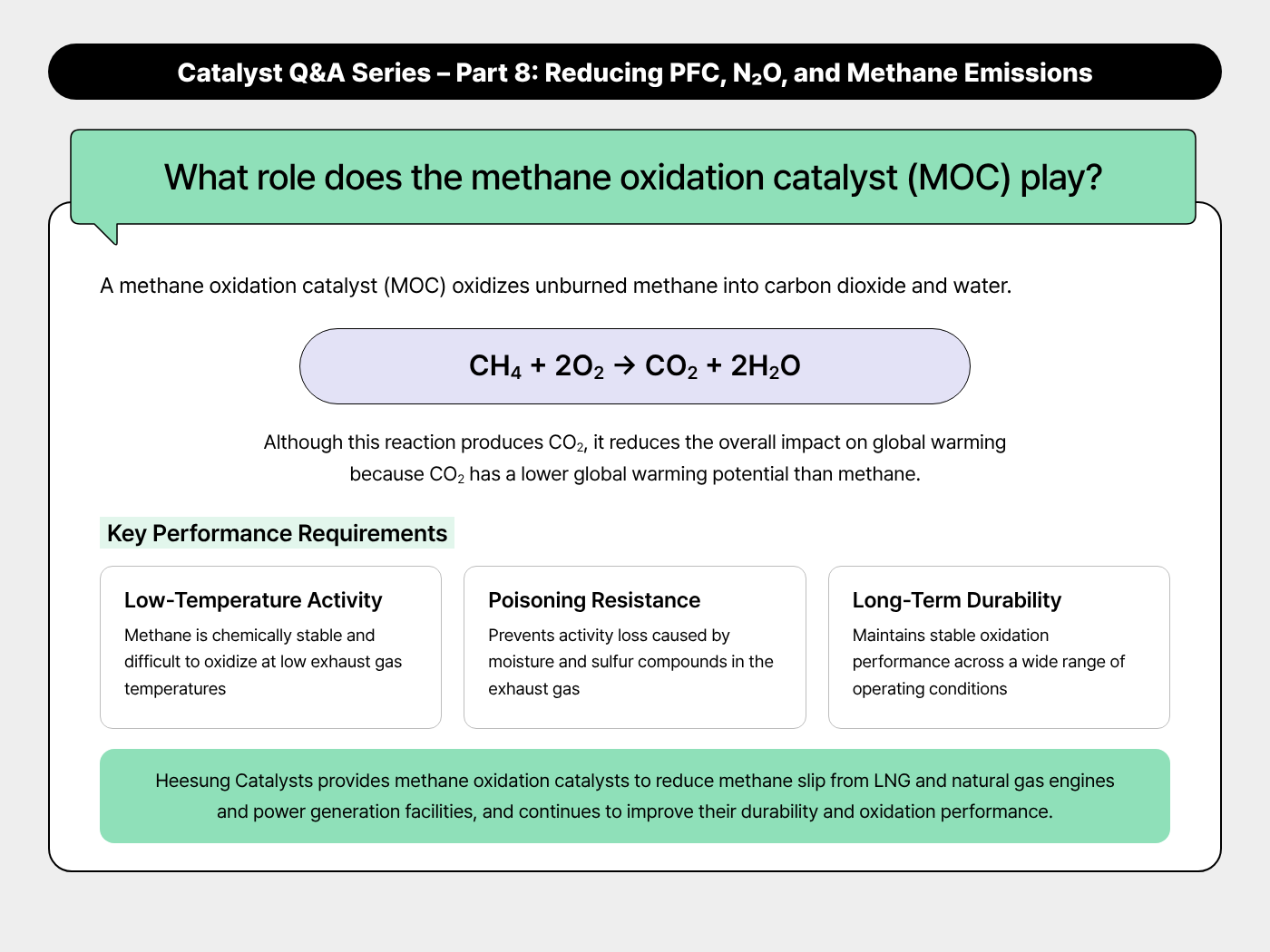
One such technology is the methane oxidation catalyst (MOC), which promotes the oxidation of unburned methane into carbon dioxide and water. Although this reaction produces CO₂, it reduces the overall impact on global warming because CO₂ has a lower global warming potential than methane.
However, methane is chemically stable and difficult to oxidize at low exhaust gas temperatures. Moisture and sulfur compounds in the exhaust gas can also reduce catalyst activity. MOC technologies must therefore deliver high activity at low temperatures, resistance to catalyst poisoning, and long-term durability.
Heesung Catalysts provides methane oxidation catalysts designed to reduce methane slip from LNG and natural gas engines and power generation facilities. The company continues to improve catalyst durability and oxidation performance across a wide range of operating conditions.
✅ Greenhouse Gas Reduction Catalysts: Methane Oxidation Catalyst (MOC)
Q4. Why is catalyst durability important in greenhouse gas reduction systems?
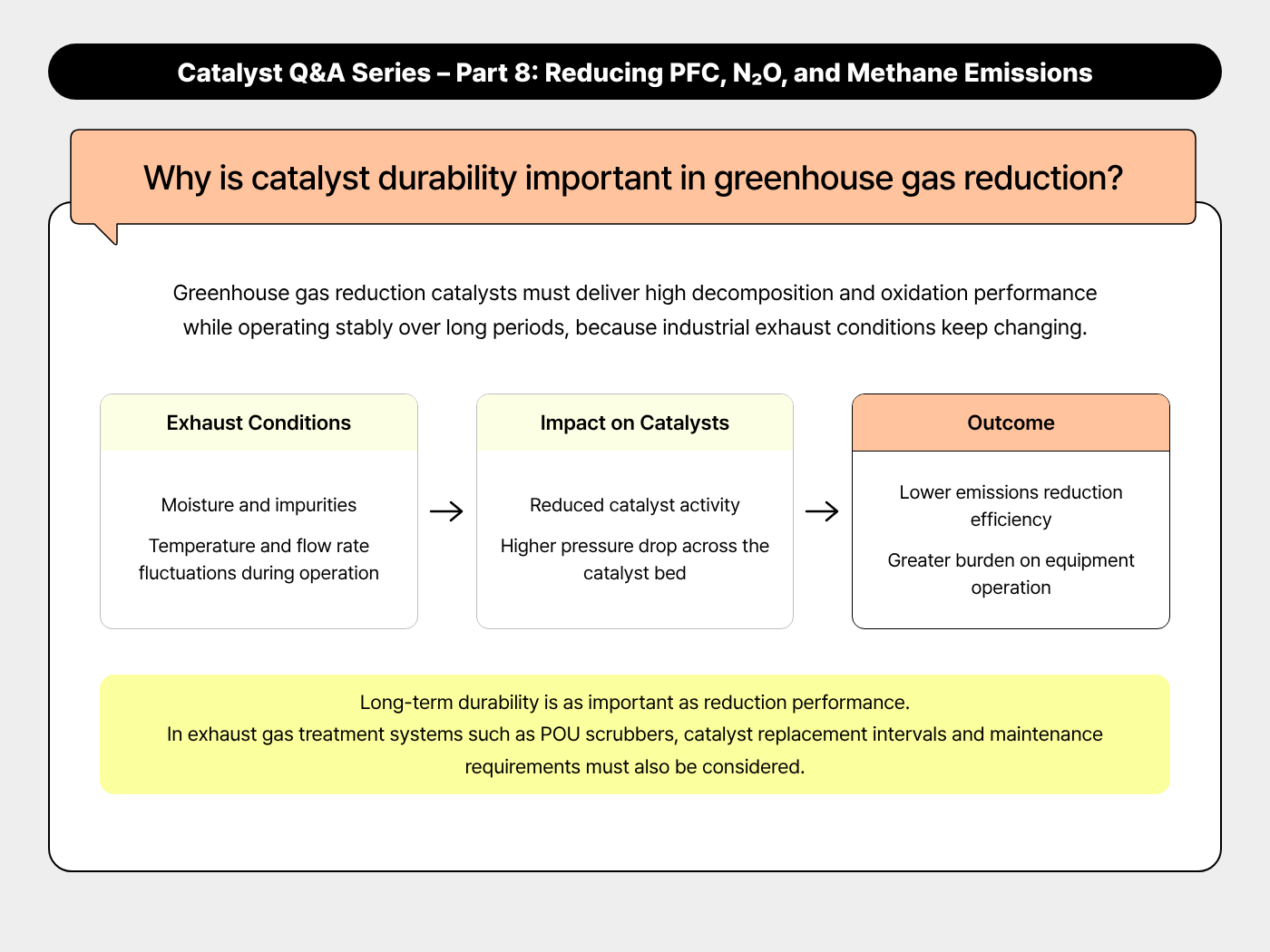
Greenhouse gas reduction catalysts must deliver high decomposition and oxidation performance while maintaining stable operation over extended periods. Industrial exhaust gases may contain moisture and impurities, while temperatures and flow rates can fluctuate during operation.
These conditions can reduce catalyst activity or increase pressure drop across the catalyst bed, affecting both emissions reduction efficiency and equipment operation. In exhaust gas treatment systems such as POU scrubbers, catalyst replacement intervals and maintenance requirements must also be considered.
Key factors in selecting greenhouse gas reduction catalysts include:
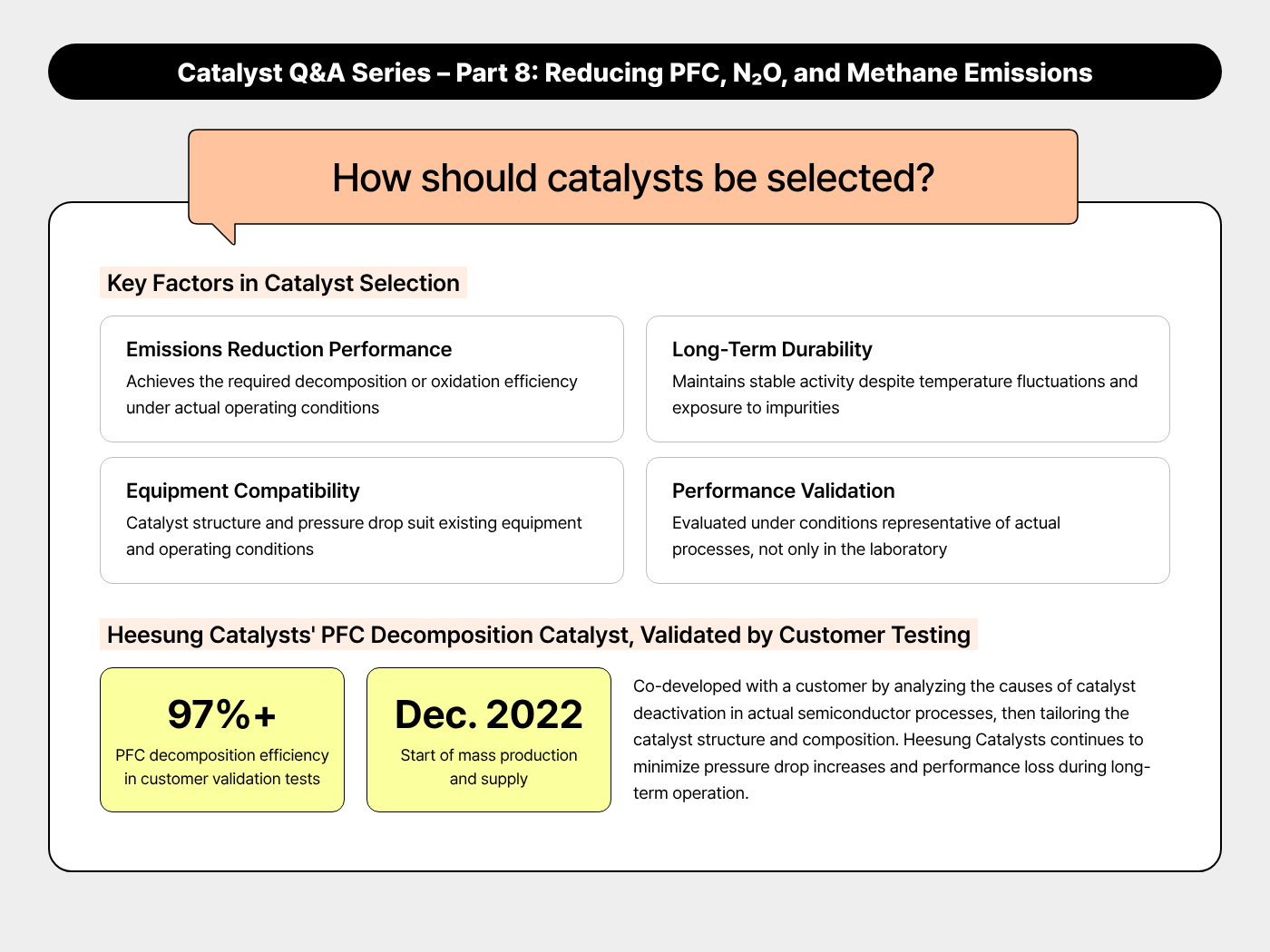
- Emissions Reduction Performance: Whether the catalyst achieves the required decomposition or oxidation efficiency under actual operating conditions
- Long-Term Durability: Whether the catalyst maintains stable activity despite temperature fluctuations and exposure to impurities
- Equipment Compatibility: Whether the catalyst structure and pressure drop are compatible with existing equipment and operating conditions
- Performance Validation: Whether the catalyst has been evaluated under conditions representative of actual industrial processes, in addition to laboratory testing
Heesung Catalysts’ PFC Decomposition Catalyst: Validated Performance Through Customer Testing
Heesung Catalysts jointly developed a PFC decomposition catalyst with a customer, analyzing the causes of catalyst deactivation under actual semiconductor process conditions. Based on these findings, the company developed a catalyst structure and composition suited to the operating environment.
As a result, customer validation tests confirmed a PFC decomposition efficiency of at least 97%, and mass production and supply began in December 2022.
Building on this development experience, Heesung Catalysts continues to advance its catalyst technologies to minimize pressure drop increases and performance degradation during long-term operation.
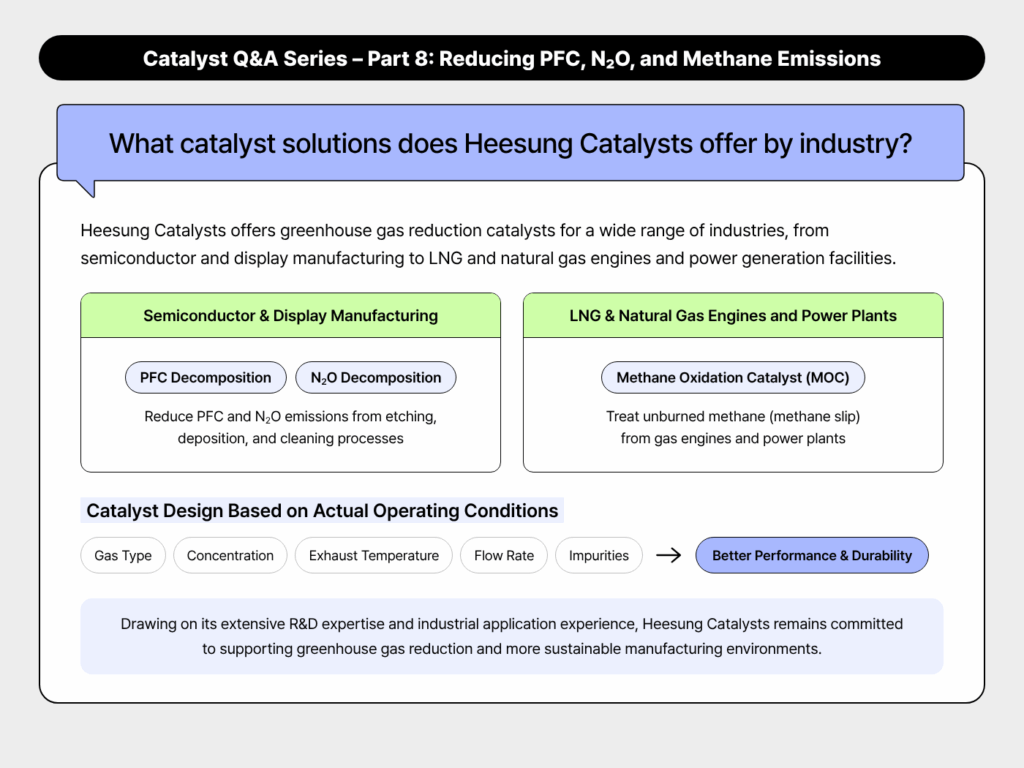
Q5. What catalyst solutions does Heesung Catalysts offer for greenhouse gas reduction across industries?
Heesung Catalysts offers a portfolio of greenhouse gas reduction catalysts for a wide range of industrial applications, from semiconductor and display manufacturing to LNG and natural gas engines and power generation facilities.
PFC and N₂O decomposition catalysts reduce greenhouse gas emissions from semiconductor and display manufacturing processes, while methane oxidation catalysts (MOC) treat unburned methane from gas engines and power generation facilities.
Heesung Catalysts continues to enhance catalyst emissions reduction performance and durability by considering actual operating conditions, including target gas types and concentrations, exhaust gas temperatures, flow rates, and impurities. Drawing on its extensive R&D expertise and industrial application experience, the company remains committed to supporting greenhouse gas emissions reduction and more sustainable manufacturing environments.
