

Core Catalyst Technologies for Clean Hydrogen Power Generation
2026.06.29
Catalyst solutions that enhance the environmental performance of power systems—from hydrogen supply to emissions control
With the launch of Korea’s 2026 Hydrogen Power Generation Bidding Market, now divided into Clean Hydrogen Power and General Hydrogen Power, the power industry is accelerating the demonstration and commercialization of hydrogen- and ammonia-based clean fuel technologies.
While clean hydrogen power offers significant potential for reducing carbon dioxide (CO₂) emissions, commercial deployment requires more than low-carbon fuels alone. Stable hydrogen supply, optimized combustion conditions, power generation efficiency, and effective emissions control must all work together to ensure reliable system performance.
Ammonia has emerged as a promising hydrogen carrier because it can be liquefied at approximately -33°C under atmospheric pressure, making it easier to store and transport than hydrogen. However, when integrated into power generation systems, unreacted ammonia (ammonia slip) must be carefully controlled. In addition, high-temperature hydrogen combustion can generate nitrogen oxides (NOx), making both NOx and ammonia slip critical factors in maintaining the environmental performance of hydrogen power plants.
As a result, exhaust gas aftertreatment catalyst technologies are becoming increasingly important in hydrogen power generation.
Key Catalyst Technologies for Clean Hydrogen Power
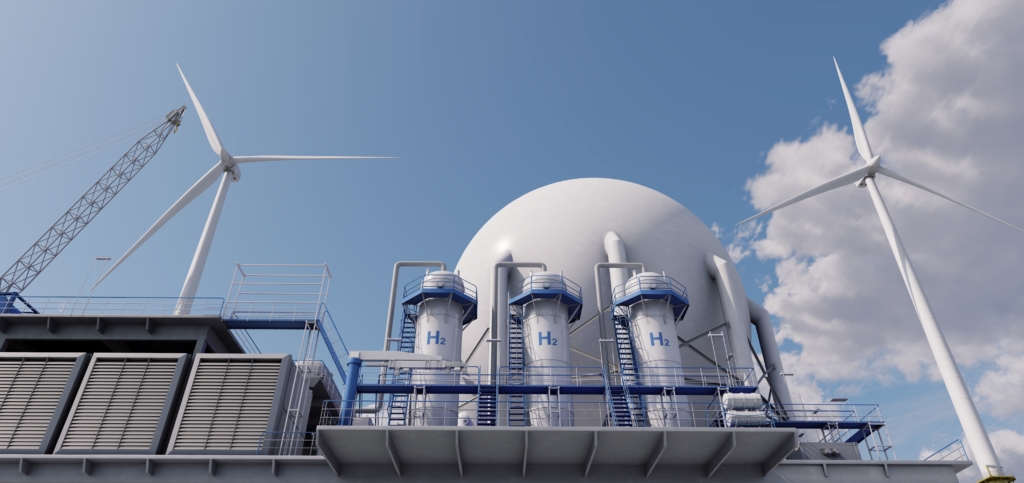
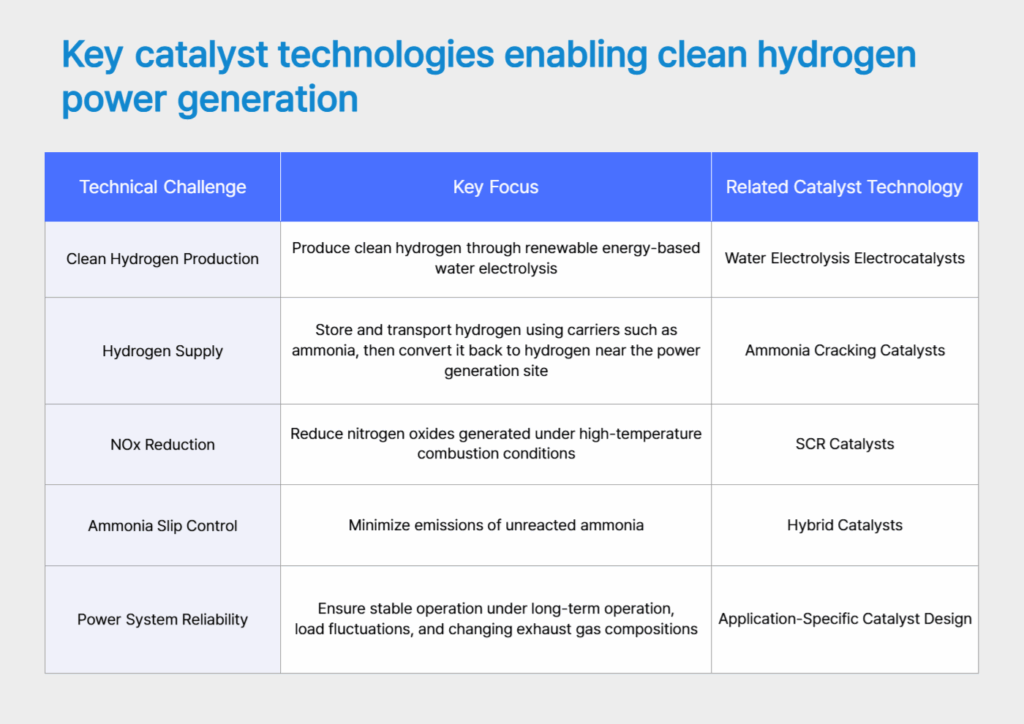
Clean hydrogen power generates electricity using clean hydrogen or hydrogen carriers such as ammonia. In practice, reliable operation depends on the seamless integration of multiple technologies—from hydrogen production and supply to power generation and emissions control.
Why NOx Control Matters in Hydrogen Power Generation
Nitrogen oxides (NOx) are among the primary air pollutants that must be controlled in power plants and industrial facilities.
Although hydrogen contains no carbon and therefore produces no CO₂ during combustion, NOx can still form under certain operating conditions when hydrogen is burned with air at high temperatures.
Because hydrogen combustion produces a very high flame temperature, thermal NOx formation through the oxidation of atmospheric nitrogen must be considered. When ammonia is used as a hydrogen carrier, nitrogen contained in the fuel introduces additional pathways for NOx formation, making emissions control even more complex.
For this reason, clean hydrogen power requires effective NOx reduction technologies in addition to carbon reduction strategies.
SCR Catalysts: A Proven Solution for NOx Reduction
Selective Catalytic Reduction (SCR) is one of the most widely used exhaust gas aftertreatment technologies for converting NOx into harmless nitrogen and water. It has been extensively applied in power plants, industrial boilers, and marine engines, and is now being evaluated as a key emissions control technology for hydrogen- and ammonia-fueled power systems.
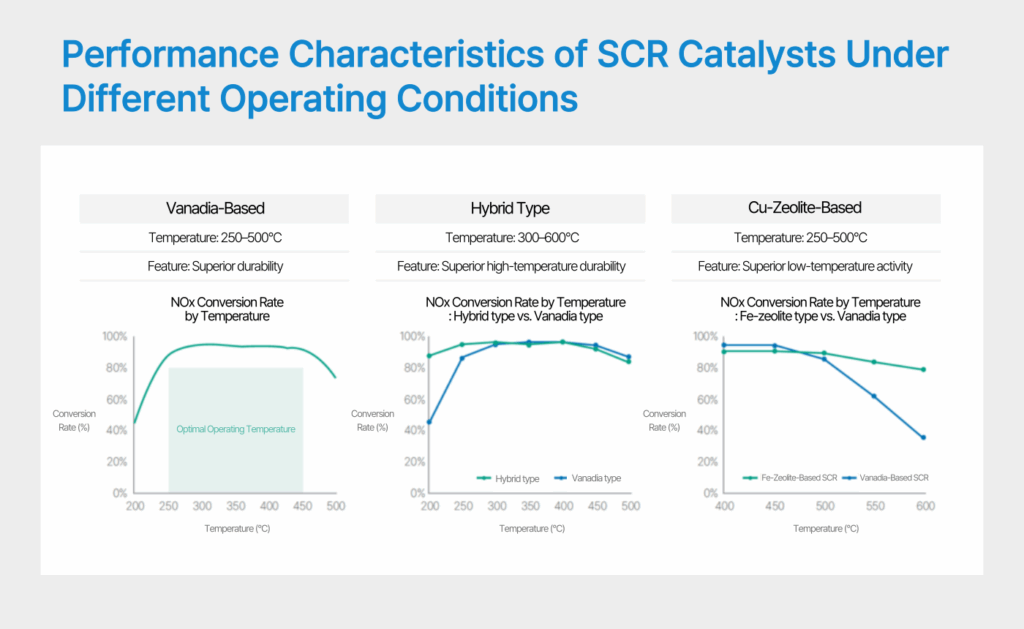
Since operating temperatures and exhaust gas compositions vary widely among power generation facilities, SCR catalyst selection must be optimized for each application.
- Vanadia-based SCR catalysts provide excellent sulfur resistance at operating temperatures between 250–500°C.
- Cu-zeolite catalysts offer strong catalytic activity under relatively low-temperature operating conditions.
- Hybrid catalysts are designed for high-temperature environments ranging from 300–600°C, delivering excellent durability and long-term stability.
Selecting the right SCR catalyst therefore requires a comprehensive evaluation of operating temperature, load fluctuations, exhaust gas composition, and long-term performance.
Hybrid Catalysts for Ammonia Slip Control
Ammonia slip refers to unreacted ammonia that passes through the SCR system and is released with the exhaust gas. In addition to causing odor issues, ammonia slip can contribute to the formation of secondary pollutants such as NOx and nitrous oxide (N₂O), making effective control essential.
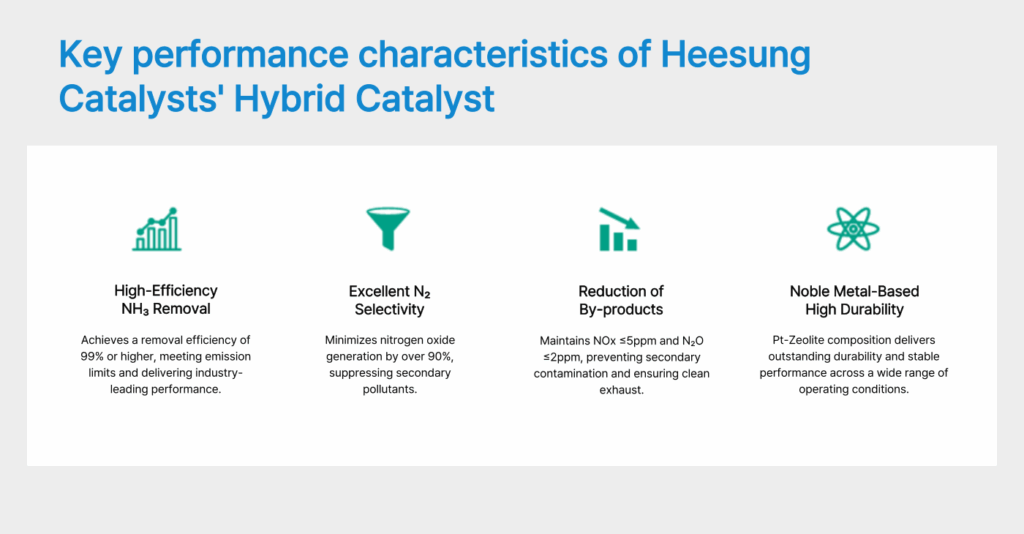
Heesung Catalysts’ Hybrid Catalyst selectively oxidizes residual ammonia downstream of the SCR system, improving overall exhaust gas quality.
Designed to achieve:
- NH₃ slip below 10 ppm
- More than 99% ammonia removal efficiency
- Over 90% nitrogen (N₂) selectivity
the catalyst minimizes both unreacted ammonia emissions and the formation of secondary pollutants.
Ammonia Cracking: The Critical Link in Hydrogen Supply
Ammonia is widely recognized as one of the most practical hydrogen carriers for storing and transporting hydrogen. At power generation sites, ammonia cracking technology plays a vital role by converting ammonia back into hydrogen for use as fuel.
Ammonia cracking catalysts are available in multiple configurations depending on operating requirements.
- Ru-based catalysts for low-temperature operation (400–600°C)
- Ni-based catalysts for high-temperature operation (600–800°C)
Catalysts can also be manufactured in various forms—including pellets, spheres, and hole-type structures—to accommodate different reactor designs and process conditions.
While ammonia cracking catalysts ensure a stable hydrogen supply, SCR catalysts and Hybrid catalysts reduce NOx and ammonia slip generated during power production, enhancing the overall environmental performance of hydrogen power systems.
Why Demonstration Projects Matter
Commercial deployment of clean hydrogen power depends on successful demonstration under real operating conditions.
The entire process—from hydrogen production via ammonia cracking to system integration, combustion stability, NOx reduction, and ammonia slip control—must be validated to ensure reliable, long-term operation.
Heesung Catalysts is collaborating with Pusan National University Institute for Clean Energy Power Generation, PANASIA, Hyosung Heavy Industries, and RNP Enterprise to develop and demonstrate an ammonia cracking system for clean hydrogen power generation.
This collaboration represents an important step toward integrating clean hydrogen production with power generation technologies and advancing the practical application of ammonia-based hydrogen supply systems.
✅ Ammonia Cracking for Clean Hydrogen Power : Heesung Catalysts MOU
Enabling Clean Hydrogen Power Through Catalyst Innovation
Clean hydrogen power requires far more than hydrogen production alone.
Reliable hydrogen supply, high power generation efficiency, combustion stability, effective NOx reduction, and ammonia slip control must all work together to ensure environmentally responsible and dependable power generation.
At Heesung Catalysts, we are advancing a comprehensive portfolio of catalyst technologies—from ammonia cracking catalysts that enable stable hydrogen supply to SCR and Hybrid catalysts that reduce emissions throughout the power generation process.
We remain committed to developing catalyst solutions that accelerate the commercialization of clean hydrogen power while supporting the global transition toward sustainable energy.

FAQ
Q1. If hydrogen power produces little or no carbon emissions, why is emissions control still necessary?
Although hydrogen combustion produces no carbon dioxide (CO₂), burning hydrogen with air at high temperatures can generate nitrogen oxides (NOx). When ammonia is used as a hydrogen carrier, unreacted ammonia (ammonia slip) must also be controlled. To maximize the environmental benefits of clean hydrogen power, both NOx and ammonia slip must be effectively managed alongside CO₂ emissions.
Q2. How are NOx emissions reduced in hydrogen gas turbines?
NOx emissions can be minimized through a combination of advanced combustion technologies and exhaust gas aftertreatment. Low-NOx burners, lean combustion, and micromix combustors reduce NOx formation during combustion, while SCR catalysts further convert remaining NOx into harmless nitrogen and water.
Q3. What role do catalysts play in clean hydrogen power generation?
Catalysts support multiple stages of the clean hydrogen power value chain. Ammonia cracking catalysts convert ammonia into hydrogen for a stable fuel supply, while SCR and Hybrid catalysts reduce NOx emissions and ammonia slip, improving the overall environmental performance of power generation systems.
Q4. What is ammonia slip, and why is it important to control?
Ammonia slip refers to unreacted ammonia that escapes the SCR system and is discharged with the exhaust gas. Besides causing odor issues, ammonia slip can contribute to the formation of secondary pollutants such as NOx and nitrous oxide (N₂O), making it an important parameter to control in power plants and industrial facilities.
Q5. Can existing SCR systems be used for hydrogen- or ammonia-fired power generation?
It depends on the operating conditions. Hydrogen- and ammonia-fueled power systems may have different exhaust gas temperatures, compositions, and NOx concentrations than conventional fossil-fuel power plants. As a result, catalyst performance and overall system compatibility should be carefully evaluated before applying existing SCR systems.
