

Catalyst Technology in the Carbon-Neutral Era: Practicality Determines Competitiveness
2026.05.29
Heesung Catalysts participates in a wide range of industry and technology conferences and exhibitions each year to stay directly connected with global technology trends and developments on the ground. We exchange knowledge with researchers, industry professionals, engineers, and customers across sectors — and use these opportunities to discuss the technical requirements and operational challenges that arise when catalyst technologies meet real-world processes.
Most recently, we participated in ISCRE29 & APCRE11, the international chemical reaction engineering symposium, and the Spring Conference of the Korean Society of Combustion, where we introduced a range of catalyst technologies and solutions.
Both events reinforced a clear message: in the carbon-neutral era, practical applicability is the true measure of technological competitiveness. Discussions went well beyond sharing research outcomes — the focus was on technologies that can actually be deployed in industrial settings, and on the path to commercialization.
Technology Trends in Chemical Processes and the Hydrogen Industry: Insights from ISCRE29 & APCRE11
Held at COEX in Seoul from May 10 to 13, ISCRE29 & APCRE11* is a prestigious global conference in the field of chemical reaction engineering. This year’s theme was “Chemical Reaction Engineering toward a Carbon-Neutral Future.”
*ISCRE29: 29th International Symposium on Chemical Reaction Engineering
*APCRE11: 11th Asia-Pacific Chemical Reaction Engineering Symposium
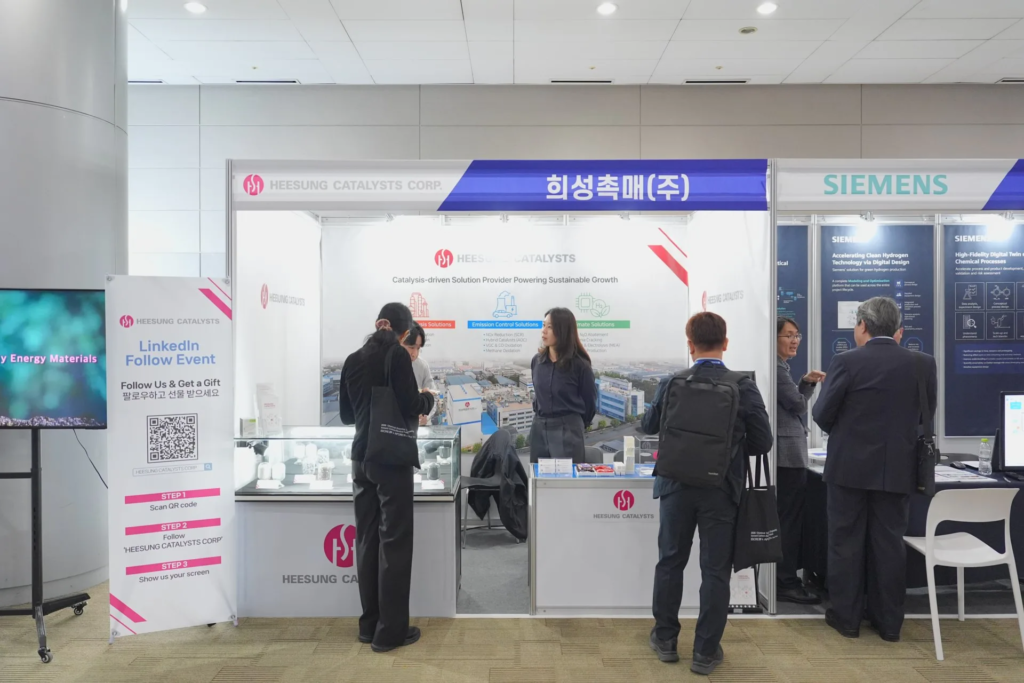
Heesung Catalysts operated an exhibition booth showcasing key catalyst technologies in chemical processes and hydrogen applications — including methanol synthesis catalysts, reforming catalysts, and ammonia cracking catalysts. Attendees from a broad range of backgrounds — domestic and international research institutions, industry professionals, engineers, and students — engaged in active conversations about where the industry is heading and what technologies are in demand on the ground. Interest was especially high in hydrogen production and utilization, e-Fuels as carbon-neutral energy carriers, and carbon conversion processes. Questions about industrial applicability and commercialization potential came up consistently throughout.
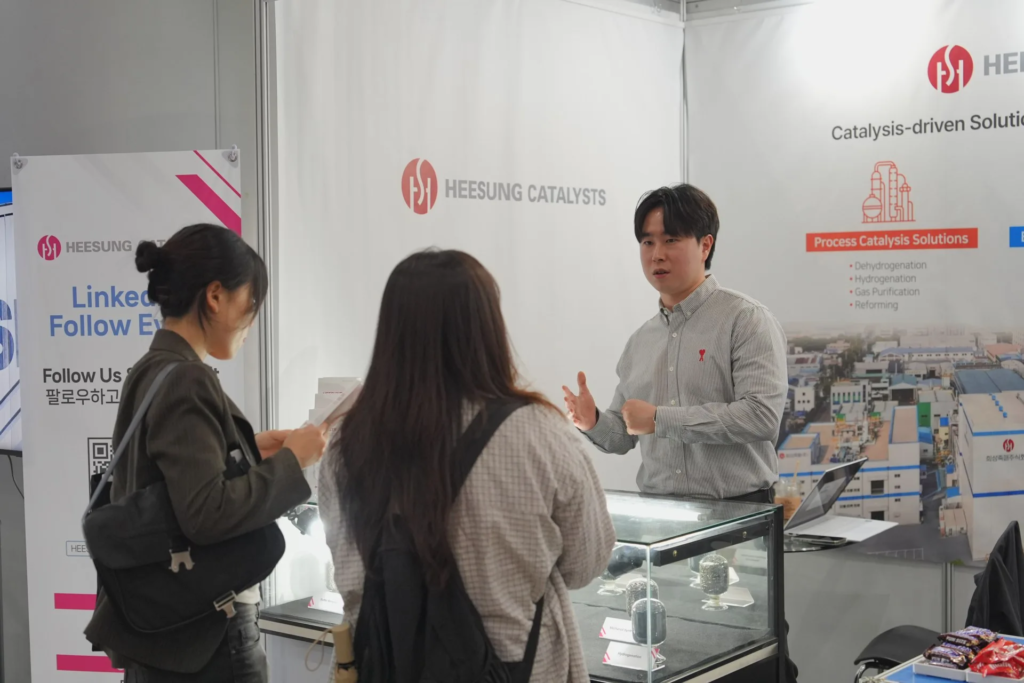
Technical discussions also centered on long-term durability, process stability, and scale-up capability — a clear signal that industry is now prioritizing proven, deployable performance over raw technical benchmarks.
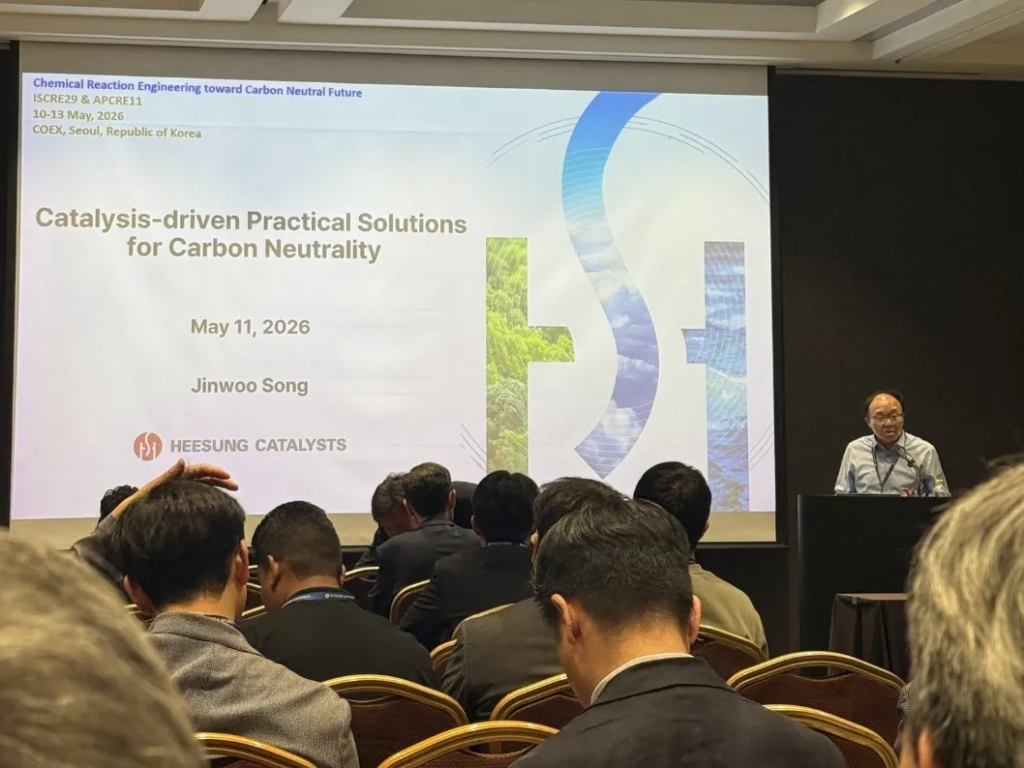
During the conference, Dr. Jinwoo Song, Research Director at Heesung Catalysts, delivered an invited keynote address titled “Catalysis-driven Practical Solutions for Carbon Neutrality.” He outlined Heesung Catalysts’ technology roadmap — spanning from automotive emission catalysts to climate catalysts and hydrogen catalysts — and shared concrete industrial application cases, offering his perspective on the role catalyst technology must play in achieving carbon neutrality and how to approach it practically.
Demand for Practical Technologies Also Clearly Evident in the Power Generation and Combustion Sectors
The power generation and combustion industries are in the midst of a genuine fuel transition — toward hydrogen-ammonia co-firing, e-Methanol, and other next-generation fuels. Securing technologies that perform reliably under actual operating conditions has become a pressing priority. Power generation equipment and industrial processes involve wide swings in operating conditions and require sustained stability over long periods, which means demand is growing for technologies that maintain performance consistently across variable environments — not just in laboratory settings.
The same trend was evident at the Spring Conference of the Korean Society of Combustion, held in Busan from May 13 to 15.
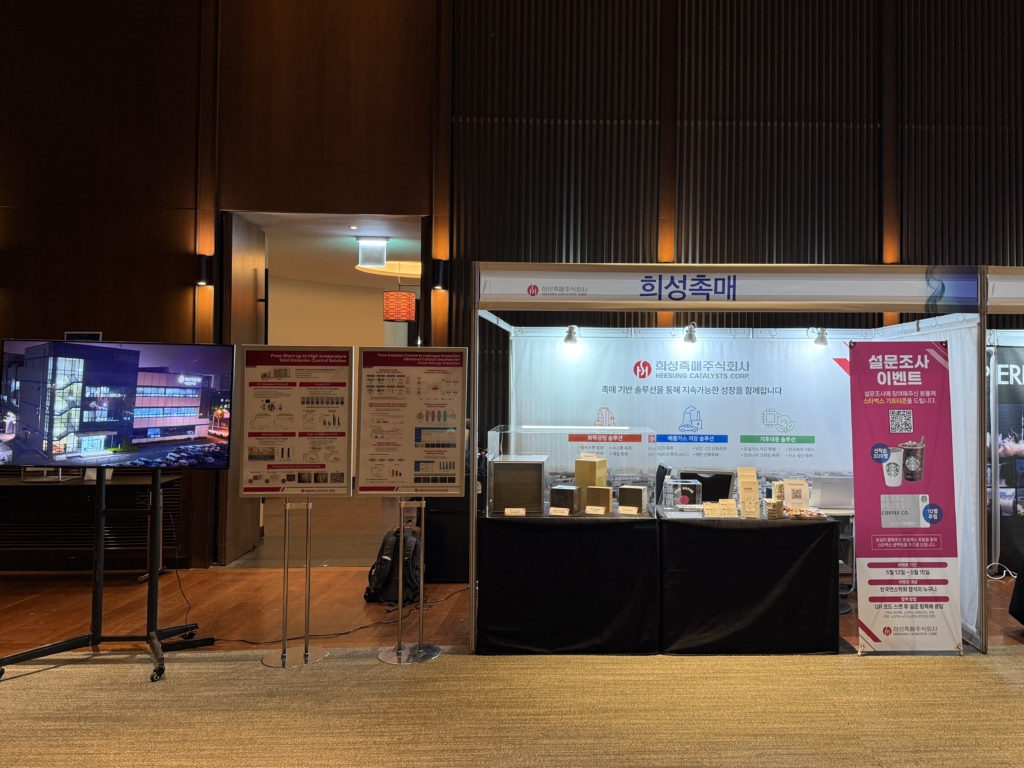
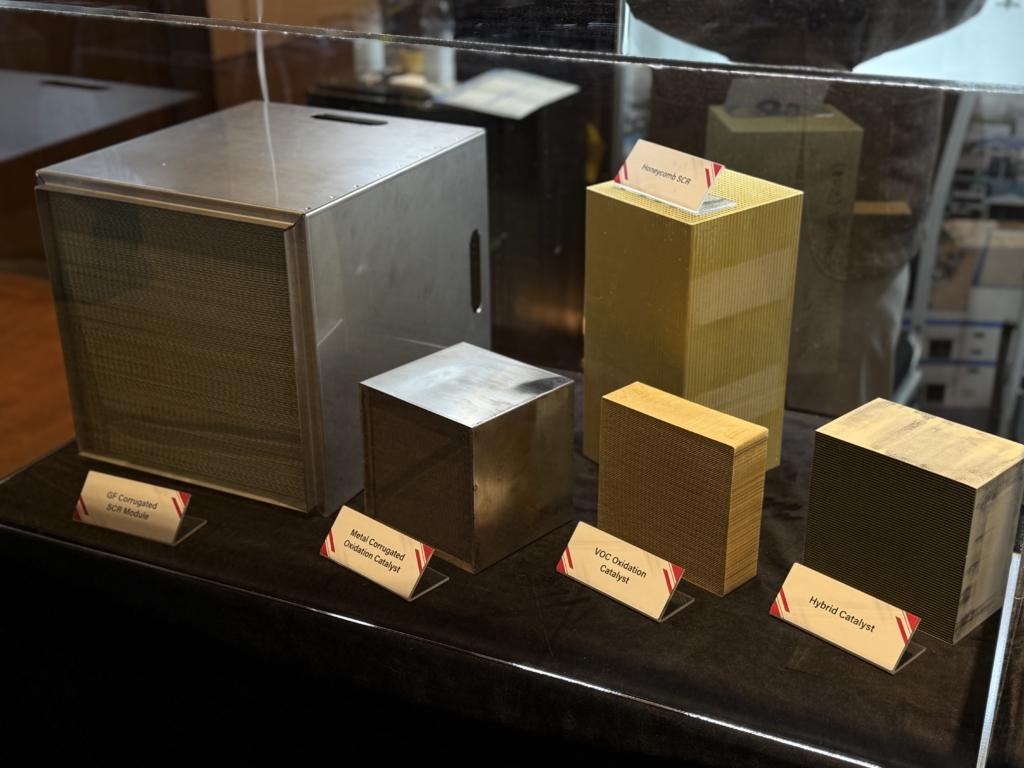
Heesung Catalysts presented environmental response technologies for power generation and combustion applications, centered on SCR catalysts, hybrid catalysts, and oxidation catalysts. On-site discussions covered NOx reduction, greenhouse gas management, and the treatment of ammonia and combustion exhaust gases. There was also strong interest in operating conditions and maintenance considerations that arise during actual process deployment.
‘Practical Solutions’ — the Competitive Edge Heesung Catalysts Brings to the Carbon-Neutral Era
The most significant shift we observed across both events is that industry is now orienting itself around technologies that can actually be put to work. Carbon neutrality can no longer be addressed through declarations or directional statements alone. What matters now is technology that operates reliably under real process conditions, sustains performance over the long term, and can carry through to commercialization and full-scale production.
Heesung Catalysts responds to this shift by providing catalyst technologies and solutions built with deployability and commercial viability in mind. Building on decades of expertise in automotive emission catalysts, we have expanded into chemical processes, hydrogen, power generation and combustion, and greenhouse gas reduction — supporting customers in developing the real technical competitiveness needed for carbon neutrality and the energy transition.
Going forward, we will continue developing practical catalyst solutions that address the technical challenges faced across diverse industries, working together toward a carbon-neutral and sustainable future.

FAQ
Q1. What factors does the industry now consider most important in catalyst technology?
Raw catalyst performance is no longer the primary consideration — practical deployability in actual processes is. Long-term durability, process stability, scale-up capability, and maintenance efficiency have emerged as the core criteria for evaluating technical competitiveness in real industrial environments.
Q2. Why does catalyst technology matter so much in the transition to next-generation fuels like hydrogen-ammonia co-firing?
Power generation and combustion equipment operates across a wide range of conditions and must run stably over extended periods. Next-generation fuels such as hydrogen-ammonia co-firing and e-Methanol have different combustion characteristics from conventional fossil fuels, which means they require aftertreatment catalyst technologies designed for new exhaust gas compositions. Challenges like NOx reduction and ammonia slip — which existing systems struggle to address — are creating growing demand for catalysts that maintain performance reliably across varying operating environments. Fuel transition and catalyst technology transition go hand in hand.
Q3. How is SCR catalyst technology used in power generation and combustion applications?
SCR (Selective Catalytic Reduction) catalysts are a core aftertreatment technology that converts nitrogen oxides (NOx) — emitted from power plants, boilers, and marine engines — into nitrogen (N₂) and water (H₂O). Using ammonia or urea as a reducing agent, SCR catalysts selectively remove NOx and are widely deployed for emissions compliance. In hydrogen-ammonia co-firing environments, both ammonia slip suppression and simultaneous NOx reduction are required, making catalyst composition and operating condition optimization increasingly critical. Heesung Catalysts provides integrated emissions management solutions combining SCR catalysts with hybrid catalysts and oxidation catalysts.
Q4. What catalyst solutions does Heesung Catalysts offer for the carbon-neutral era?
Building on expertise developed in automotive emission catalysts, Heesung Catalysts has expanded its technology portfolio into chemical processes, hydrogen, power generation and combustion, and greenhouse gas reduction. Through catalyst technologies and solutions developed with process applicability and a clear path from commercialization to full-scale production in mind, we support industry in navigating the carbon-neutral transition and the broader energy transformation.
