Catalysts for Carbon Neutrality: Reducing Methane Emissions and Using Methane as a Feedstock
2026.11.18
Key Takeaways
- At the ASEAN-Korea Cooperation for Methane Mitigation (AKCMM) Regional Workshop, Heesung Catalysts outlined how methane oxidation catalysts could reduce emissions of unburned methane from LNG-fueled ships and gas turbines.
- Methane reforming and pyrolysis both produce hydrogen. Reforming also yields synthesis gas that can be converted into liquid fuels, including aviation fuel.
- Selecting a catalyst for industrial use requires assessing its performance, service life, and cost under actual operating conditions. To estimate greenhouse gas savings from methane-derived hydrogen and synthetic fuels, a life cycle assessment compares emissions from feedstock sourcing through end use with those of conventional alternatives.
Methane (CH₄) is a greenhouse gas that contributes to global warming. It is also a feedstock for hydrogen and synthetic fuels. These two roles have drawn interest in technologies that reduce methane emissions and those that convert methane into useful products. Both make use of catalysts and the reactions they accelerate, a process known as catalysis.
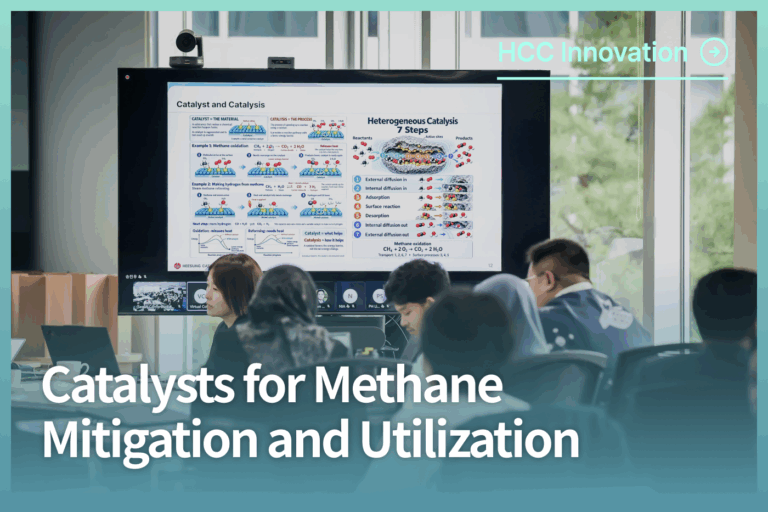
On October 13, 2026, Dr. Jinwoo Song, Head of R&D at Heesung Catalysts, presented catalytic approaches to methane mitigation and utilization at the ASEAN-Korea Cooperation for Methane Mitigation (AKCMM) Regional Workshop in Seoul. The Global Green Growth Institute (GGGI) hosted the workshop, which brought together representatives from 10 ASEAN countries, international organizations, and industry. Dr. Song discussed how catalysts can reduce emissions from vehicles, ships, and power plants. He also outlined their potential role in producing hydrogen and sustainable aviation fuel (SAF) and the technical challenges involved.

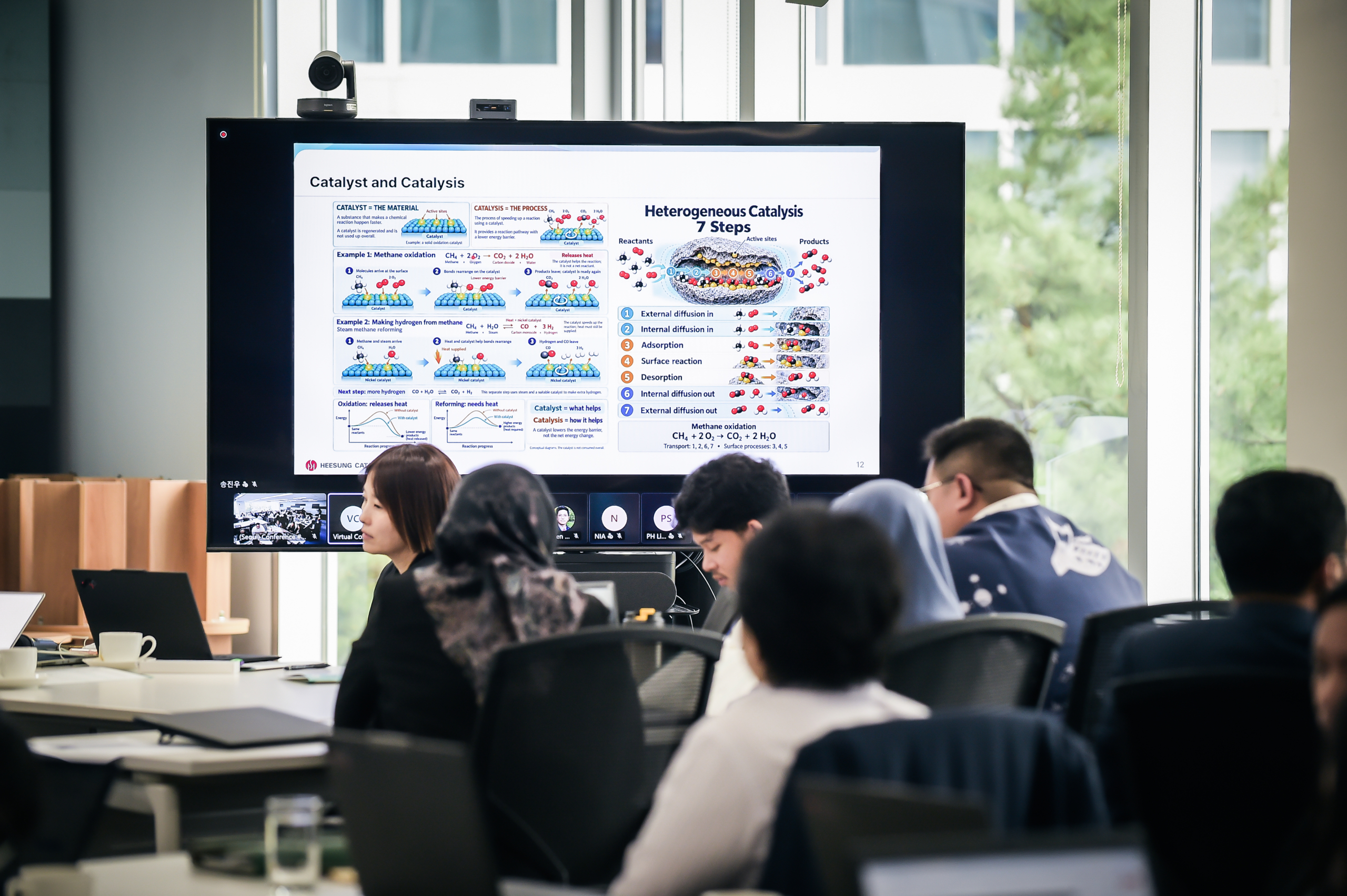



1. From Exhaust Treatment to Methane Mitigation
A catalyst speeds up a chemical reaction by lowering its activation energy. Automotive exhaust treatment is a familiar example. A three-way catalyst (TWC) uses oxidation and reduction reactions to reduce emissions of three pollutants at once: carbon monoxide (CO), hydrocarbons (HC), and nitrogen oxides (NOₓ).
Engines and power plants that burn natural gas also need to control methane emissions. Some of the methane in the fuel can pass through the combustion process and leave the system in the exhaust.
2. How Catalysts Reduce Methane Emissions in Industry
When some of the methane in a fuel escapes combustion and enters the atmosphere, the resulting emission is called methane slip. Methane stays in the atmosphere for less time than carbon dioxide, but a given mass of methane has a greater warming effect than the same mass of carbon dioxide. Cutting methane emissions can therefore help slow warming in the near term.
A methane oxidation catalyst (MOC) helps control methane slip by promoting the reaction of unburned methane with oxygen in the exhaust. The reaction produces carbon dioxide and water. Oxidizing the methane has a smaller warming effect than releasing it directly into the atmosphere.
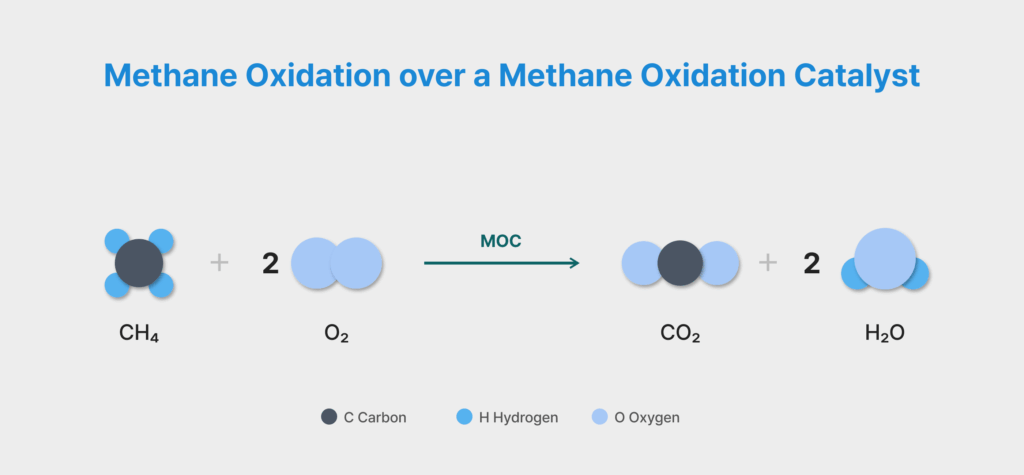
Methane’s stable molecular structure makes it harder to oxidize than many other hydrocarbons. At low exhaust temperatures, the reaction slows and the catalyst removes less methane. Water vapor and sulfur compounds in the exhaust can also impair catalyst performance.
Reducing Methane Slip from LNG-Fueled Ships
The International Maritime Organization (IMO) aims for international shipping to reach net-zero greenhouse gas emissions by or around 2050. Ships that burn liquefied natural gas (LNG) emit less sulfur oxides and particulate matter than ships using conventional marine fuels. Depending on the engine’s combustion system, some methane can escape in the exhaust. Assessments of an LNG-fueled ship’s greenhouse gas emissions therefore need to account for methane slip.
A marine methane oxidation catalyst system (MOCS) reduces methane slip by oxidizing unburned methane in the engine exhaust. Selecting a system for a vessel requires checking how much methane it removes at the engine’s exhaust temperatures and methane concentrations, and how well the catalyst maintains that performance over time.
The fuel and the engine’s emissions profile determine which other exhaust treatment technologies a ship needs. Selective catalytic reduction (SCR) reduces nitrogen oxides, an ammonia oxidation catalyst (AOC) treats unreacted ammonia, and a DeN₂O catalyst breaks down nitrous oxide.
Managing Emissions During Gas Turbine Startup
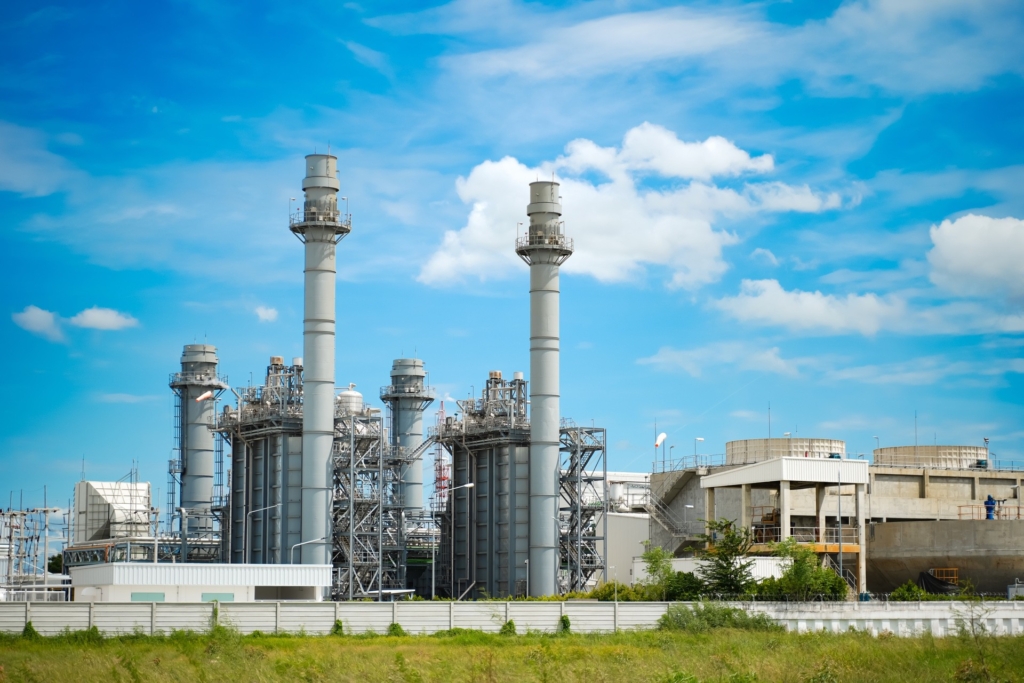
Gas turbines fueled by natural gas can start quickly and adjust their output as electricity demand and renewable generation fluctuate. During startup or changes in load, incomplete combustion can raise the concentrations of carbon monoxide and unburned hydrocarbons in the exhaust. Early in startup, the exhaust treatment catalyst is still warming up and removes these pollutants less efficiently.
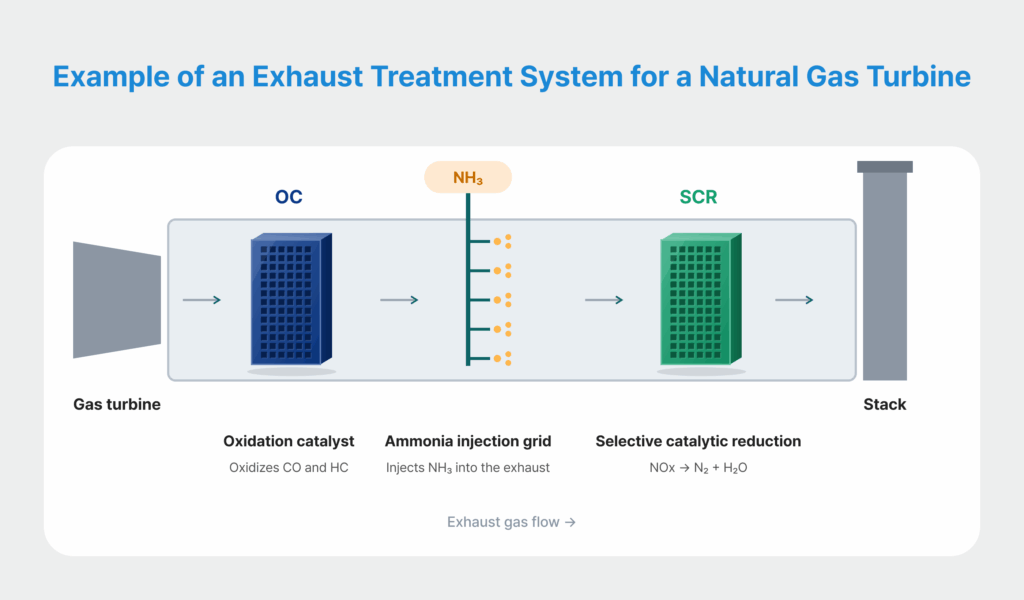
An oxidation catalyst converts carbon monoxide and some unburned hydrocarbons. Downstream, an ammonia injection grid introduces ammonia into the exhaust. The SCR catalyst then promotes the reaction between ammonia and nitrogen oxides to form nitrogen and water.
A methane oxidation catalyst is one option for treating methane that remains in turbine exhaust. To assess its suitability, operators need to determine how much methane the catalyst can remove at the exhaust temperatures reached during startup and load changes, and whether that reduction justifies the cost.
3. Catalytic Routes from Methane to Hydrogen and Synthetic Fuels
Methane for hydrogen and synthetic fuel production can come from LNG, biogas, or landfill gas. Biogas and landfill gas consist mainly of methane and carbon dioxide. Depending on the source, they can also contain impurities such as hydrogen sulfide. Removing these impurities and adjusting the gas composition to suit the downstream process helps maintain stable catalyst performance.
Methane Reforming and Turquoise Hydrogen
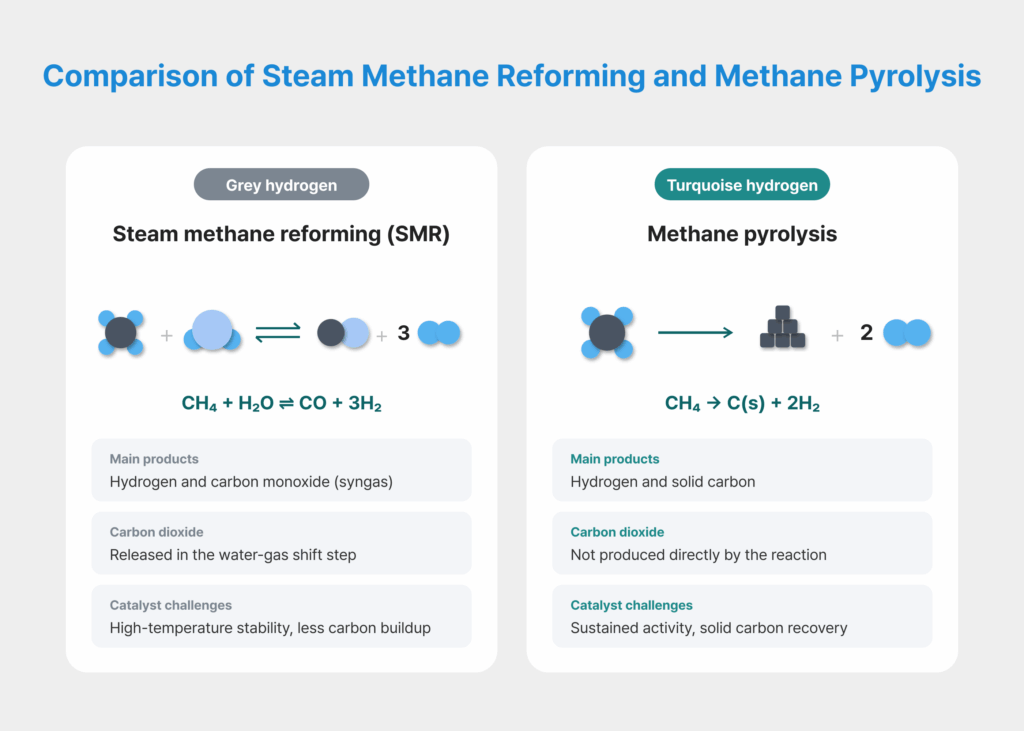
Steam methane reforming (SMR) is a widely used method of producing hydrogen from methane. At high temperatures, methane reacts with steam to form synthesis gas, or syngas, consisting mainly of hydrogen and carbon monoxide.
In the subsequent water-gas shift reaction, carbon monoxide reacts with steam to produce additional hydrogen and carbon dioxide. Reforming natural gas without capturing the carbon dioxide is a common production route for grey hydrogen. Reforming catalysts need to remain active at high temperatures over long operating periods. Carbon deposits can cover the catalyst surface, reducing the area available for the reaction. Limiting this buildup is one of the main challenges in reforming.
Methane pyrolysis offers another route to hydrogen. Heat breaks methane down into hydrogen and solid carbon. Hydrogen produced this way is known as turquoise hydrogen. The reaction itself produces no carbon dioxide. Its overall greenhouse gas benefit depends on the energy source, the amount of methane that leaks, and how the process handles the solid carbon. In catalytic pyrolysis, carbon can accumulate on the catalyst surface and reduce its activity. A key technical challenge is recovering the carbon while keeping the catalyst active over time.
Methane-Based Synthetic Fuels and SAF
Aviation relies on energy-dense liquid fuels that are difficult to replace. Sustainable aviation fuel is one option for reducing the sector’s greenhouse gas emissions.
Syngas from methane reforming can serve as a feedstock for aviation fuel. In Fischer-Tropsch (FT) synthesis, a catalyst helps convert the carbon monoxide and hydrogen in syngas into hydrocarbons. The choice of catalyst and the reaction conditions influence the mix of hydrocarbons the process produces. Further upgrading and refining yield components suitable for aviation fuel.
For a methane-derived synthetic aviation fuel to qualify as SAF, its feedstock, production process, and life cycle greenhouse gas savings must meet the applicable sustainability and certification criteria. These criteria also apply to methane recovered from biogas or landfill gas. The assessment takes into account both the feedstock and the emissions associated with producing the fuel.
4. What Determines Whether a Catalyst Is Suitable for Industrial Use?
For ships and gas turbines, an important measure of a methane oxidation catalyst is how long it maintains its removal efficiency at low exhaust temperatures and under changing loads. Catalyst life also affects operating costs. A catalyst with a low purchase price can cost more over time if it needs frequent replacement.
In methane utilization, the feedstock determines the choice of purification method and catalyst. Gas composition and impurity levels vary by source. Process design also needs to account for how operators will separate and recover the products after the reaction.
Assessing the greenhouse gas savings from methane-derived hydrogen and synthetic fuels requires a life cycle assessment (LCA). The assessment adds up emissions from feedstock sourcing, production, transport, and end use, then compares the total with emissions from producing and using an equivalent amount of hydrogen or fuel through a conventional route.
5. Extending Catalyst Technology from Exhaust Treatment to Carbon Neutrality
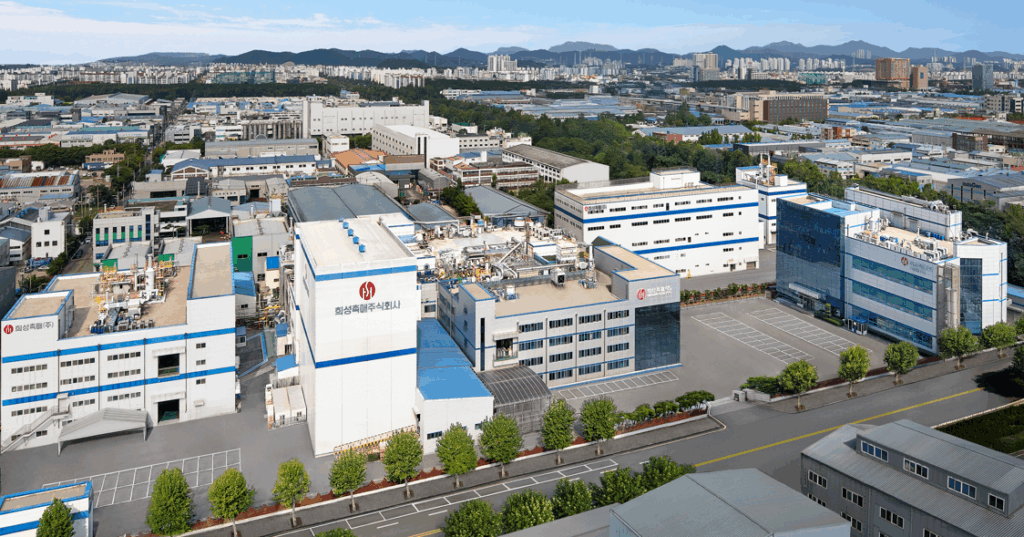
Heesung Catalysts has developed catalysts for automotive and industrial exhaust treatment, greenhouse gas mitigation, hydrogen production, and chemical processing. We draw on that experience to develop catalysts that reduce methane emissions and catalysts that help convert methane into hydrogen and synthetic fuels. Operating conditions and costs in each industry guide this work.
As a Catalysis-driven Solution Provider, Heesung Catalysts works to improve catalyst performance and extend its use across industrial applications, from emissions control to fuel production.
➡️ Explore climate response solutions from Heesung Catalysts

FAQ
Q1. What is methane slip, and how does it affect greenhouse gas savings from LNG-fueled ships?
Methane slip occurs when some of the methane in the fuel passes through the engine unburned and escapes in the exhaust. Because methane has a greater warming effect per unit of mass than carbon dioxide, higher methane slip reduces the greenhouse gas savings a ship can achieve by switching to LNG.
Q2. How does a methane oxidation catalyst reduce methane emissions?
A methane oxidation catalyst promotes the reaction between methane and oxygen in the exhaust to form carbon dioxide and water. Converting methane this way has a smaller warming effect than releasing the same amount of methane directly into the atmosphere.
Q3. What should operators check before using a methane oxidation catalyst in a gas turbine?
Operators should check how much methane the catalyst removes at the exhaust temperatures the turbine reaches during startup and load changes. Oxidation proceeds more slowly while the catalyst is warming up, so the assessment should account for performance under actual operating conditions as well as catalyst life and replacement costs.
Q4. How do steam methane reforming and methane pyrolysis differ in hydrogen production?
Steam methane reforming uses steam to convert methane into hydrogen and carbon monoxide. A subsequent water-gas shift reaction produces additional hydrogen and carbon dioxide. Methane pyrolysis splits methane into hydrogen and solid carbon to produce turquoise hydrogen. Its overall greenhouse gas benefit depends on the process energy source, methane leakage, and how the solid carbon is handled.
Q5. When does methane-derived synthetic aviation fuel qualify as SAF?
The feedstock and production process must meet the applicable sustainability criteria, and the fuel must satisfy life cycle greenhouse gas reduction requirements. The same assessment applies when the feedstock is methane recovered from biogas or landfill gas.