Heesung Catalysts, Jointly Filed PFC Decomposition Catalyst Patent with Samsung Electronics Approved in China
2026.02.09
Heesung Catalysts’ Joint Patent Included in Samsung’s China Patent Approvals — Reported by The Guru
The industrial media outlet The Guru reported on February 9, 2026 that China’s National Intellectual Property Administration (CNIPA) approved 731 patents filed by Samsung affiliates, including Samsung Electronics, Samsung Display, and Samsung SDI. Among these, a jointly filed patent by Heesung Catalysts and Samsung Electronics titled “Perfluorocompound (PFC) Decomposition Catalyst and Method for Manufacturing the Same (Patent No. CN121266567A)” was included.
Industrial Significance of the PFC Decomposition Catalyst Patent
According to the report, the patent covers a catalytic technology that decomposes perfluorocompounds (PFCs) emitted during semiconductor and display manufacturing processes. Rather than serving merely as a regulatory compliance measure, the technology is noteworthy in that it aims to reduce environmental impact while maintaining semiconductor process competitiveness.
In particular, as semiconductor processes continue to miniaturize and structurally generate higher PFC emissions, this patent is seen as an example of efforts to achieve “semiconductor PFC reduction” at a system and process level rather than through one-off countermeasures.
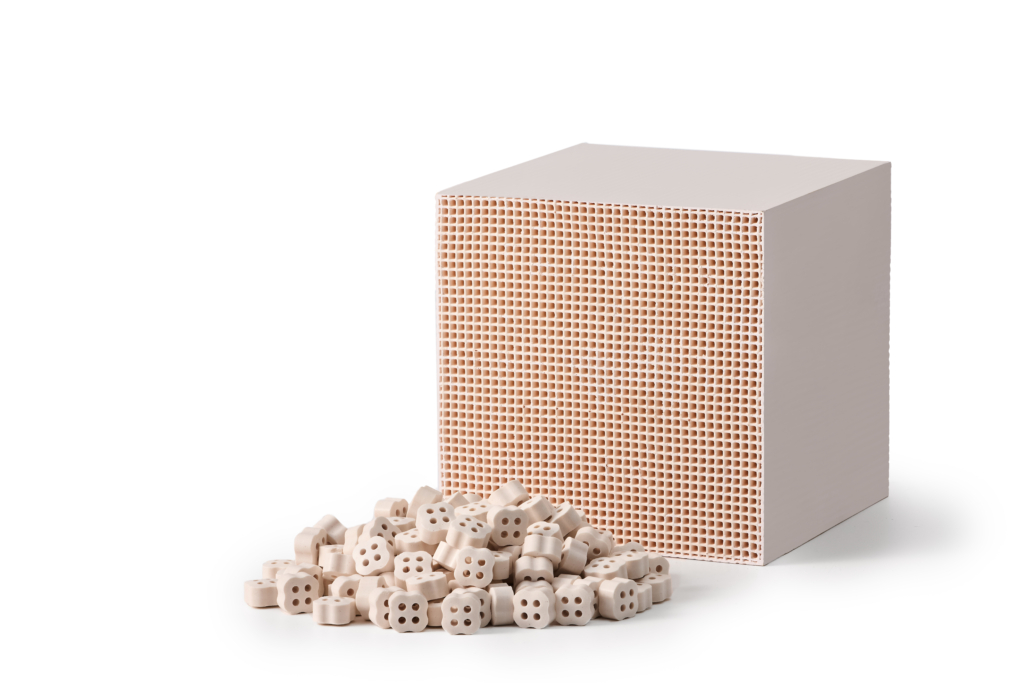
Why is the ‘PFC Decomposition Catalyst’ Approach More Efficient than High-Temperature Incineration?
To date, PFC treatment has largely relied on high-temperature incineration using scrubber systems. However, this method requires maintaining extremely high temperatures, leading to high energy consumption, significant equipment burden, and challenges in ensuring long-term operational stability.
By contrast, the PFC decomposition catalyst approach is considered a more efficient alternative for the following reasons:
- Catalysts lower the activation energy of chemical reactions, enabling PFC decomposition at relatively lower temperatures.
- This reduces energy consumption and operational costs.
- Compared to high-temperature incineration, the thermal stress on equipment is reduced, improving long-term operational stability.
For these reasons, catalyst-based treatment is regarded not simply as an improvement in end-of-pipe processing, but as a key technological foundation for transitioning toward more sustainable, green semiconductor processes.

Heesung Catalysts’ Future Direction
Heesung Catalysts has focused on developing catalytic solutions across semiconductor, energy, and environmental sectors while taking real industrial operating conditions into account. This joint patent reflects the company’s field-oriented approach to technology development.
Building on its expertise in designing catalysts that perform under actual semiconductor process conditions, Heesung Catalysts will continue to advance technologies that substantively support semiconductor PFC reduction and the transition to green semiconductor manufacturing.
↓↓Read related article ↓↓