Catalysts in Industry – Part 1. Catalysts in Power Plants and Industrial Facilities
2026.11.27
Key Takeaways
- Power plants use selective catalytic reduction (SCR) catalysts to reduce nitrogen oxides (NOₓ) and oxidation catalysts to control emissions of carbon monoxide and unburned hydrocarbons. Operators assess catalyst performance across the plant’s operating range because exhaust temperature and flow rate change with load.
- On painting and drying lines, oxidation catalysts treat volatile organic compounds (VOCs) released as solvents evaporate. In road tunnels, air treatment systems can use adsorbents to capture nitrogen dioxide and oxidation catalysts to treat carbon monoxide at ambient temperature.
- Fuel cell power systems can obtain hydrogen by reforming natural gas or cracking ammonia. Inside the fuel cell, electrocatalysts promote the reactions that generate electricity.
The Catalysts in Industry series examines the challenges each industry faces and how it uses catalysts to address them. This first article covers exhaust treatment in power plants and industrial facilities, air treatment in road tunnels, and electricity generation in fuel cells.

1. Power Plant Emissions Control Under Changing Loads and During Long-Term Operation
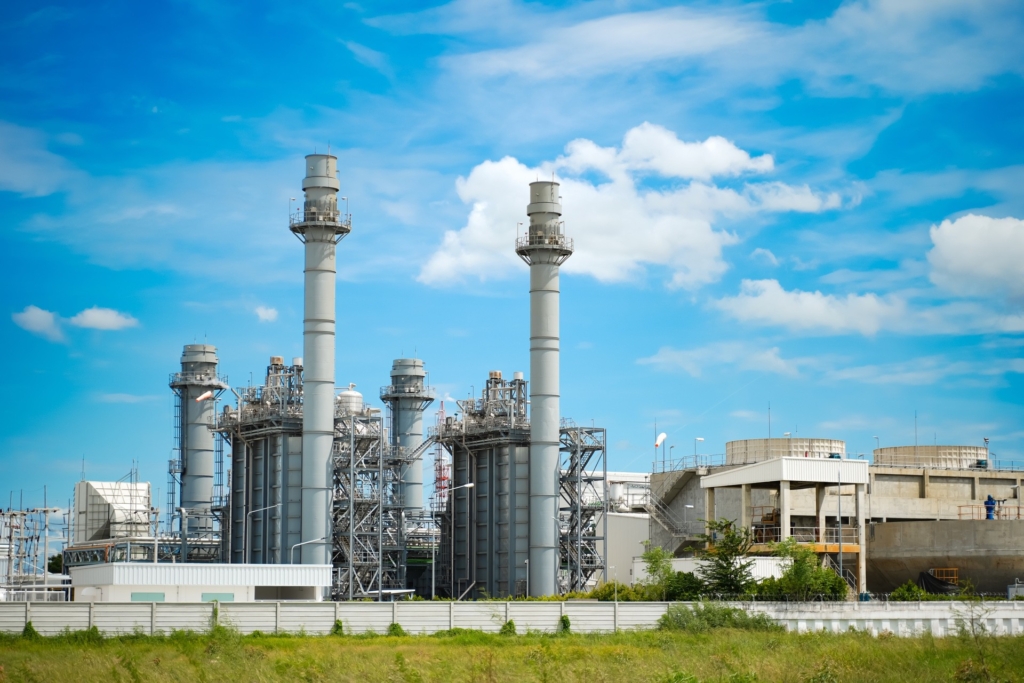
When a gas turbine operates at low load, incomplete combustion can raise the concentrations of carbon monoxide (CO) and unburned hydrocarbons (HC) in the exhaust. Oxidation catalysts help both pollutants react with oxygen. If the exhaust entering the catalyst also cools, the oxidation reactions slow. Plant operators therefore track how often the turbine runs at low load and how long it stays there, alongside the average exhaust temperature.
Temperature also affects selective catalytic reduction (SCR) systems. Operators inject ammonia into the exhaust, where it reacts with NOₓ in the catalyst bed to form nitrogen and water. The reaction slows if the exhaust temperature falls below the catalyst’s operating range. Changes in exhaust flow rate also affect how long the gas stays in contact with the catalyst.
If the NOₓ concentration at the SCR outlet rises after a load reduction, operators first check the exhaust temperature and how evenly the injection system distributes ammonia. When the temperature is low or the distribution is uneven, increasing the injection rate can allow some ammonia to pass through the catalyst bed without reacting with NOₓ. This is called ammonia slip. The escaping ammonia is itself an air pollutant and can react with sulfur compounds in the exhaust to form deposits in downstream equipment. Heesung Catalysts’ Hybrid catalyst treats residual ammonia downstream of the SCR system.
During long-term operation, operators also check whether gas flows evenly through the catalyst bed. If dust and deposits accumulate in some channels, more gas flows through those that offer less resistance. The faster flow through these channels shortens contact time with the catalyst, leaving less time for NOₓ to react.
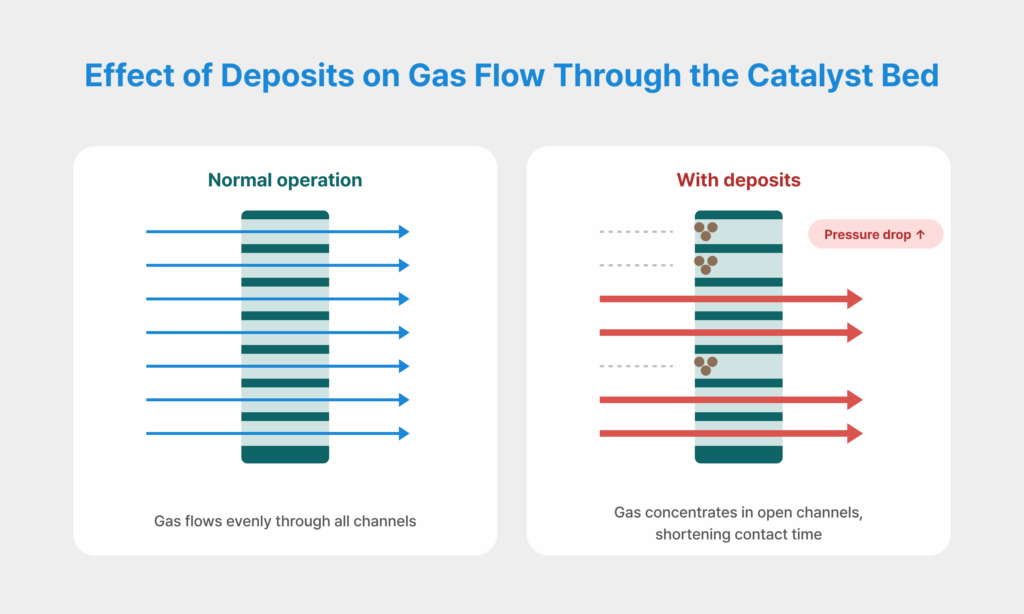
One indicator of restricted flow is the pressure drop across the catalyst bed, or the difference between inlet and outlet pressure. A steady rise in pressure drop at comparable exhaust temperatures and flow rates may indicate that dust or deposits have accumulated in the catalyst bed channels. Operators review this trend alongside outlet NOₓ concentrations, ammonia consumption, and the extent of deposits. Together, these observations help them decide whether to clear the channels, test catalyst activity, or consider replacement.
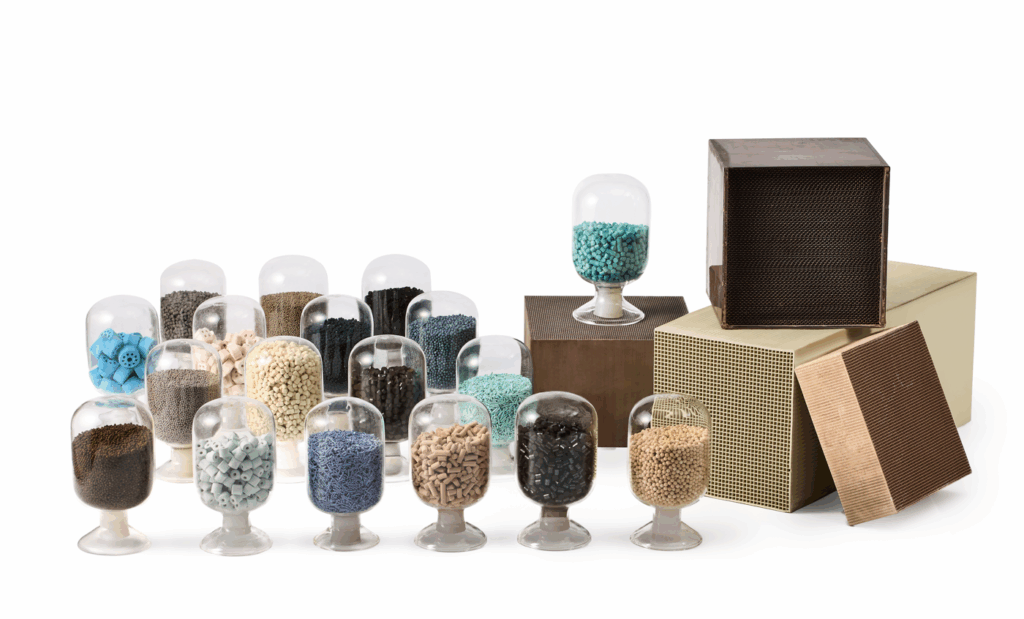
Operating conditions also guide the choice of catalyst geometry. Power plants and industrial boilers process large volumes of exhaust continuously, so they need even gas flow and a low pressure drop. The uniform channels in Heesung Catalysts’ honeycomb SCR catalyst suit these conditions. Where installation space is limited, a stacked SCR catalyst is another option. Its stacked layers of corrugated fiberglass or metal provide a large reaction surface within a compact volume, and its lightweight structure makes installation and maintenance easier.
2. Gas Collection Points and Air Treatment Conditions
On a painting line, emissions continue after spraying ends. As coated products move into the dryer, solvents in the coating continue to evaporate, releasing VOCs. Some of these compounds can cause odors in the surrounding area.
Even when a line uses the same coating throughout, the spray booth and dryer produce exhaust streams with different temperatures and solvent concentrations. A spray booth exhausts large volumes of air for ventilation, diluting the solvent vapors. A dryer uses heat to cure the coating and can produce a hotter exhaust stream with a higher VOC concentration. Since ventilation rates and drying methods affect these conditions, engineers check the solvent types and concentrations, gas temperature, and flow rate at each collection point before selecting an oxidation catalyst. These measurements help them determine which compounds the system needs to treat, in what quantities, and how much additional heat the oxidation reaction requires.
In road tunnels, air temperature guides the choice of treatment technology. Vehicle exhaust mixes with tunnel air, and heating the resulting volume of air would require considerable energy. Treatment at ambient temperature is therefore useful. Heesung Catalysts’ ambient-temperature nitrogen dioxide (NO₂) adsorbent captures NO₂ from the air. Its CO oxidation catalyst helps carbon monoxide react with oxygen to form carbon dioxide. On a painting line, the collection point helps determine the operating conditions for catalytic oxidation. In a tunnel, the target pollutant determines whether the system uses adsorption or oxidation, even when the air temperature is the same.
3. Catalysts for Hydrogen Supply and Fuel Cell Power Generation
A fuel cell power plant that runs on natural gas first converts the fuel into a form the fuel cell can use. Inside the reformer, a reforming catalyst promotes the conversion of natural gas into a hydrogen-containing gas. The system supplies the resulting hydrogen to the fuel cell, where electrocatalysts promote the reactions that generate electricity.
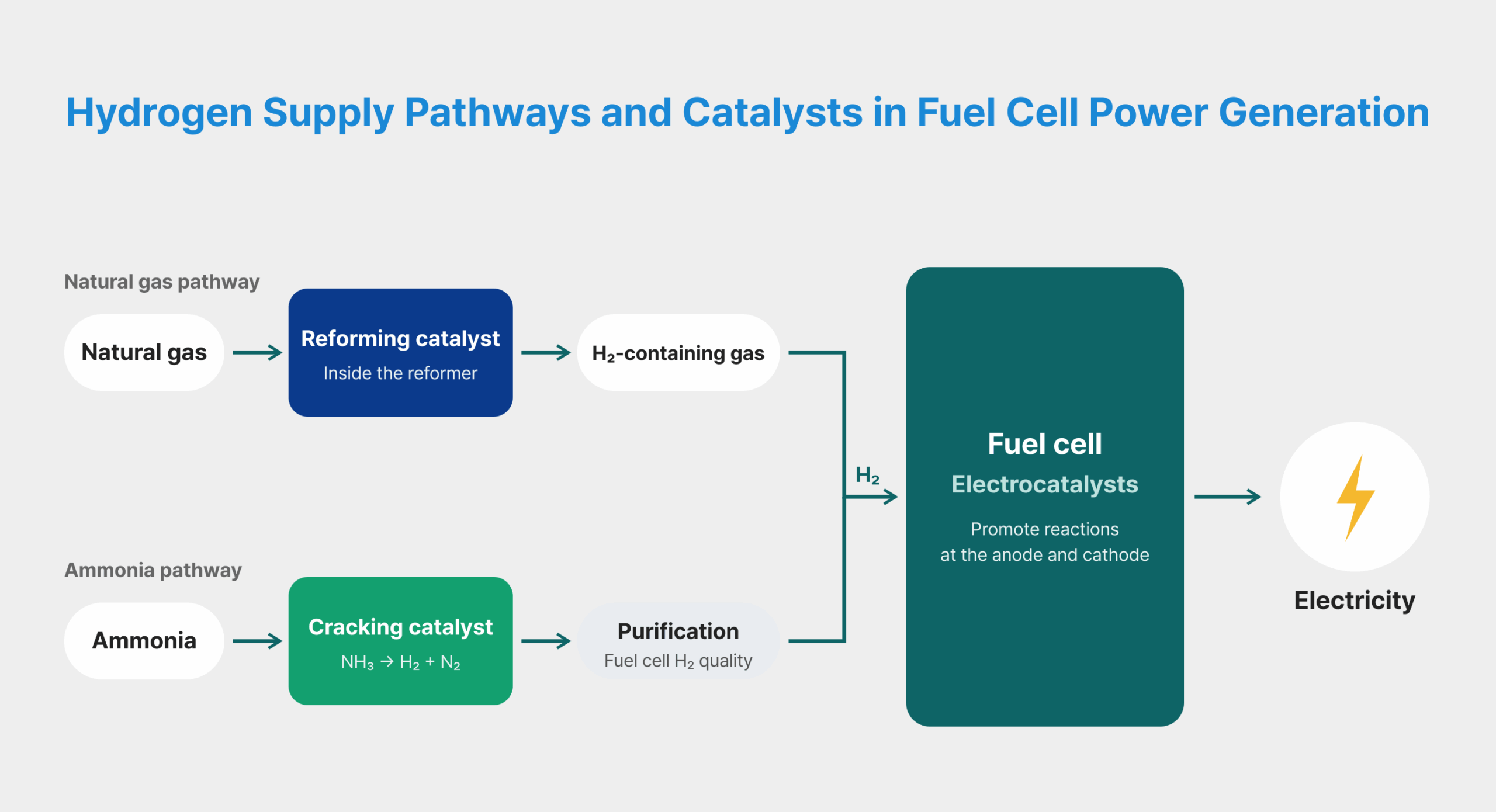
At the anode of a phosphoric acid fuel cell (PAFC), hydrogen releases electrons. These electrons flow through an external circuit, producing an electric current. At the cathode, oxygen reacts with hydrogen ions and electrons to form water. Heesung Catalysts develops and supplies electrocatalysts for fuel cell anodes and cathodes, including those in PAFCs for stationary power generation. Its products include catalysts with platinum dispersed on a support, as well as alloy catalysts.
Power systems that use ammonia as a hydrogen carrier release the hydrogen on site. An ammonia cracking catalyst promotes the decomposition of ammonia into hydrogen and nitrogen. The system then purifies the gas to meet the fuel cell’s hydrogen quality requirements. In this application, ammonia serves as a feedstock for hydrogen production. In an SCR system, it serves as the reducing agent for NOₓ removal.
Catalysts for Power Generation and Industrial Air Treatment at a Glance
| Application | Technology | What to check |
|---|---|---|
| NOₓ control in power plants, industrial boilers, and incinerators | SCR catalyst | Exhaust temperature and flow rate at each load, ammonia mixing, and pressure drop across the catalyst bed |
| Residual ammonia control downstream of SCR | Hybrid catalyst | Ammonia concentration at the SCR outlet and system operating conditions |
| CO control in power generation and VOC control on painting and drying lines | Oxidation catalyst | Target compounds and their concentrations, gas temperature and flow rate at the collection point |
| Ambient-temperature air treatment in road tunnels and similar settings | Ambient-temperature NO₂ adsorbent and CO oxidation catalyst | Target pollutants and adsorption or oxidation performance at ambient temperature |
| Fuel processing for natural gas–fueled fuel cells | Fuel reforming catalyst | Feedstock and gas quality requirements for the fuel cell |
| Hydrogen production from ammonia for power generation | Ammonia cracking catalyst | Intended use of the hydrogen and purification requirements after cracking |
| Electricity generation in stationary fuel cells | Fuel cell electrocatalysts | Fuel cell type, reaction efficiency at the anode and cathode, and catalyst durability |
Visit Heesung Catalysts’ Power Generation and Industrial Environment page →

FAQ
Q1. Why do power plants consider both SCR and oxidation catalysts?
SCR catalysts reduce NOₓ, while oxidation catalysts treat carbon monoxide and unburned hydrocarbons. Operators select catalysts based on the pollutants the plant emits and the exhaust temperatures at different loads.
Q2. Is average exhaust temperature enough to assess catalyst performance in a gas turbine power plant?
No. During startup and low-load operation, the exhaust temperature can fall below the catalyst’s operating range. Operators need to review the temperature history and the time the turbine spent at each load alongside the average.
Q3. Does a rise in pressure drop across an SCR catalyst bed mean the catalyst needs immediate replacement?
A rise in pressure drop calls for a check for dust or deposits that may be blocking the gas channels. Operators compare pressure drop readings at similar loads and review NOₓ removal efficiency and the catalyst’s physical condition before deciding whether it needs maintenance or replacement.
Q4. What should engineers check first when selecting a VOC oxidation catalyst for a painting and drying line?
At each exhaust source, including the spray booth and dryer, engineers identify the solvents, measure their concentrations, and check gas temperature and flow rate. They also check whether moisture or dust enters the treatment system.
Q5. Where do reforming catalysts and electrocatalysts work in a fuel cell power system?
A reforming catalyst acts in the fuel processing stage, helping convert natural gas into a hydrogen-containing gas. Electrocatalysts work at the electrodes inside the fuel cell, where they promote the electrochemical reactions that generate electricity.