

Global Energy Outlook 2026: Where There Is Energy, There Is a Catalyst
2026.08.31
Key Takeaways
- Surging electricity demand driven by AI, data centers, and electrification—and the challenge of managing its environmental impact
- A diversifying energy system in which renewables and established energy sources coexist
- The role of catalyst technology in driving reactions and cutting emissions across production, conversion, and emissions management
The way the world produces and uses energy is changing fast. Alongside the rise of AI and data centers and the electrification of transport and industry, the way we generate power is being reshaped around renewables.
Resources for the Future (RFF), a US nonprofit dedicated to independent research on environmental, energy, and natural resource issues, compared 15 long-term energy scenarios from eight organizations—including international bodies and major energy companies—in its report Global Energy Outlook 2026, using a common framework. The central finding: the future of energy will not follow a single path. Electricity demand is climbing quickly and wind and solar are expanding sharply, yet natural gas, nuclear, and other established sources will continue to play their own roles.
As energy sources shift and the ways we use energy change, catalysts remain part of every stage—producing energy, converting it into the forms we need, and managing the environmental impact after it is used, whatever the source.
Drawing on Global Energy Outlook 2026, this article looks at how the energy system is changing and the role catalysts play within it.
Surging Global Electricity Demand and Managing the Environmental Impact of Power Generation
According to RFF, global power generation roughly doubled between 2000 and 2024. By 2050, generation is expected to rise 59 percent above 2024 levels even in the most conservative scenario, and to more than double under scenarios with aggressive climate action. Projected demand itself has also grown recently: the 2050 generation figures released by the International Energy Agency (IEA) and Bloomberg New Energy Finance (BNEF) in 2025 are 7,000 to 8,000 TWh higher than the estimates the same organizations published in 2022.
Behind this rise is the growth of AI and data centers, together with the electrification of transport and industrial processes and rising demand for cooling worldwide. An IEA outlook cited by RFF projects that electricity demand from data centers will double between 2024 and 2030.
As demand grows, the question is no longer only how to generate and supply the power we need, but also how to manage the environmental impact that comes with producing it.
A Future Where Multiple Energy Sources Coexist
Much of the coming growth in electricity is expected to come from renewables. Across all the scenarios RFF compared, wind and solar generation rise sharply, reaching 40 to 72 percent of global generation by 2050. Counting hydro, biomass, and geothermal, the renewable share climbs from about 30 percent in 2024 to between 52 and 70 percent by 2050 (under reference and evolving-policies scenarios).
Yet other sources are not disappearing. Coal generation declines, but natural gas grows 7 to 56 percent above 2024 levels under reference and evolving-policies scenarios, and nuclear rises 31 percent even in the most conservative scenario.
The energy system of the future is more likely to take shape as several sources and technologies working together, rather than one source replacing all the rest. RFF likewise notes that it is hard to say definitively whether the expansion of renewables amounts to replacing existing energy or adding new sources on top of it.
So what role do catalysts play in this increasingly diverse energy landscape?
Efficient Energy Production and Emissions Management
As energy sources diversify, so do the ways power is generated. Beyond large power plants, distributed energy systems that generate electricity close to where it is used are also expanding. These setups draw on fuel cells, combined heat and power (CHP), biogas facilities, and diesel- and gas-fired generators.
Running such equipment can release air pollutants such as nitrogen oxides (NOx), carbon monoxide (CO), hydrocarbons (HC), and volatile organic compounds (VOCs), and catalysts bring these emissions down. Selective catalytic reduction (SCR), for example, cuts the NOx released from power equipment, boilers, CHP units, and biogas facilities, while diesel oxidation catalysts (DOC) oxidize CO, HC, and VOCs to reduce emissions.
Catalysts also matter when biogas is turned into new energy and feedstock. Reforming the methane in biogas to produce hydrogen relies on nickel or precious-metal catalysts, opening up biogas for a range of uses—hydrogen production, power generation, and industrial feedstock.
Driving Reactions in the Energy Conversion Process
Producing energy is only the start; converting, storing, and using it involves a variety of chemical reactions as well. Here catalysts help the desired reactions proceed efficiently.
The hydrogen value chain
Producing hydrogen from natural gas or biogas relies on catalysts to drive steam methane reforming (SMR) and dry reforming of methane (DRM). Catalysts also improve reaction efficiency when water-gas shift (WGS) generates additional hydrogen and when ammonia cracking separates hydrogen out.
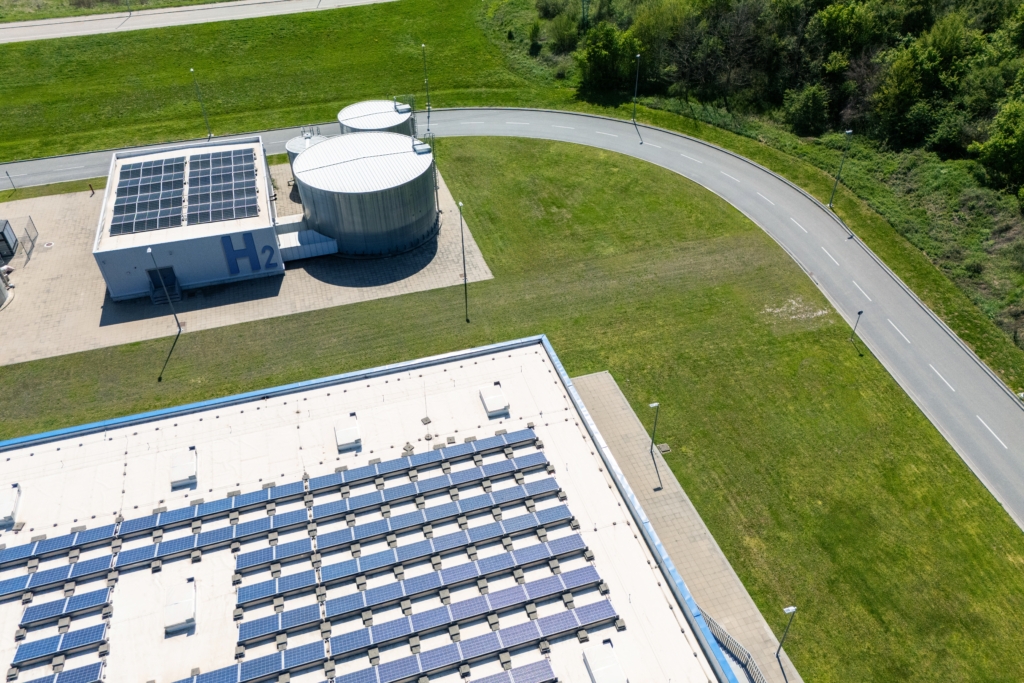
Catalysts are just as essential when converting hydrogen into electricity or using electricity to produce hydrogen. Electrode catalysts drive the electrochemical reaction that turns hydrogen’s chemical energy into electricity in fuel cells, and the reaction that splits water to produce hydrogen in electrolysis. Heesung Catalysts, too, develops catalyst technologies across the hydrogen value chain, from SMR catalysts to fuel cell and electrolysis catalysts.
Sustainable fuels
Sustainable aviation fuel (SAF) can be produced from a range of feedstocks, including used cooking oil, biomass, and CO₂-based syngas. The HEFA process uses catalysts in its hydrogenation reactions, while the Fischer-Tropsch (FT) process uses iron (Fe) and cobalt (Co) catalysts to convert syngas into liquid fuel. The power-to-liquid (PtL) process, which draws on hydrogen produced from renewables together with CO₂, likewise depends on catalytic reactions to make syngas and SAF.
Applying Catalyst Technology for Carbon Neutrality
RFF reports that energy-related CO₂ emissions worldwide exceeded 38 billion tons in 2024. As important as producing and converting more energy is the task of reducing the environmental impact of energy production and industrial activity.
Environmental catalysts cut the NOx, CO, and VOCs emitted from power plants, industrial facilities, and vehicles. Greenhouse gases are addressed the same way: perfluorocarbons (PFCs) from semiconductor and display processes, nitrous oxide (N₂O) from nitric acid production, and methane (CH₄) from power and biogas facilities are all broken down or oxidized through catalytic reactions. Matching the catalyst to the emission in this way is an effective way to reduce the environmental impact of energy production and industry.
A Technology Partner for Better Energy
As the energy system changes, catalyst technology becomes all the more important. Heesung Catalysts develops catalyst technologies for a wide range of energy settings—from hydrogen production and use to sustainable fuels, and from emissions abatement in power and industry to greenhouse-gas reduction.
We will keep developing the technologies the field of energy transition calls for, moving forward as a technology partner in building a better energy environment.
FAQ
Q1. Why is global electricity demand rising?
The main drivers are the growth of AI and data centers, the electrification of transport, and rising demand for cooling worldwide. An IEA outlook cited by RFF projects that electricity demand from data centers will double between 2024 and 2030.
Q2. As renewables expand, will existing energy sources disappear?
Not quite. Across the 15 long-term scenarios RFF compared, wind and solar generation rise sharply, but natural gas and nuclear are also expected to continue playing their own roles. This points to an energy transition that moves toward a mix of sources working together rather than converging on any single one.
Q3. What role do catalysts play in the energy industry?
Catalysts drive the chemical reactions involved in producing energy, converting it into the forms we need, and reducing the emissions from energy production and industrial activity. They are used across many areas—SMR, DRM, and WGS for hydrogen production, ammonia cracking, fuel cells and electrolysis, and the HEFA, FT, and PtL processes for SAF.
Q4. What catalysts are needed to produce and use hydrogen?
Catalysts are used in SMR and DRM, which produce hydrogen from natural gas or biogas; in WGS, which generates additional hydrogen; and in ammonia cracking, which separates hydrogen from ammonia. Electrode catalysts also drive the electrochemical reaction that converts hydrogen into electricity in fuel cells, and the reaction that splits water to produce hydrogen in electrolysis.
Q5. How do catalysts contribute to carbon neutrality and greenhouse-gas reduction?
Catalysts help reduce a wide range of emissions from energy and industrial activity. Their reach is broad—from environmental catalysts that cut NOx, CO, and VOCs from power plants, industrial facilities, and vehicles, to catalysts that treat PFCs from semiconductor and display processes, N₂O from nitric acid production, and CH₄ from power and biogas facilities. As the energy system grows more diverse, so does the importance of catalyst technologies tailored to the characteristics of each emission.
References
Raimi, D., Joiner, E., Hubbell, B., Lohawala, N., & Robertson, M. (2026). Global Energy Outlook 2026: How the World Lost the Goal of 1.5°C. Resources for the Future, Report 26-06.
