

[Smart Energy Week 2026] H₂ & FC EXPO – Hydrogen Industry Transition and Catalyst Technology Insights
2026.04.10
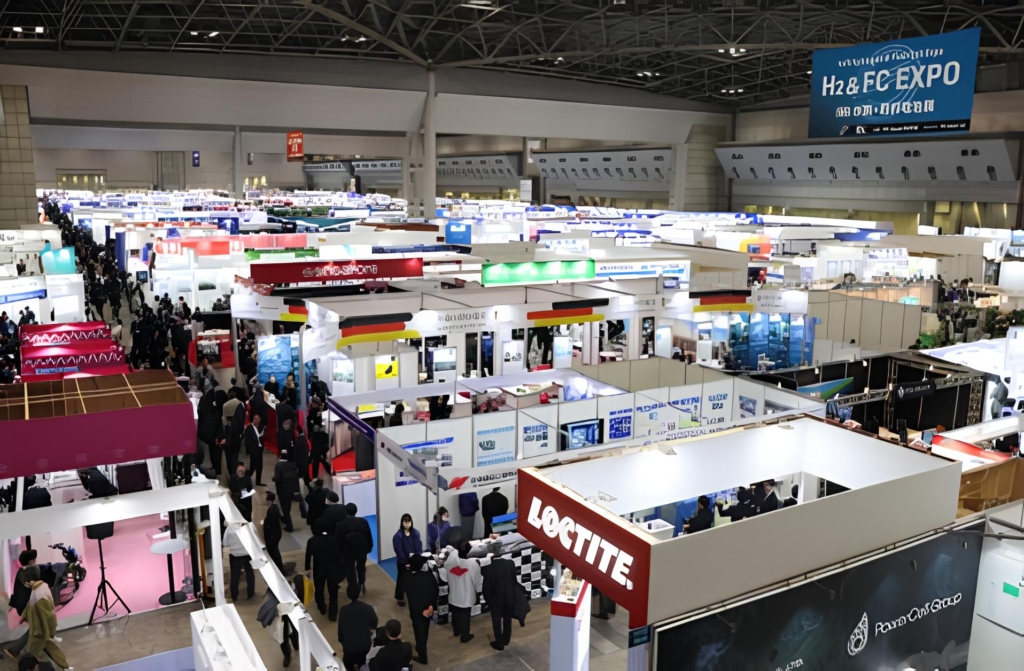
From March 17 to 19, Smart Energy Week 2026 was held at Tokyo Big Sight in Japan. As one of Asia’s largest comprehensive energy exhibitions, the event brought together global leaders across the energy sector. In particular, the H₂ & FC EXPO, dedicated to hydrogen and fuel cells, showcased the latest technologies and solutions from leading companies and research institutions worldwide.
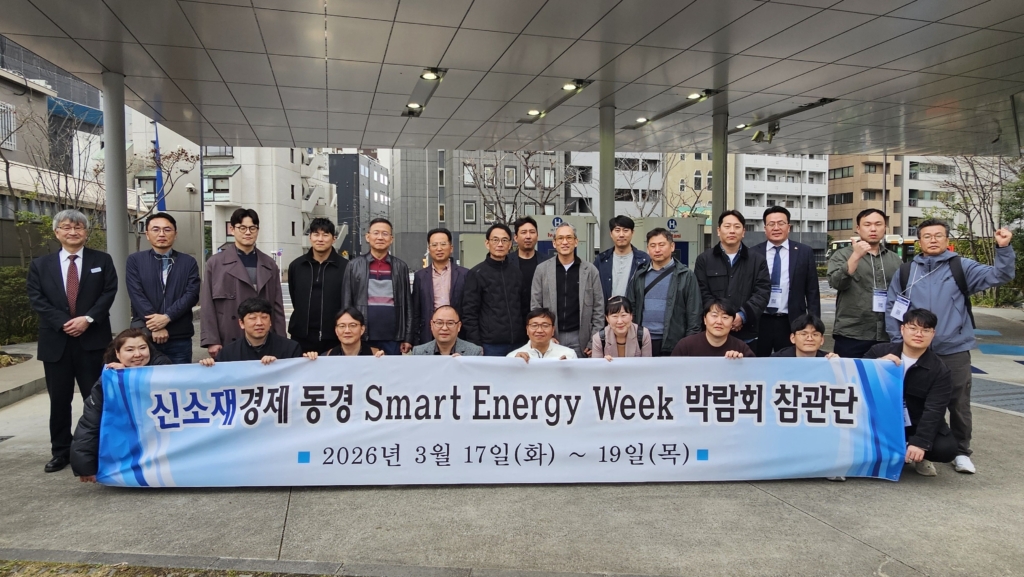
Heesung Catalysts joined the exhibition as part of a delegation, closely examining the current state of the hydrogen industry and its future direction. As the industry moves beyond early-stage technology development into commercialization, both policy and investment priorities are shifting—from securing technology to improving economic feasibility and real-world deployment. One of the most notable takeaways from this year’s expo was how hydrogen value chains are being implemented in practice and scaled into large industrial systems.
Expanding Strategies Across the Hydrogen Value Chain
A clear pattern emerged among global automotive manufacturers. Hydrogen is no longer viewed as a mobility-only solution. Instead, companies are expanding their business scope across the entire value chain—connecting production, storage, transportation, and utilization.
Hyundai Motor Group: Integrated Hydrogen Solutions
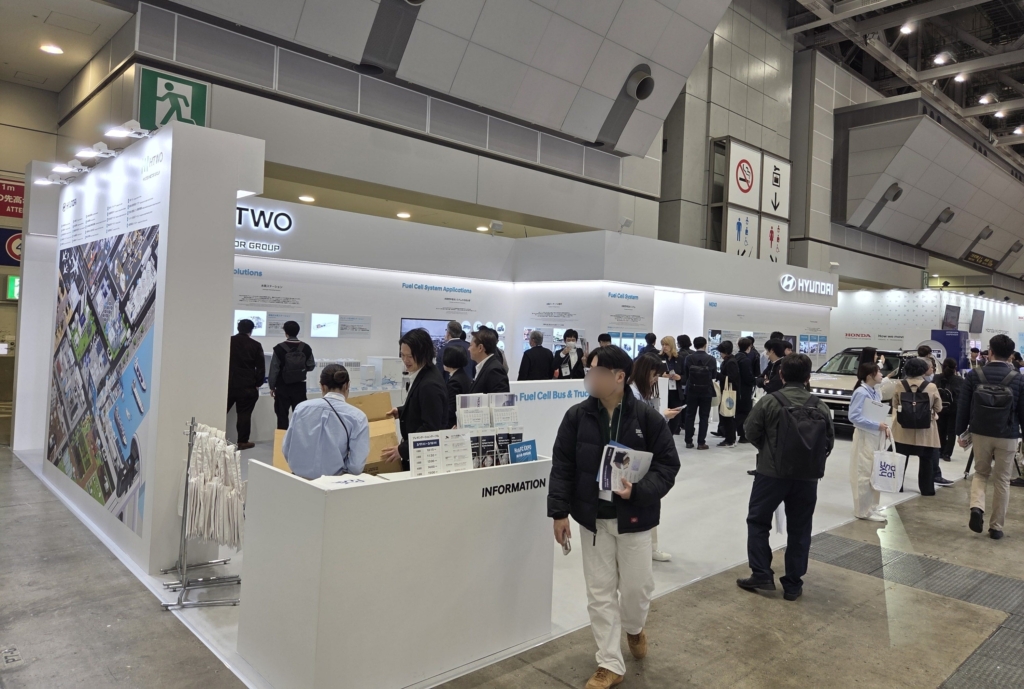
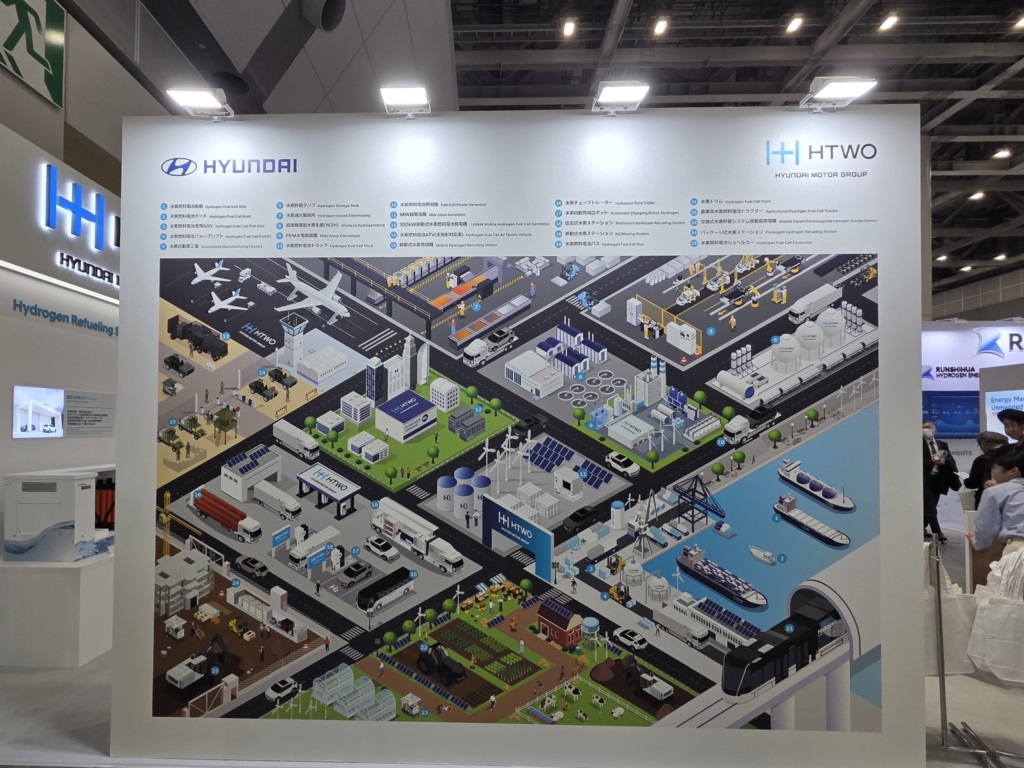
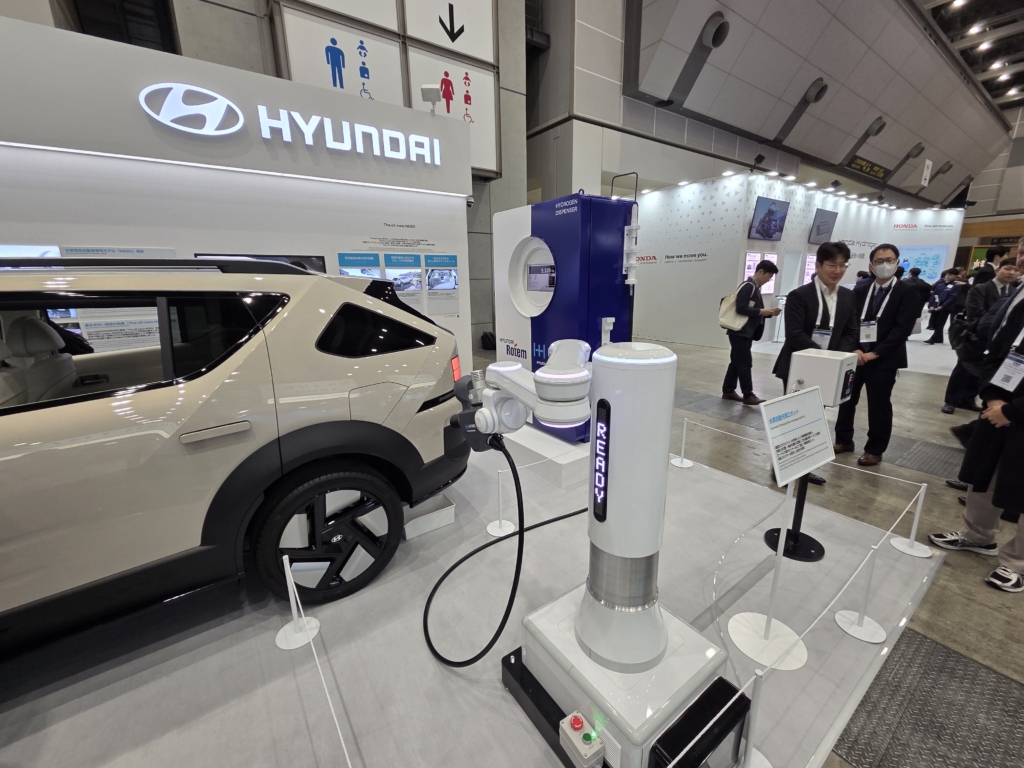
Hyundai Motor Group presented a fully integrated hydrogen strategy centered on HTWO, its hydrogen business brand and platform. By showcasing solutions that connect production to infrastructure automation—including hydrogen refueling robots from Hyundai Rotem—the company outlined a comprehensive hydrogen ecosystem.
- Integrated hydrogen business strategy based on HTWO
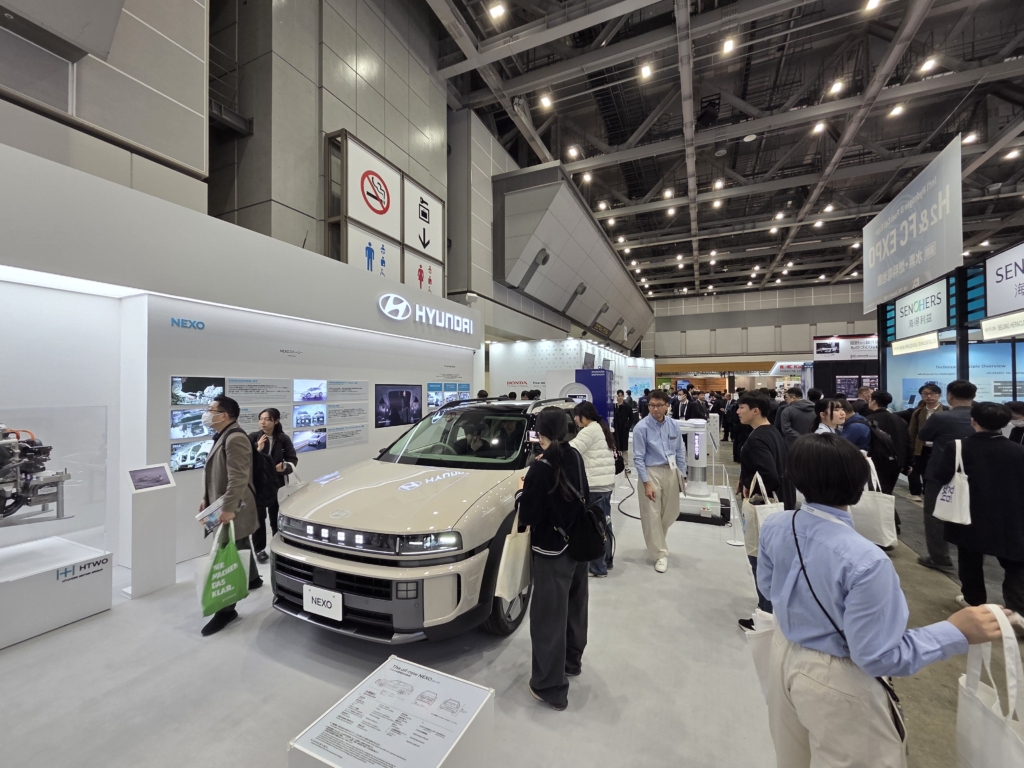
- Planned launch of the all-new NEXO in the Japanese market
- Expansion into trucks, construction equipment, ships, and power generation
- Modularization of fuel cell systems
Toyota: Expanding the Hydrogen Ecosystem
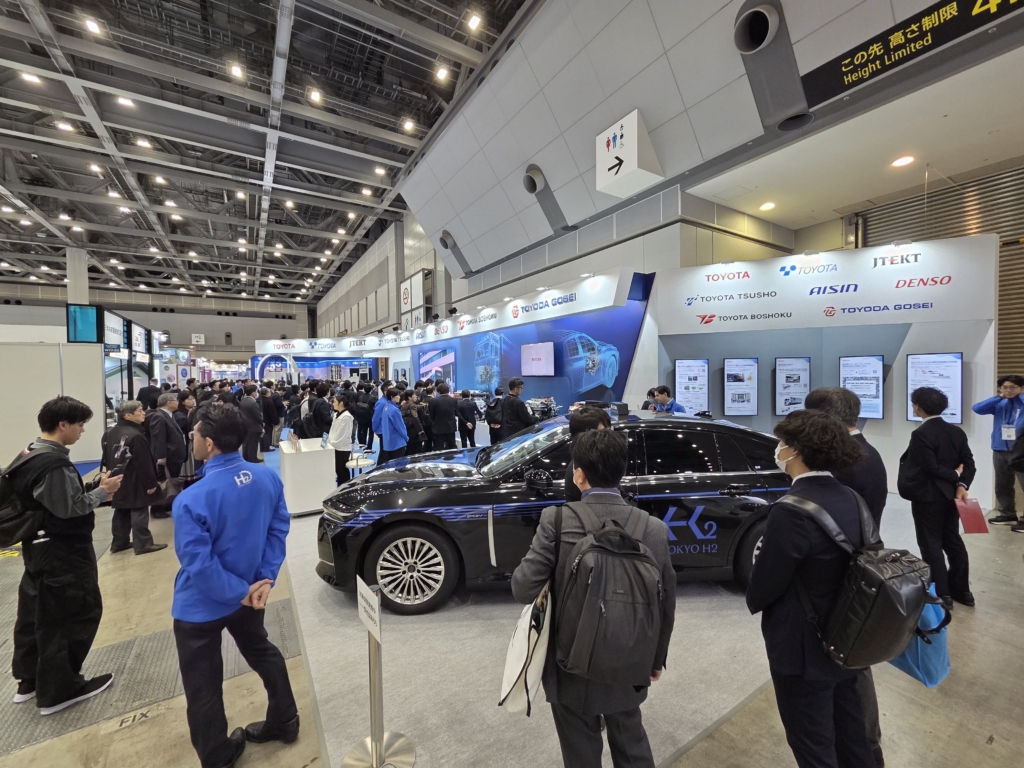
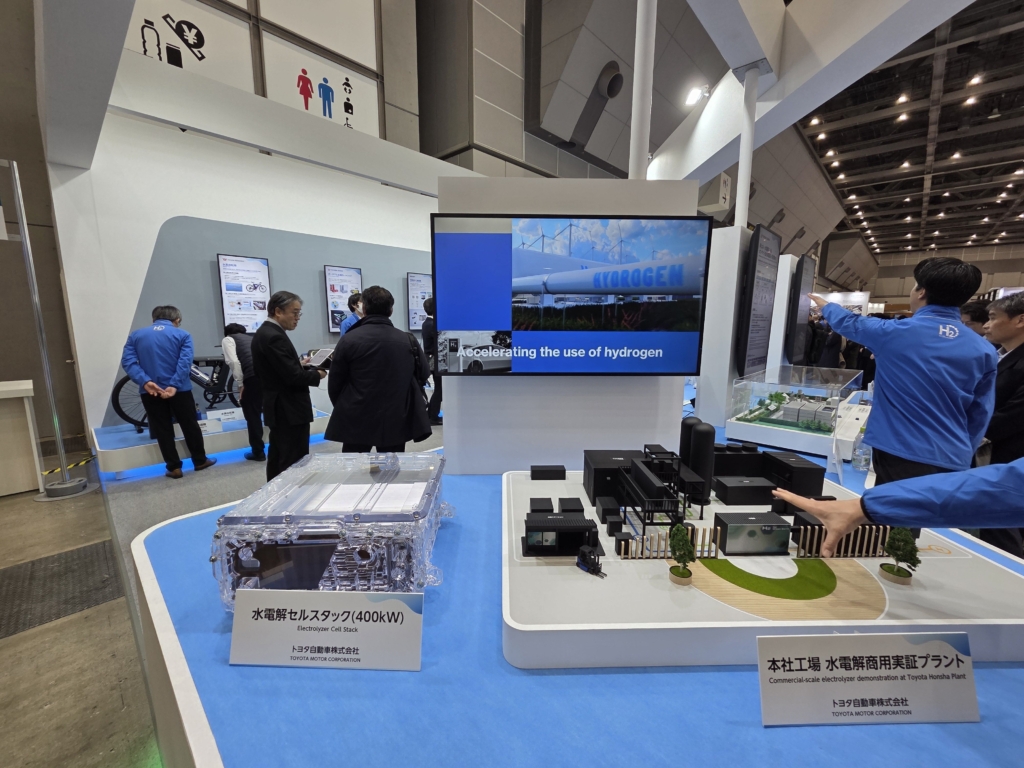
Toyota continues to broaden its hydrogen ecosystem through its group companies. Starting from mobility, it is extending into the full spectrum of hydrogen applications—from production and storage to transportation and utilization.
- Simultaneous expansion across the entire hydrogen value chain
- Exhibition of water electrolysis technologies and industrial applications
- Expansion into forklifts, construction equipment, ships, and power generation
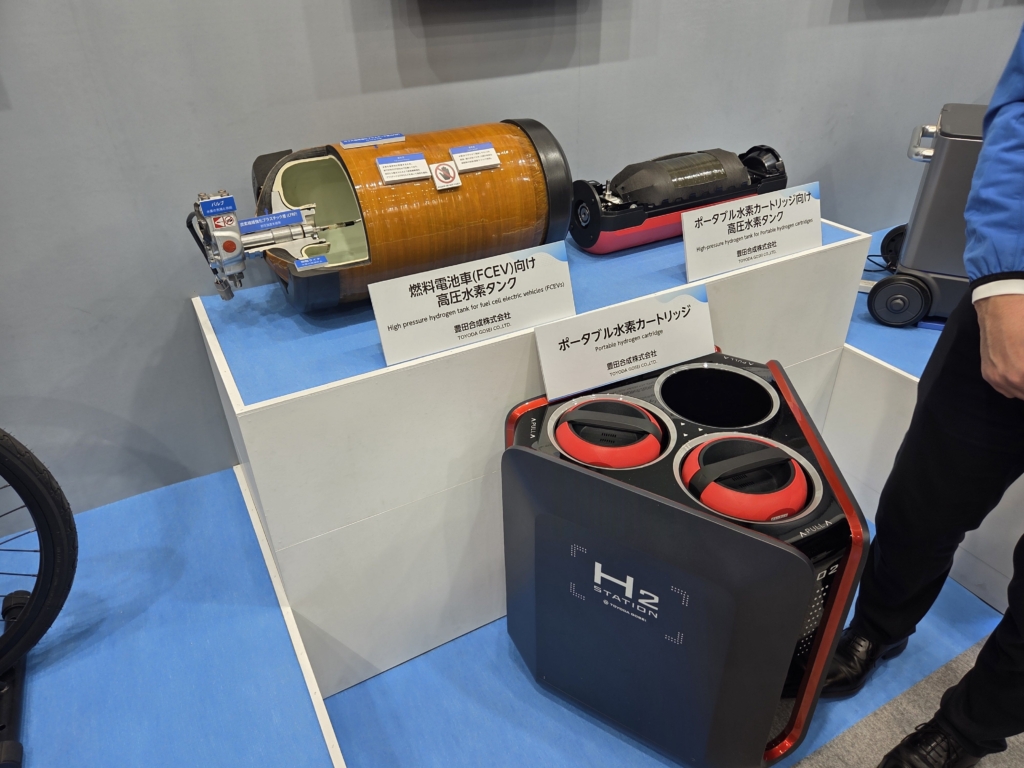
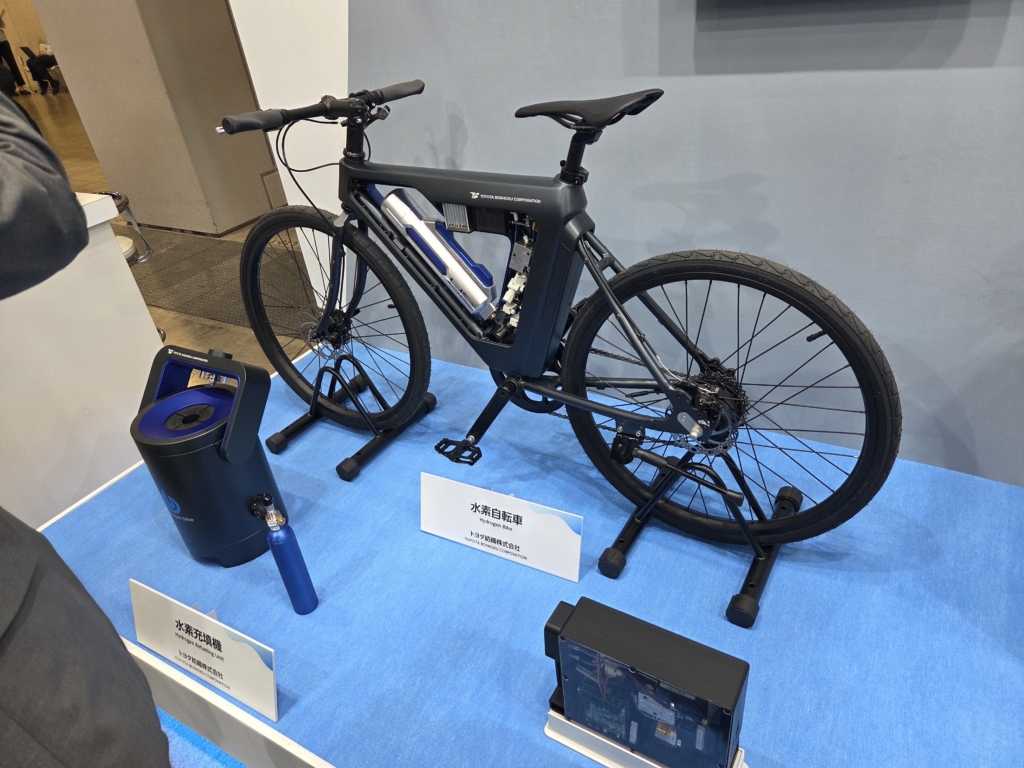
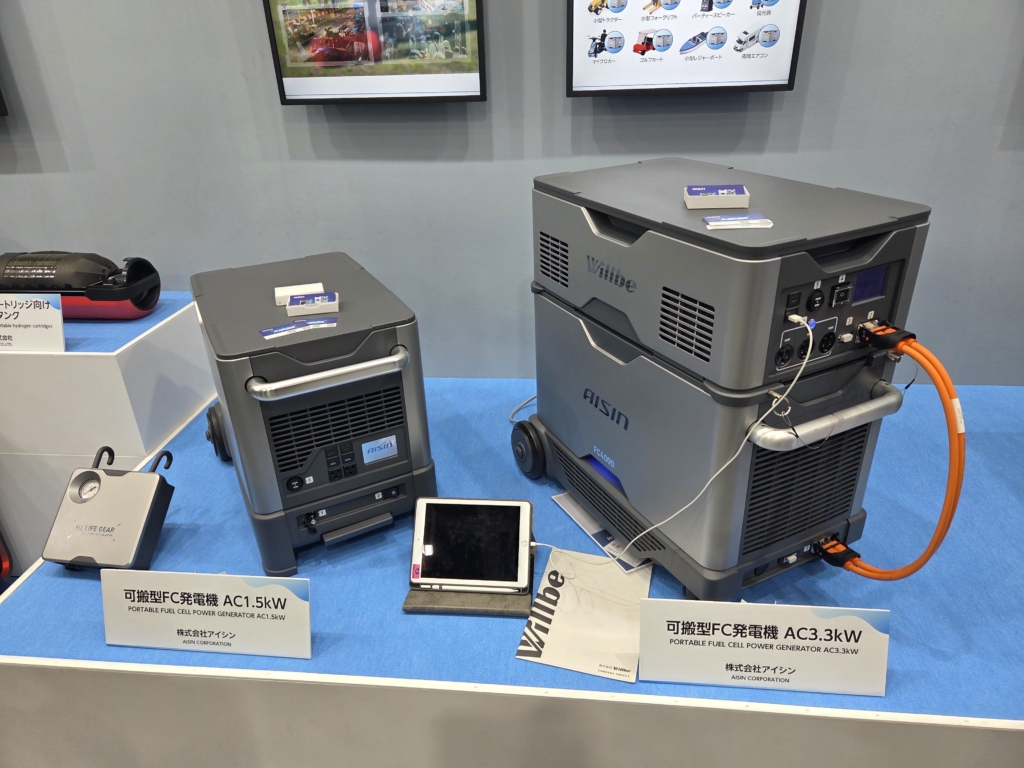
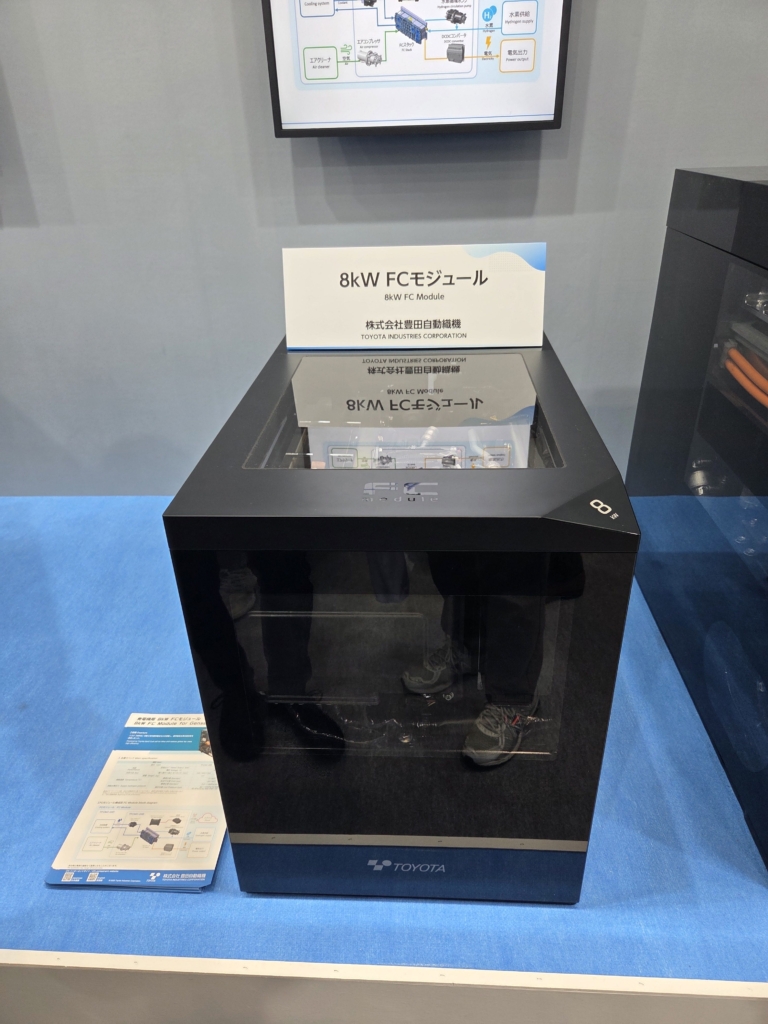
Photo 9, 10, 11, 12. Hydrogen Business Exhibits by Toyota Group Companies
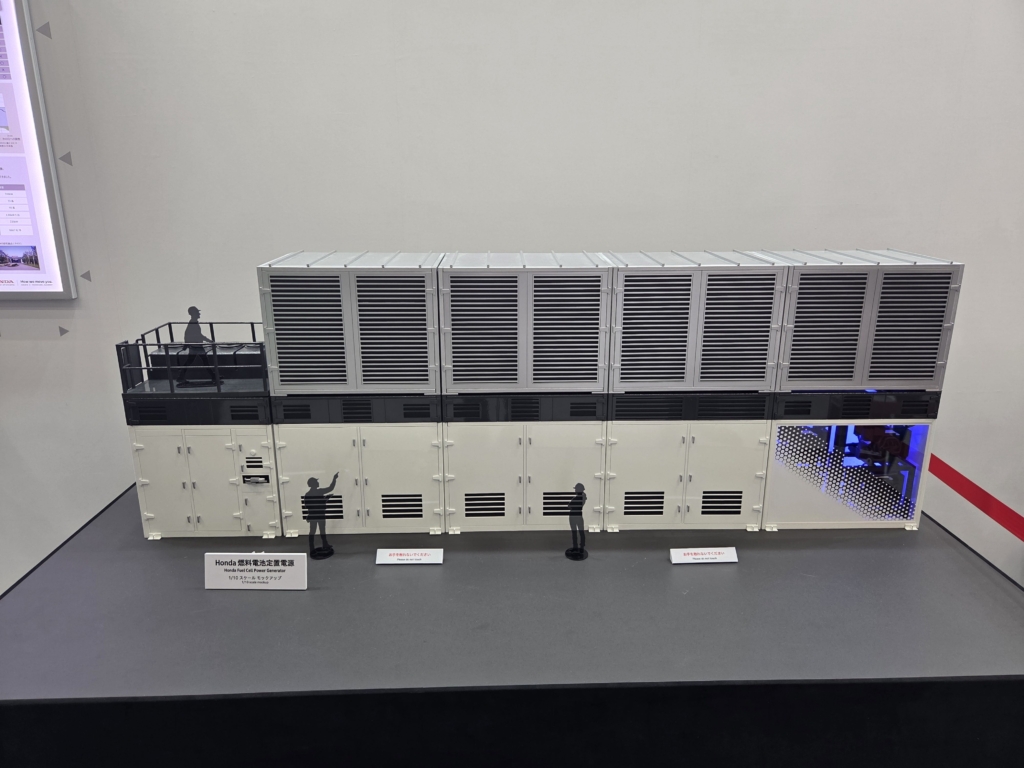
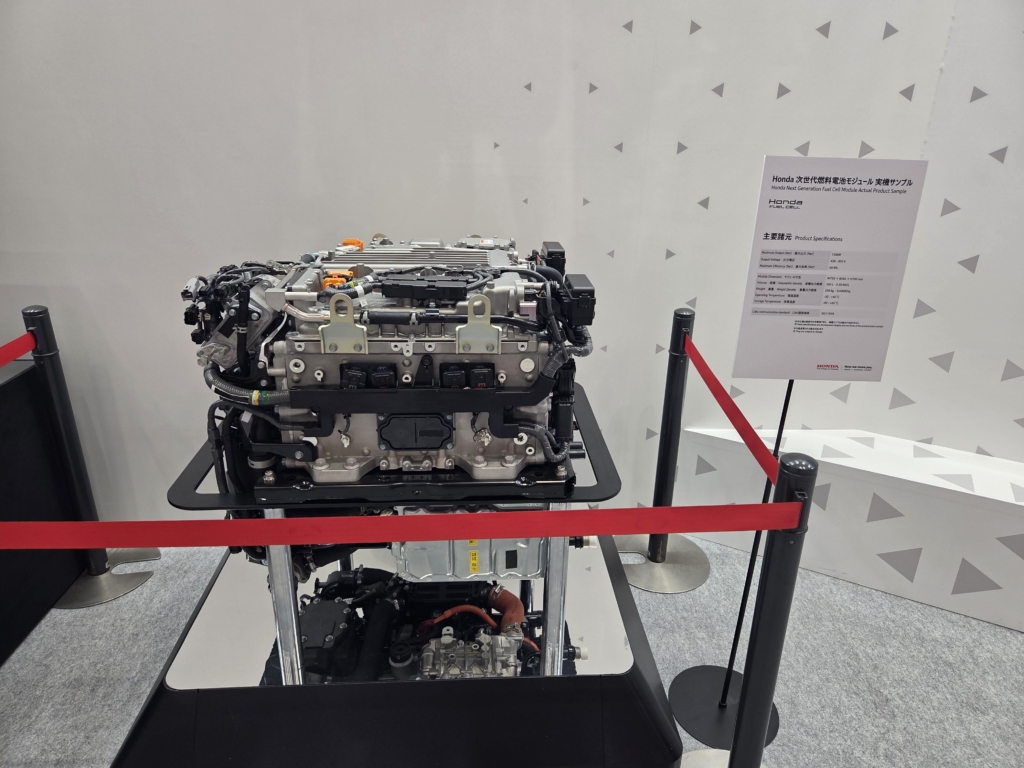
Honda: Integrated Energy Management Strategy
Honda is shifting away from a fuel cell vehicle-centric approach toward integrating hydrogen into a broader energy management system. By presenting hydrogen–power integrated solutions based on EMS (Energy Management System), Honda is expanding into power generation, commercial vehicles, and even aerospace applications. The company also announced ongoing collaboration with General Motors to commercialize hydrogen fuel cell systems in the United States.
- EMS-based hydrogen–power integrated solutions
- Application across power, commercial vehicles, and aerospace
Catalyst Technology Trends: From Performance to Economics
As the hydrogen industry enters the commercialization phase, the criteria for competition in catalysts and materials are evolving. Performance alone is no longer sufficient. Durability, cost competitiveness, and long-term operational stability are now critical, making economic optimization the central focus.
This shift aligns closely with Heesung Catalysts’ strategic direction. As the hydrogen value chain becomes more defined—spanning production, storage, transportation, and utilization—the role of catalysts at each stage becomes clearer. Catalysts are essential throughout the entire process: producing hydrogen, transporting it in the form of ammonia, converting it back to hydrogen at the point of use, and generating electricity in fuel cells. As the hydrogen industry expands, so does the range of processes where catalysts are applied.
Heesung Catalysts has built a comprehensive portfolio of technologies covering every stage of the hydrogen value chain.
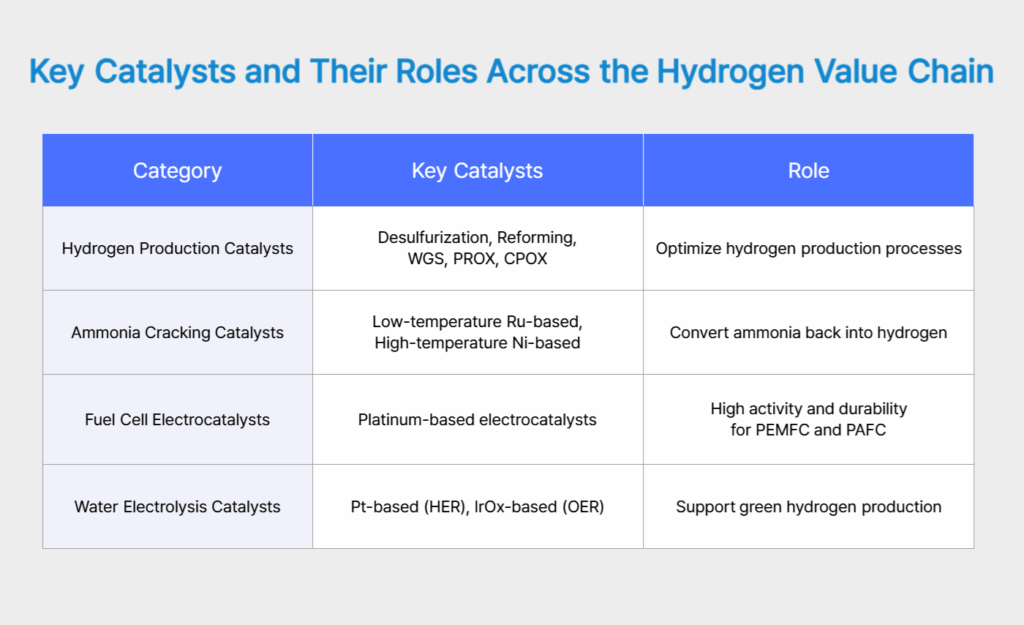
- Hydrogen production catalysts: Optimized for desulfurization, reforming, WGS, PROX, and CPOX processes to improve production efficiency
- Ammonia cracking catalysts: Ru-based catalysts for low temperatures and Ni-based catalysts for high temperatures to reconvert ammonia into hydrogen
- Fuel cell electrocatalysts: High-activity, high-durability Pt-based catalysts for PEMFC and PAFC
- Water electrolysis catalysts: Pt-based HER and IrOx-based OER catalysts supporting green hydrogen production
By improving durability, enhancing process efficiency, and optimizing catalyst design for real operating environments, Heesung Catalysts continues to advance its technology. At the same time, we are expanding application opportunities across the hydrogen industry through global partnerships.
As the hydrogen economy scales, the role of catalysts becomes more defined—and more critical. Heesung Catalysts will continue to serve as a trusted partner, supporting customers in building efficient and reliable processes across the hydrogen value chain.
If you would like to learn more about catalyst solutions applied across various processes—including hydrogen production, fuel cells, and water electrolysis—please visit our Contact page for further information.

FAQ
Q1. What is the hydrogen value chain?
The hydrogen value chain refers to the entire process of producing, storing, transporting, and utilizing hydrogen. It connects how hydrogen is made, how it is delivered, and how it is ultimately used, with each stage requiring different technologies and optimizations.
Q2. What role do catalysts play in each stage of the hydrogen value chain?
Catalysts enable efficient hydrogen production through processes such as desulfurization, reforming, and WGS. In storage and transport, ammonia cracking catalysts convert ammonia back into hydrogen. In utilization, fuel cell electrocatalysts drive the reaction that converts hydrogen into electricity.
Q3. What are ammonia cracking catalysts, and why are they important?
Ammonia is gaining attention as a hydrogen carrier for storage and transport. Ammonia cracking catalysts are used to reconvert ammonia into hydrogen at the point of use. Depending on operating conditions, Ru-based catalysts are used for low temperatures and Ni-based catalysts for high temperatures, with conversion efficiency and long-term stability being key performance factors.
Q4. How are water electrolysis catalysts linked to green hydrogen production?
Water electrolysis produces hydrogen by splitting water using electricity. When combined with renewable energy, it enables carbon-free hydrogen production. Pt-based catalysts are used for hydrogen evolution (HER), while IrOx-based catalysts are used for oxygen evolution (OER), directly impacting efficiency and cost.
Q5. How does Heesung Catalysts contribute to the hydrogen industry?
Heesung Catalysts provides technologies across the entire hydrogen value chain—from production to utilization. Our portfolio includes catalysts for reforming, WGS, PROX, ammonia cracking, fuel cells, and water electrolysis. By focusing on durability, cost reduction, and real-world optimization, we support customers in building efficient and sustainable hydrogen processes.
