


How Catalyst Technology Drives Carbon Neutrality — Insights from the Head of Heesung Catalysts’ R&D Center
2026.03.13
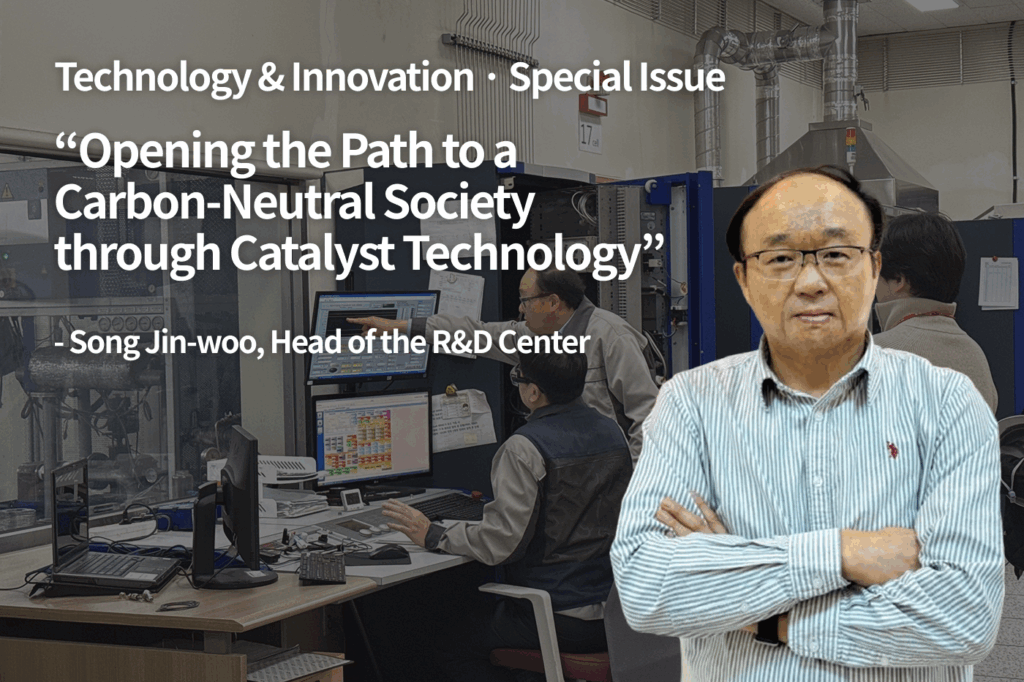
An article titled “Opening the Path to a Carbon-Neutral Society through Catalyst Technology” written by Song Jin-woo, Head of the R&D Center at Heesung Catalysts, was published in the Special Issue of Technology & Innovation, a journal issued by the Korea Industrial Technology Association (KOITA).
In the article, Song explains how catalyst technology plays a critical role in both emission reduction and energy transition, as carbon neutrality becomes an increasingly urgent challenge across industries.
This post highlights the key points from the article and examines the current role of catalyst technologies across industries and the technological direction of Heesung Catalysts.
Why Catalyst Technology Matters in the Carbon-Neutral Era

Since the Industrial Revolution, energy systems based on fossil fuels have increased industrial productivity but have also led to the accumulation of air pollutants such as nitrogen oxides (NOx), carbon monoxide (CO), hydrocarbons (HC), and carbon dioxide (CO₂). These environmental impacts have made carbon neutrality a global priority.
Catalyst technology is gaining attention as a practical solution for energy transition, as it enables industries to reduce harmful emissions and improve process efficiency without fundamentally changing existing industrial infrastructure.
According to Song, catalysts can control reaction rates and pathways, reducing energy consumption while minimizing the generation of harmful substances. This makes it possible to achieve meaningful emission reductions within a relatively short time frame, even while maintaining existing industrial systems.
Expanding Applications of Catalyst Technology Across Industries
Catalyst technology originally developed for automotive emission control has expanded into a wide range of industries, including shipping, power generation, and semiconductors. Song outlines this expansion across several industrial sectors.
In the automotive industry, catalysts such as Three-Way Catalysts (TWC) and Selective Catalytic Reduction (SCR) catalysts have been widely used to reduce major air pollutants including NOx, CO, and HC. As emission regulations become stricter, catalyst technologies continue to evolve, contributing significantly to improvements in air quality.
SCR catalysts are also widely applied in marine and power generation facilities to reduce NOx emissions. In addition, Methane Oxidation Catalysts (MOC) are being optimized to treat methane (CH₄) emitted from LNG engines and gas turbines.
In the semiconductor industry, catalyst technologies are used to decompose perfluorinated compounds (PFCs)—which have a global warming potential thousands to tens of thousands of times higher than CO₂—at low temperatures with high efficiency.
Catalyst Technologies for the Future Energy Transition

“Catalyst technology is becoming a fundamental technology not only for reducing emissions from existing industries but also for enabling future energy transitions, including the hydrogen economy and next-generation fuels.”
In the field of hydrogen production, catalysts are essential for processes such as Steam Methane Reforming (SMR). In addition, ammonia cracking catalysts, which enable ammonia to be used as a hydrogen carrier, are drawing increasing attention.
In other words, catalyst technology is playing a key role in solving challenges related to how hydrogen is produced, transported, and utilized.
Catalysts also serve as critical components in the production of Sustainable Aviation Fuel (SAF) and e-fuels, where they directly influence reaction efficiency and overall production productivity. The economic feasibility of these synthetic fuels ultimately depends on the availability of highly efficient catalyst technologies.
A Foundational Technology for Carbon-Neutral Industries
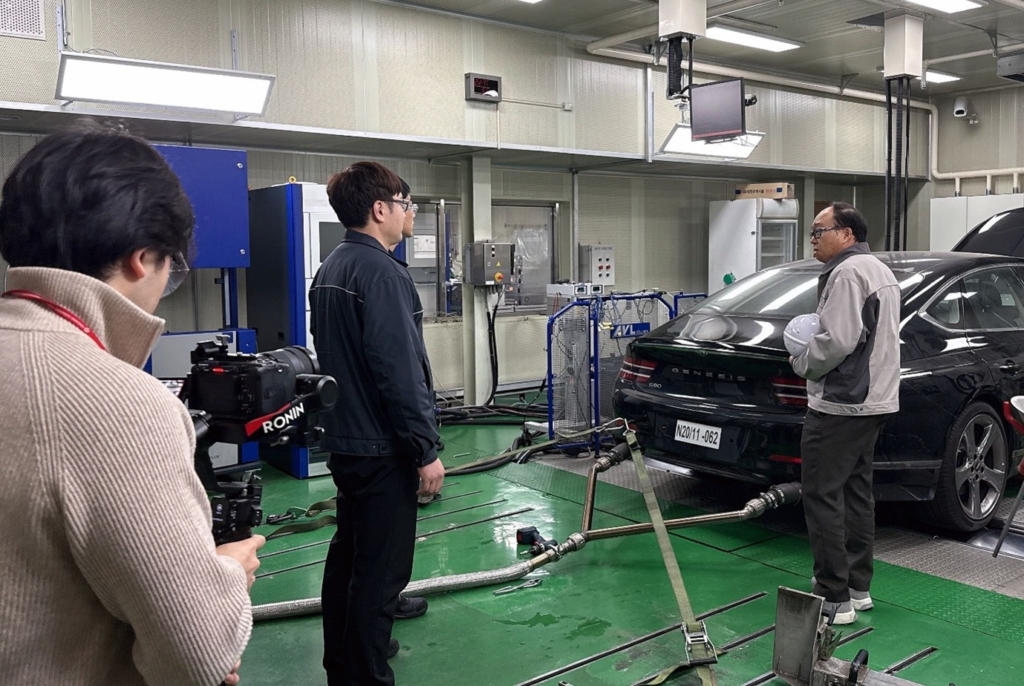
Catalyst technologies enable industries to reduce emissions and improve process efficiency without major changes to existing facilities. Song emphasizes that this makes catalysts a realistic and practical pathway for achieving greenhouse gas reductions without requiring abrupt structural changes across industrial systems.
Heesung Catalysts goes one step further by developing resource recycling technologies that recover precious metals from spent catalysts and reuse them in the production of new catalysts.
This approach reduces greenhouse gas emissions associated with raw material production and transportation, while simultaneously improving resource efficiency and minimizing environmental impact.
Song Jin-woo, Head of the R&D Center
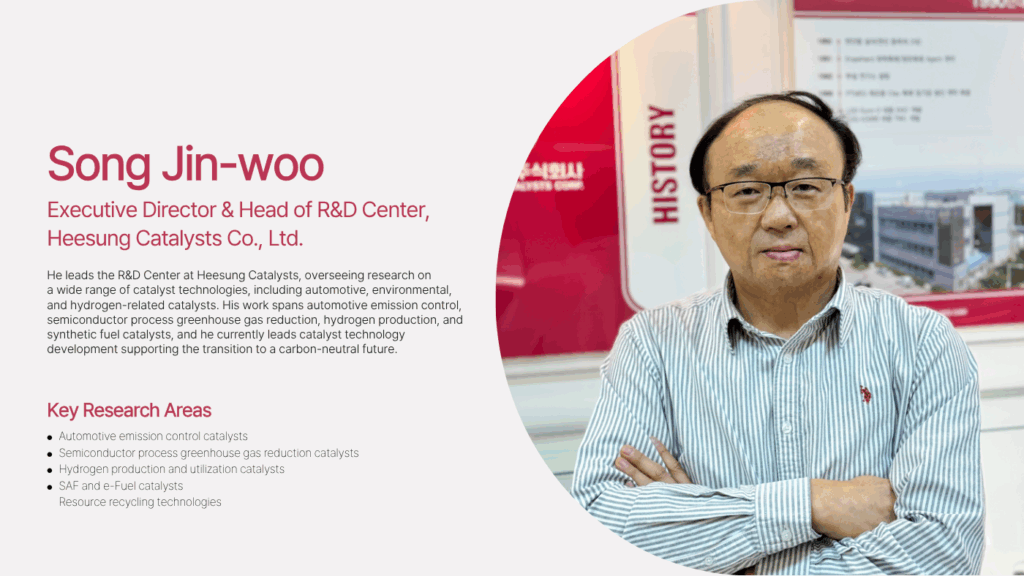
Song Jin-woo leads the R&D Center at Heesung Catalysts, overseeing research and development in fields including automotive catalysts, environmental catalysts, and hydrogen-related catalyst technologies.
Starting with the development of automotive emission control catalysts, he has conducted research across a wide range of areas including semiconductor process greenhouse gas reduction catalysts, hydrogen production catalysts, and synthetic fuel catalysts.
Today, he continues to lead catalyst technology development aimed at supporting industries in the transition toward carbon neutrality.
🔍 For more details, explore the full interview and original article
Original article: https://webzinekoita.or.kr/202601/1_6.php
