

[Earth Day 2026] Catalysts: The Technology Behind Carbon Neutrality
2026.04.20
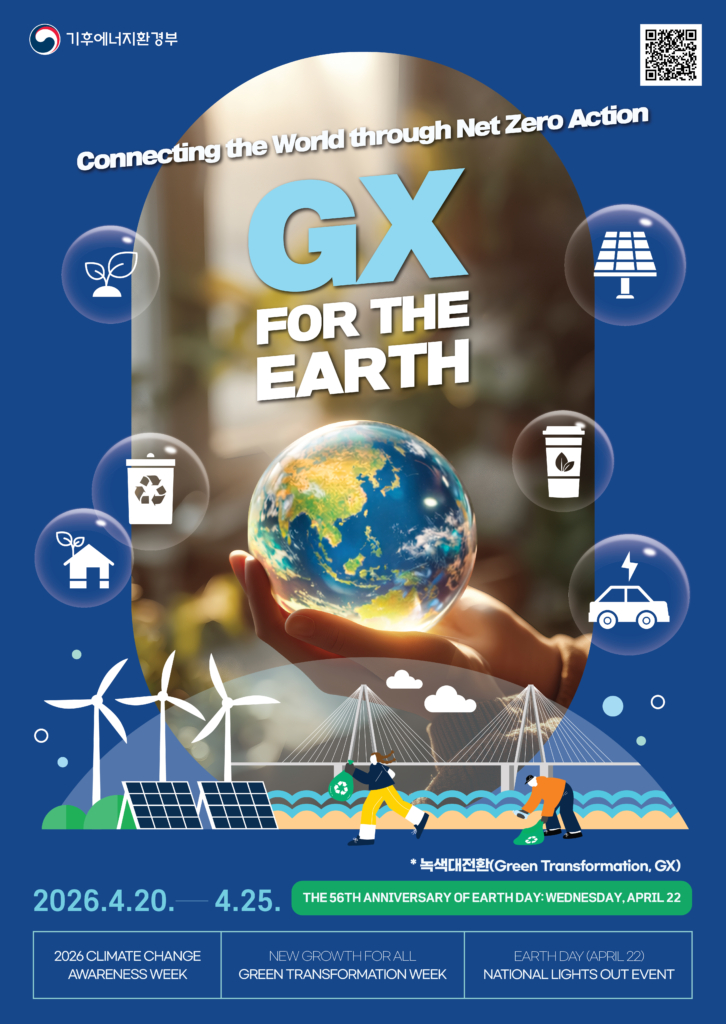
April 22 is Earth Day — a date that began as a call to raise awareness about environmental protection and has since become a symbol of climate action. What started as a campaign to motivate individual behavior has expanded into a much broader conversation: government policy, industrial transformation, and corporate technology adoption.
When and Why Was Earth Day Created?
In the 1960s, as the United States industrialized rapidly, factories and power plants discharged pollutants without legal consequences, and leaded fuel was used in vehicles on a massive scale. Society largely accepted pollution as an unavoidable side effect of economic growth.
That began to change. Rachel Carson’s Silent Spring (1962) and a major oil spill off the coast of Santa Barbara, California (1969) brought the damage that pollution inflicts on ecosystems and human health into public consciousness. Against this backdrop, former U.S. Senator Gaylord Nelson proposed a nationwide movement to put environmental issues on the public agenda and translate awareness into action. On April 22, 1970, the first Earth Day was held — drawing roughly 20 million participants.

From Personal Concern to Public Issue
Earth Day’s most significant achievement was lifting environmental issues out of the realm of individual concern and placing them firmly on the social agenda. Groups that had been fighting separate battles — oil spills, factory pollution, pesticide use — found common ground and joined forces. The resulting coalition cut across party lines and sectors, bringing together Republicans and Democrats, urban and rural communities, corporations and labor unions. That coalition drove real policy change:
- U.S. Environmental Protection Agency (EPA): A dedicated federal body to manage and regulate environmental protection at the national level
- Clean Air Act (CAA): Legislation establishing legal controls over air pollutants emitted by factories and vehicles
- Clean Water Act (CWA): Regulations governing pollutant discharge into waterways and standards for water quality protection
Earth Day in Korea: The Climate Change Action Week
South Korea marks Earth Day through its national Climate Change Action Week, an annual government-led campaign running around April 22. The campaign is designed to communicate the urgency of the climate crisis and the need for carbon neutrality, and to mobilize engagement from both citizens and businesses.
In 2026, South Korea has been selected as the host of the UNFCCC Climate Week, placing the country at the center of global climate discussions. The event will be held in Yeosu, bringing together governments, international organizations, and companies to deliberate on climate policy and industrial transition strategies. It will also be linked to the Korea Green Transformation (K-GX) International Week, providing a platform to share South Korea’s decarbonization strategies and real-world implementation cases with the international community.
Catalysts: The Technology That Makes Carbon Neutrality Possible
In the push toward carbon neutrality, catalysts play an indispensable role across industrial operations.
1) Reducing emissions to meet environmental regulations
Industrial processes and energy generation produce a range of air pollutants — nitrogen oxides (NOx), volatile organic compounds (VOCs), and carbon monoxide (CO), among others. Catalysts break these substances down chemically or convert them into harmless compounds, cutting emissions and helping facilities stay ahead of tightening regulations. For large-scale emission sources — power plants, ships, and industrial facilities — catalyst-based emission control is not optional; it is essential.
2) Directly cutting greenhouse gases
Carbon neutrality means managing more than just CO₂. Gases such as nitrous oxide (N₂O) and perfluorocarbons (PFCs) carry Global Warming Potential hundreds to thousands of times higher than carbon dioxide, and they require active management as well. Catalyst technology decomposes or converts these high-impact greenhouse gases, delivering direct emission reductions. In semiconductor and chemical manufacturing in particular, there is no practical alternative to catalysts for treating these gases.
3) Lowering energy consumption through greater efficiency
By reducing the temperatures required for chemical reactions and improving overall reaction efficiency, catalysts cut the energy a process consumes. Less energy used means fewer carbon emissions — which is why catalysts are increasingly recognized as foundational infrastructure for reducing the carbon footprint of industry as a whole.

Heesung Catalysts’ Commitment to Carbon Neutrality
Carbon neutrality cannot be achieved through declarations or policy alone. It takes consistent application of technology in actual industrial settings.
Contributing to carbon neutrality on the factory floor
Heesung Catalysts supplies emission reduction catalysts for power plants, ships, and industrial facilities, and applies greenhouse gas reduction technology to semiconductor and chemical manufacturing processes. Beyond product supply, we provide technical support to help customers navigate environmental regulations and execute their carbon reduction commitments.
Expanding renewable energy and improving operations
Heesung Catalysts is scaling up its use of renewable energy through an Off-site PPA (Power Purchase Agreement)*, under which electricity generated by renewable energy producers is delivered to the company via the transmission grid. We also continually work to improve energy efficiency across its production lines and participates in fine dust reduction agreements to support environmental improvement at industrial sites.
*Off-site PPA: A form of Power Purchase Agreement in which electricity from a renewable energy producer is delivered to a corporate buyer through the public transmission and distribution network.
✅ Heesung Catalysts Accelerates RE100 Achievement through Off-site PPA Agreement
Sustainability in everyday practice
To embed ESG into organizational culture, Heesung Catalysts runs employee-led initiatives including midday lighting shutoffs, reusable cup campaigns, and internal environmental awareness programs.


Where We Go From Here
Fifty-six years ago, 20 million people took to the streets and made environmental protection a matter of public concern. The challenge of carbon neutrality we face today is a direct continuation of that effort. What has changed is this: the task is no longer about raising awareness — it is about deploying technology and taking action.
Heesung Catalysts contributes to carbon neutrality in industrial settings across the full spectrum: from emission reduction and greenhouse gas treatment to energy efficiency improvement.
➡️ Related Reads

FAQ
Q1. When and why was Earth Day created?
The first Earth Day was held on April 22, 1970, in the United States, as growing public concern over industrial pollution drew roughly 20 million people into the streets. It led directly to landmark policy changes, including the establishment of the EPA and the passage of the Clean Air Act and Clean Water Act.
Q2. What is South Korea’s Climate Change Action Week?
It is a national campaign run annually by the Ministry of Environment around April 22, Earth Day. The campaign communicates the urgency of the climate crisis and the importance of carbon neutrality, and works to engage citizens and businesses. In 2026, South Korea has been selected as the UNFCCC Climate Week host, with the global event taking place in Yeosu.
Q3. How do catalysts contribute to carbon neutrality?
Catalysts break down air pollutants such as NOx and VOCs, reduce high-impact greenhouse gases including N₂O and PFCs, and improve reaction efficiency to lower energy consumption at the source. They directly cut emissions from industrial processes and, through efficiency gains, contribute to reducing indirect emissions as well — making them a foundational technology for carbon neutrality.
Q4. How are catalysts used in power plants, ships, and industrial facilities?
Combustion processes at large emission sources generate a range of pollutants — NOx, CO, VOCs, and others. Heesung Catalysts’ emission reduction catalysts chemically break these substances down or convert them into harmless compounds, reducing discharges and helping operators comply with increasingly stringent environmental regulations.
Q5. How are catalysts used in semiconductor and chemical manufacturing?
These processes emit high-impact greenhouse gases — including N₂O and PFCs — with Global Warming Potential hundreds to thousands of times greater than CO₂. Conventional treatment methods are not effective against these gases; catalyst technology is the practical solution, decomposing or converting them at the source. As regulations tighten, the role of catalysts in this sector continues to grow.
