

Emission-Driven Fine Dust Reduction: Heesung Catalysts’ Solutions
2026.04.01
Fine dust is a critical environmental issue impacting public health, climate, and industrial regulation. Among its key precursors, nitrogen oxides (NOx), sulfur oxides (SOx), and volatile organic compounds (VOCs) require systematic control across industrial processes.
This article outlines the major sources of fine dust, reviews relevant policy frameworks, and highlights catalyst technologies that enable reduction at the source.
Fine Dust in Korea: Current Status

Fine dust refers to particulate matter (PM) suspended in the air, classified by size into PM-10 and PM-2.5. Smaller particles penetrate deeper into the lungs and bloodstream, posing greater health risks. The World Health Organization (WHO) classifies fine dust as a Group 1 carcinogen.
According to IQAir’s 2025 World Air Quality Report, Korea ranks 55th out of 143 countries in air pollution. The national annual average PM-2.5 concentration stands at 17.11 μg/m³—approximately 3.4 times higher than the WHO guideline of 5 μg/m³.
IQAir further estimates that non-smokers in Korea are exposed to pollutants equivalent to approximately 283 cigarettes per year due to fine dust alone. During peak months such as March, exposure levels correspond to roughly two packs of cigarettes.
Key Precursors of Fine Dust
Fine dust consists of both primary particles emitted directly and secondary particles formed through atmospheric reactions involving precursor pollutants such as NOx, SOx, and VOCs.
1) Nitrogen Oxides (NOx)
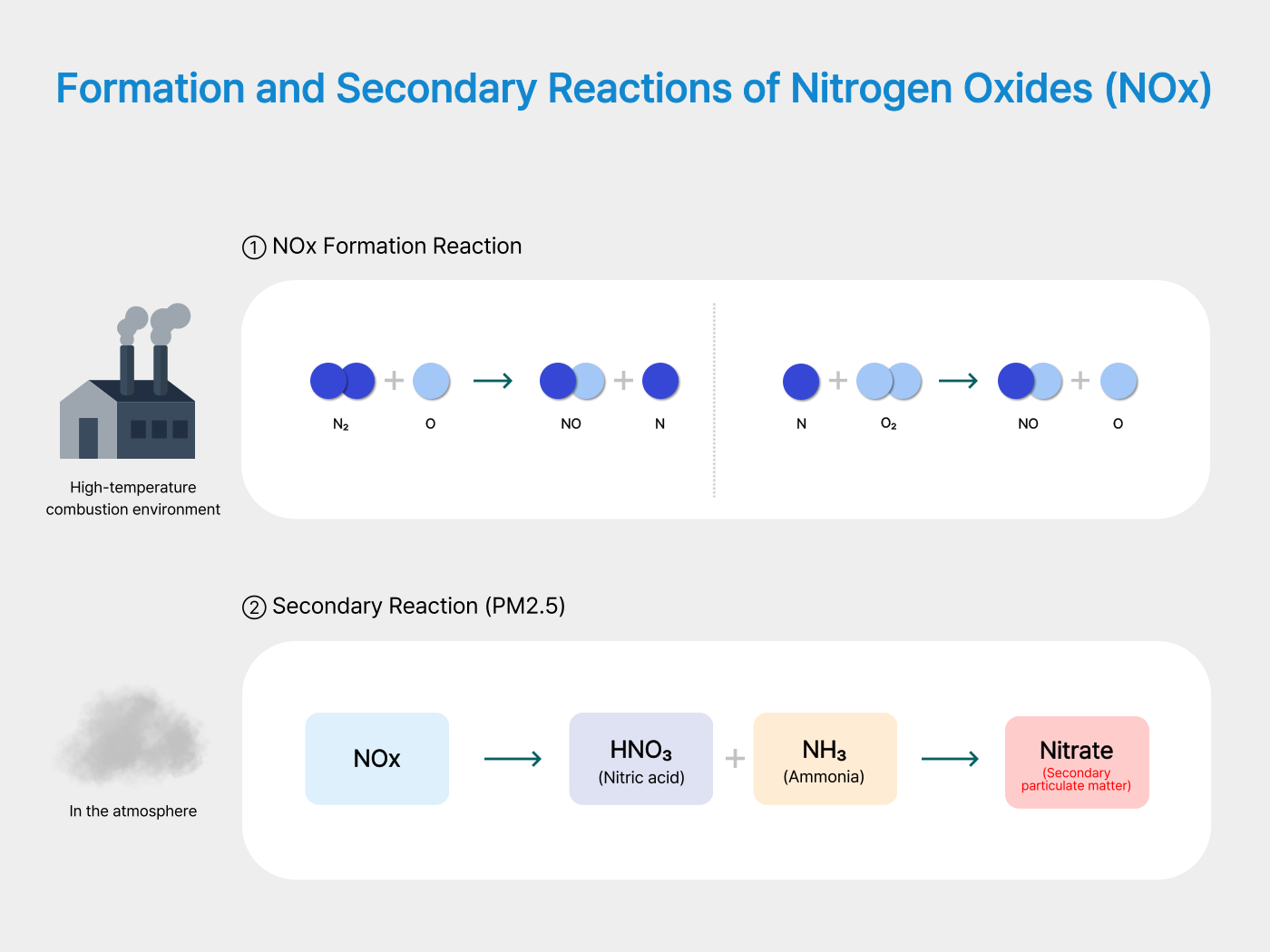
NOx is generated under high-temperature combustion conditions in power plants, industrial boilers, and vehicle engines. It can also originate from nitrogen compounds present in fuel.
Once emitted, NOx is converted into nitric acid (HNO₃). It then reacts with ammonia (NH₃) to form nitrate particles—one of the primary components of secondary PM-2.5.
2) Sulfur Oxides (SOx)
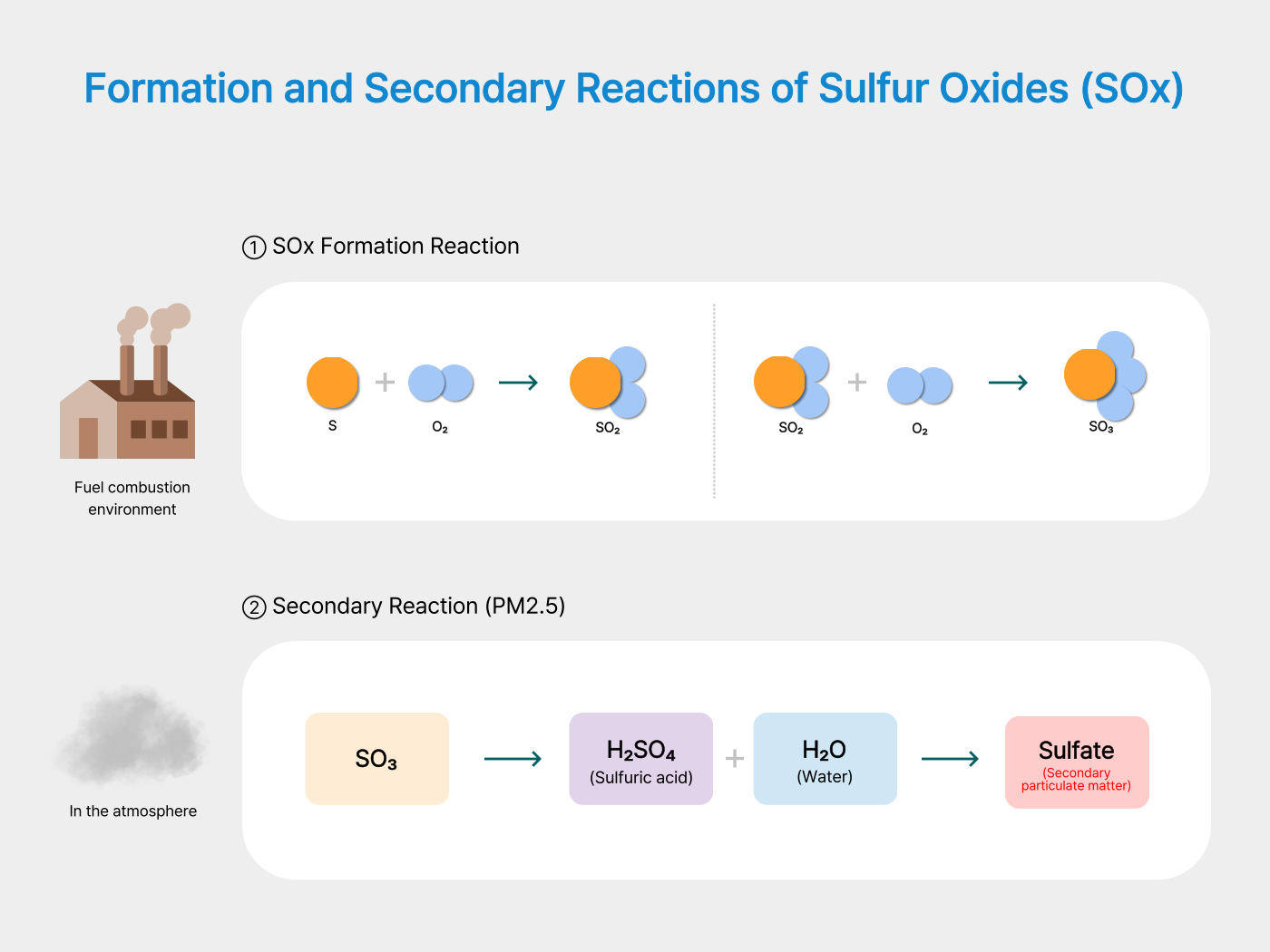
SOx is produced during the combustion of sulfur-containing fuels such as coal and heavy oil.
In the atmosphere, SOx reacts with moisture to form sulfuric acid (H₂SO₄), which subsequently forms sulfate aerosols. These particles contribute significantly to secondary fine dust formation, reducing visibility and affecting respiratory health.
3) Volatile Organic Compounds (VOCs)
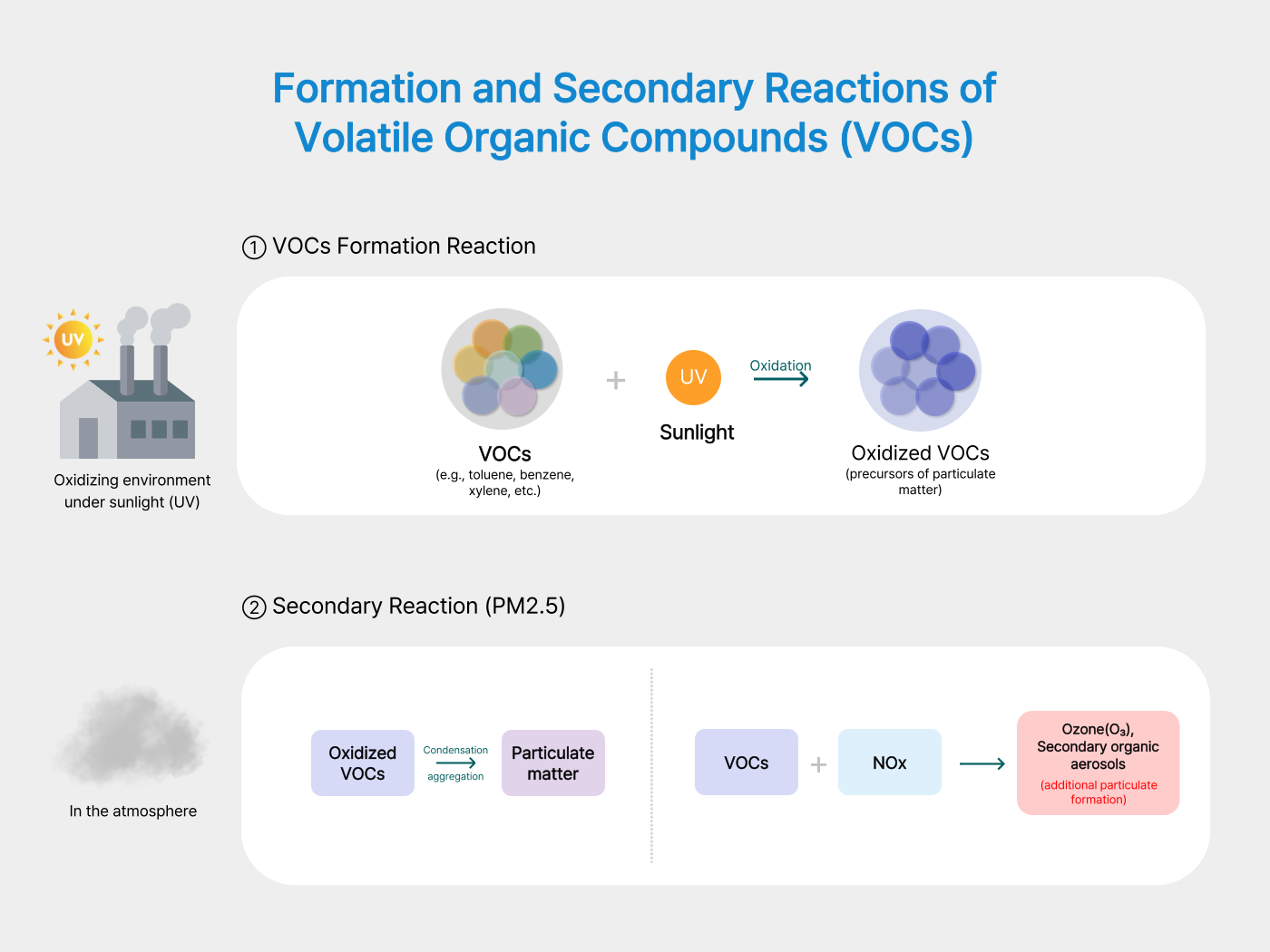
VOCs are gaseous organic compounds emitted from industrial activities such as painting, petrochemical processing, and chemical manufacturing, as well as from vehicle exhaust.
Under sunlight (UV), VOCs undergo oxidation, forming low-volatility compounds that condense into particles. They also react with NOx to generate ozone (O₃) and photochemical smog, further accelerating particulate formation.
Government Policies for Fine Dust Reduction
Korea implements fine dust reduction policies under the Clean Air Conservation Act and the Special Act on Air Quality Management.
Regulatory focus is increasingly shifting toward stricter emission control and facility upgrades across industrial and power sectors.
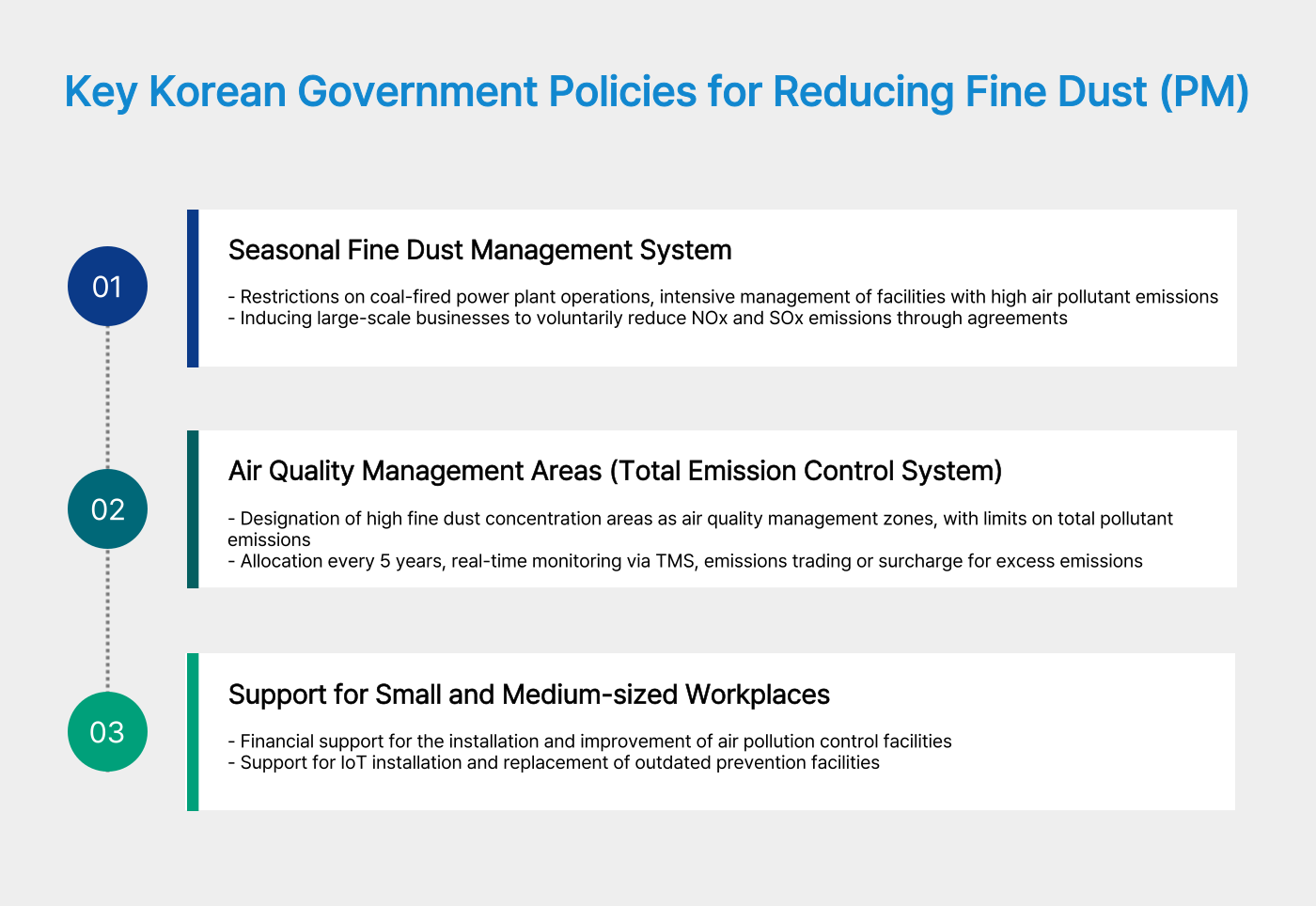
1) Seasonal Fine Dust Management
Enhanced control measures are applied from December to March, when fine dust concentrations peak. Coal-fired power plants are subject to operational restrictions, and high-emission facilities are closely monitored.
Large industrial sites are assigned NOx and SOx reduction targets, with additional reductions encouraged through voluntary agreements.
2) Air Quality Management Zones (Total Emission Control)
Regions with high pollution levels are designated as Air Quality Management Zones, where total emissions are capped.
Facilities exceeding annual thresholds—4 tons for NOx/SOx or 0.2 tons for total suspended particles (TSP)—are subject to regulation. Emissions are monitored in real time via Tele-Monitoring Systems (TMS), with emissions trading and penalties applied based on performance.
*TSP: Total Suspended Particle
3) Support for Small and Medium-Sized Enterprises
Financial support is provided to SMEs for installing and upgrading air pollution control systems. This includes IoT integration, replacement of outdated equipment, and improvements to DeNOx, desulfurization, and VOC treatment systems.
Heesung Catalysts’ Approach: Reducing Emissions at the Source
Catalysts play a critical role in reducing fine dust by converting harmful precursors into less harmful substances.
Heesung Catalysts develops and supplies catalyst solutions tailored to each emission source, while continuously advancing its technologies.
Automotive Emission Control: NOx Reduction
Vehicles are a major source of NOx emissions, making catalyst technologies essential for regulatory compliance.
Heesung Catalysts has developed advanced solutions such as Three-Way Catalysts (TWC) and NOx Trap systems. Its TWC-NT technology converts NOx from gasoline engines into nitrogen, significantly reducing emissions. This technology has been validated in commercial vehicles and recognized globally, including the Edison Patent Award.
✅ Heesung Catalysts Receives the 2024 Edison Awards Special Honor
Industrial DeNOx Catalysts (SCR)
With tightening regulations, Selective Catalytic Reduction (SCR) has become a key technology for NOx reduction in industrial and power sectors.
Heesung Catalysts provides SCR catalysts optimized for various operating conditions, with applications across power plants, industrial boilers, steel mills, and incineration facilities. We continue to strengthen its capabilities through ongoing R&D and commercialization achievements.
VOC Reduction in Industrial Processes
To address VOC emissions from industries such as petrochemicals, semiconductors, and coating processes, Heesung Catalysts offers catalyst solutions for RTO and RCO systems.
Beyond catalyst supply, we support system-level optimization tailored to specific process conditions.
Voluntary Emission Reduction Initiatives
Heesung Catalysts also implements emission reduction measures at its own facilities.
In November 2025, we entered into a voluntary agreement aligned with Korea’s seasonal management program, setting a target to reduce NOx emissions by 71% compared to permitted levels.
Integrated Support from Design to Operation
As emission regulations become more stringent, reduction systems are no longer optional—they are essential for sustainable operations.
Heesung Catalysts provides integrated support, from optimized catalyst design based on operating conditions to performance monitoring and post-installation management.
If you require evaluation for catalyst performance, replacement, or new system implementation, please contact us to consult with Heesung Catalysts’ experts.

FAQ
Q1. What is the difference between PM-10 and PM-2.5?
PM-10 refers to particles smaller than 10 μm, while PM-2.5 refers to particles smaller than 2.5 μm. Smaller particles penetrate deeper into the body, posing greater health risks.
Q2. What is secondary particulate matter?
Secondary particulate matter forms when pollutants such as NOx, SOx, and VOCs react in the atmosphere. These gases transform into particles and account for a significant portion of total fine dust.
Q3. How do catalysts reduce fine dust?
Catalysts convert harmful precursors into less harmful substances. Examples include TWC for vehicle emissions, SCR for industrial NOx reduction, and RTO/RCO catalysts for VOC treatment.
Q4. How can we determine if SCR is required?
This depends on industry type, process characteristics, and emission levels. Facilities exceeding regulatory thresholds or preparing for stricter standards should consider SCR implementation.
Q5. What solutions does Heesung Catalysts provide?
Heesung Catalysts offers tailored solutions, including automotive emission catalysts, SCR systems for industrial applications, and VOC treatment catalysts, along with integrated support from design to maintenance.
