


Gas Purification Catalysts: A Core Technology for High-Purity Gas Production
2026.03.25
Across semiconductor, hydrogen, and petrochemical industries, gases are widely used in a variety of processes. The purity of these gases directly impacts product quality, equipment stability, catalyst lifetime, and overall operating costs.
As processes become more advanced, performance requirements more stringent, and environmental and safety regulations tighter, impurity tolerance levels continue to decrease. In many cases, physical purification methods alone are no longer sufficient, increasing the importance of catalyst-based purification technologies.
Gas purification catalysts play a critical role in ensuring process stability and product quality in industries that require ultra-high-purity gases. This article explores the need for gas purification catalysts, their industrial applications, and key considerations for selecting the right catalyst.
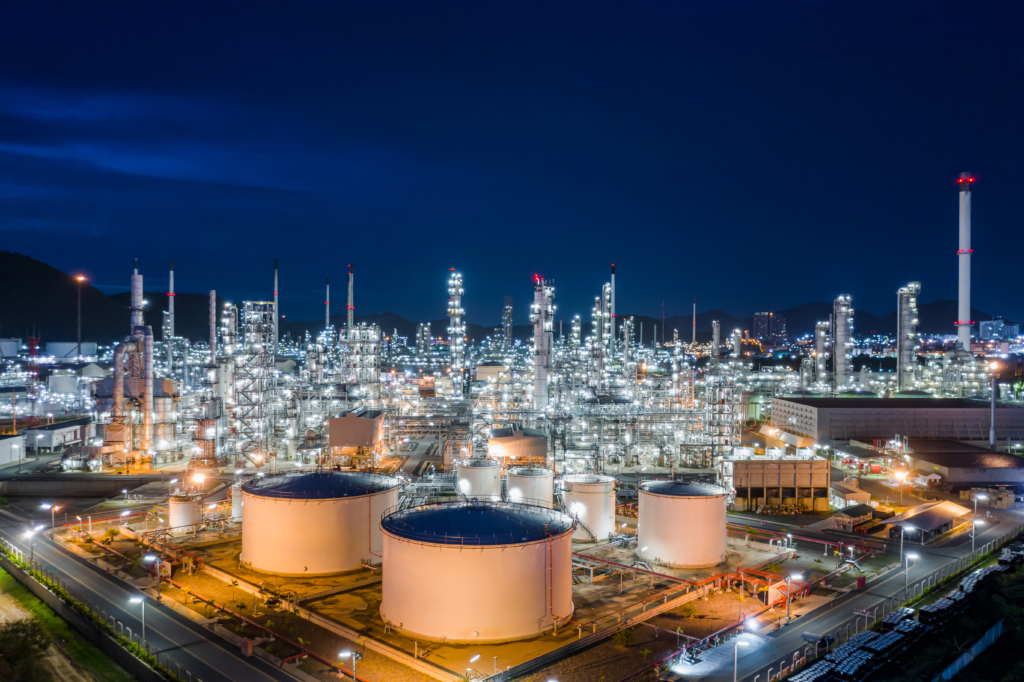
Gas Purity: The Invisible Variable
In modern industrial processes, gas is no longer a supporting resource—it is a defining factor that determines process outcomes. Even trace impurities can significantly impact product quality, making strict purity control essential.
1) Semiconductor and Display Processes
High-purity gases are used in processes such as Atomic Layer Deposition (ALD), Chemical Vapor Deposition (CVD), and etching. Impurities such as oxygen, moisture, and hydrocarbons can lead to defects in thin film formation, reduced etching uniformity, and increased defect rates.
As device geometries continue to shrink, impurity tolerance has tightened from ppm to ppb and even ppt levels. Gas purity is directly linked to yield, making it a critical factor for process stability.
*ppm: parts per million
*ppb: parts per billion
*ppt: parts per trillion
2) Hydrogen and Water Electrolysis Processes
If oxygen is mixed into hydrogen produced during electrolysis, it can degrade fuel cell performance and pose safety risks. Since fuel cell catalysts are highly sensitive to impurities, effective removal of oxygen and other contaminants is essential to maintaining system efficiency and lifetime.
3) Petrochemical and Refining Processes
In petrochemical processes, multiple catalytic reactions occur continuously. Gas impurities can reduce catalyst activity, lower selectivity, and degrade product quality.
In polymer processes in particular, even trace amounts of oxygen or moisture can directly affect material properties, making stable gas purification essential.
Catalyst-Based Purification for High-Purity Gas Production
Gas purification technologies can be broadly categorized into adsorption, separation, and reaction-based methods. Catalyst-based purification falls into the reaction category, converting impurities into harmless substances through chemical reactions.
Principles and Characteristics of Catalyst-Based Purification
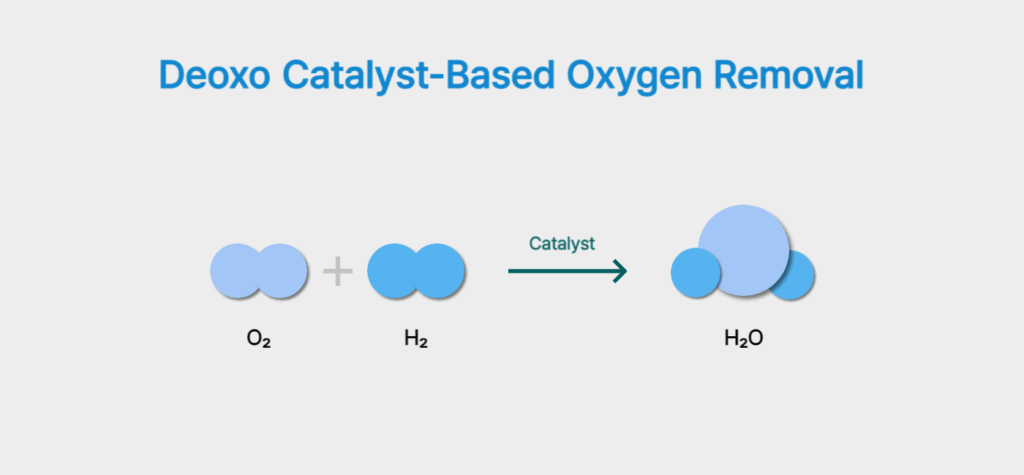
A representative example is the Deoxo catalyst, which removes oxygen by reacting hydrogen (H₂) with oxygen (O₂) to form water (H₂O).
Unlike physical filtration methods, catalyst-based purification chemically transforms impurities, enabling higher removal efficiency. It is well-suited for continuous processes and provides stable performance over long operating periods.
These advantages have led to increased adoption of catalyst-based purification in industries requiring ultra-high-purity gases, such as semiconductors, hydrogen, and petrochemicals.
Key Considerations for Selecting Gas Purification Catalysts
Gas purification catalysts are a critical factor that influences both process performance and operating costs. Selection requires a comprehensive evaluation of multiple technical factors.
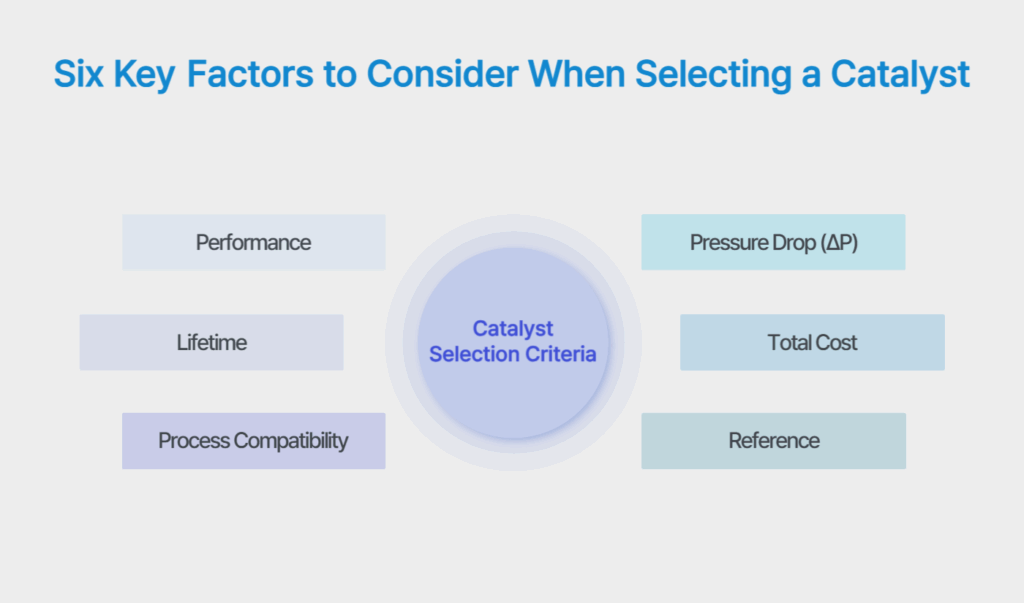
1) Performance
The most fundamental criterion is impurity removal efficiency. The catalyst must meet the target purity level (ppm, ppb, etc.).
2) Lifetime
Catalyst lifetime directly affects replacement cycles and operating costs. Long-term performance stability should be evaluated alongside initial performance.
3) Process Compatibility
Catalyst performance varies depending on temperature, pressure, flow rate, and gas composition. Selecting a catalyst that matches actual operating conditions is essential.
4) Pressure Drop (ΔP)
Pressure drop depends on catalyst structure and packing configuration. Higher pressure drop increases energy consumption, making system efficiency an important design consideration.
5) Total Cost
Evaluation should go beyond initial purchase cost and include replacement cycles, energy consumption, and maintenance costs.
6) Reference
Proven experience in similar processes is a key decision factor, especially in highly demanding industries such as semiconductors and hydrogen.
Heesung Catalysts’ Gas Purification Solutions
Heesung Catalysts provides solutions designed to address real-world challenges, considering process stability, quality risk management, and operating costs.
Proven Quality System for Stable Performance
Automotive catalysts require long-term durability and stable performance under extreme conditions.
Heesung Catalysts has established a comprehensive quality management system across its production processes, validated by Hyundai Motor Company’s Grand 5 Star quality certification. This system is also applied to gas purification catalysts, minimizing performance variation and supporting stable process operation.
Optimized Design for Performance and Lifetime
With approximately 150 researchers and advanced R&D infrastructure, Heesung Catalysts designs catalysts based on reaction characteristics and process conditions.
Using reactors to simulate real operating environments, catalyst performance is validated under conditions similar to actual processes. Designs consider conversion and selectivity to meet target purity levels while minimizing performance degradation over long-term operation.
Catalyst loading and operating conditions are also optimized based on process requirements.
Industry-Specific Design Expertise
Heesung Catalysts has extensive experience working with customers across automotive, semiconductor and display, refining and petrochemical, and hydrogen and energy industries.
This accumulated understanding of process and reaction characteristics enables tailored catalyst design optimized for diverse operating environments.
Full-Loop System and Total Cost Optimization
Gas purification catalysts often contain precious metals, affecting both initial costs and long-term operating expenses.
Through its affiliate Heesung PMTech, Heesung Catalysts has established a full-loop system covering catalyst supply, recovery, refining, and reuse of precious metals. Combined with in-house production capabilities, this ensures consistent quality, reliable supply, and responsive delivery.
This approach allows catalysts to be managed as assets rather than consumables, optimizing replacement costs, resource efficiency, and overall operating expenses.
Optimized Solutions for Gas Purification Processes
Gas purity management is a critical factor affecting both process stability and operating costs. Heesung Catalysts provides optimized gas purification solutions based on deep understanding of industry-specific processes.
For gas purification process evaluation or catalyst application, please contact us for consultation.
➡️ Related Reads

FAQ
Q1. How do gas purification catalysts differ from adsorption methods?
Adsorption physically captures impurities using adsorbents, which have limited capacity and require periodic replacement or regeneration.
In contrast, catalyst-based purification chemically converts impurities into harmless substances, enabling consistently high removal efficiency. Depending on process requirements, the two methods can be used individually or in combination.
Q2. What types of impurities can gas purification catalysts remove?
They can remove various impurities such as oxygen (O₂), moisture (H₂O), hydrocarbons, and carbon monoxide (CO).
For example, Deoxo catalysts remove oxygen by converting it into water through reaction with hydrogen. The optimal catalyst composition and operating conditions vary depending on impurity type and target purity.
Q3. What is the typical catalyst lifetime and how is replacement determined?
Catalyst lifetime depends on process conditions, gas composition, and operating temperature and pressure.
Replacement is typically determined by indicators such as reduced removal efficiency, increased pressure drop (ΔP), and changes in reaction temperature. Regular performance monitoring helps optimize replacement timing and reduce unnecessary costs.
Q4. Why are precious metals used in gas purification catalysts?
Precious metals such as platinum (Pt) and palladium (Pd) provide high catalytic activity even at low temperatures and maintain stable performance over long-term operation.
They are particularly important in processes requiring ultra-high purity at ppb levels. After use, these metals can be recovered and recycled to reduce operating costs.
Q5. What should be prepared before adopting gas purification catalysts?
Key information includes process conditions (temperature, pressure, flow rate), types and concentrations of impurities, target purity levels, and reactor configuration.
Based on this data, Heesung Catalysts evaluates catalyst requirements and operating conditions to provide optimized solutions.
