

Custom Catalyst Development & Manufacturing: The Catalyst Foundry
2026.03.20
Catalyst technologies play a critical role across a wide range of industrial processes. However, moving a technology from the lab to real-world application requires more than performance validation—it demands successful scale-up and commercial production. From process design and infrastructure setup to quality control, this stage requires comprehensive manufacturing capabilities. As a result, the catalyst foundry model has emerged as an effective way to bridge this gap.
This article explores the commercialization process of catalyst technologies, the role of catalyst foundries, and key criteria for selecting a manufacturing partner.
From R&D to Commercial Production: The Catalyst Commercialization Process
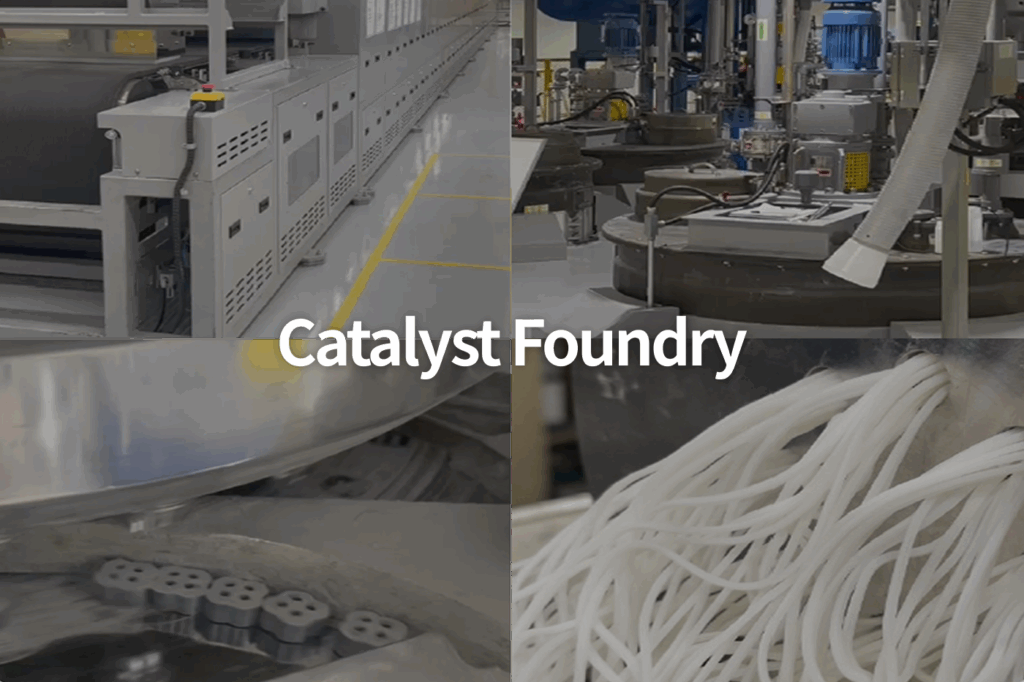
Even when a catalyst demonstrates strong performance in the lab, it encounters entirely different variables in industrial environments. Process conditions, manufacturing parameters, and large-scale production settings can all affect performance, making it difficult to rely solely on lab results for industrial application.
To ensure real-world applicability, the process must extend from design and R&D to pilot production, scale-up, and ultimately commercial production.
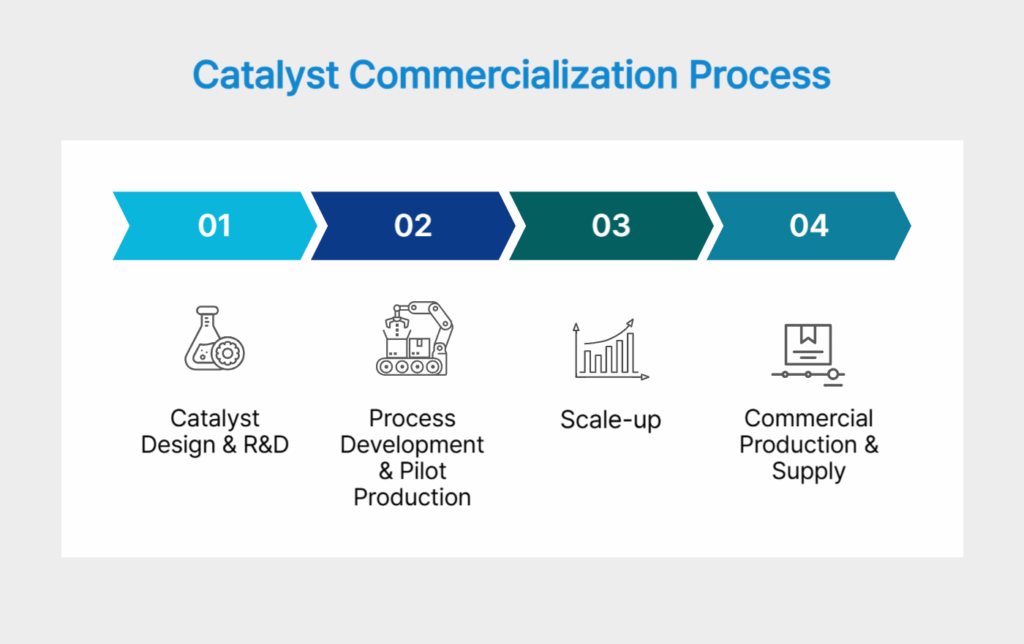
In particular, catalysts must operate reliably under mass production conditions, maintain consistent quality, and achieve economic feasibility. To meet these requirements, many companies collaborate with experienced manufacturing partners to accelerate commercialization.
What Is a Catalyst Foundry?
A foundry typically refers to a business model where design and manufacturing are separated, with specialized partners handling production. This model is increasingly adopted in the catalyst industry, where development and manufacturing are divided into collaborative roles—this is known as a catalyst foundry.
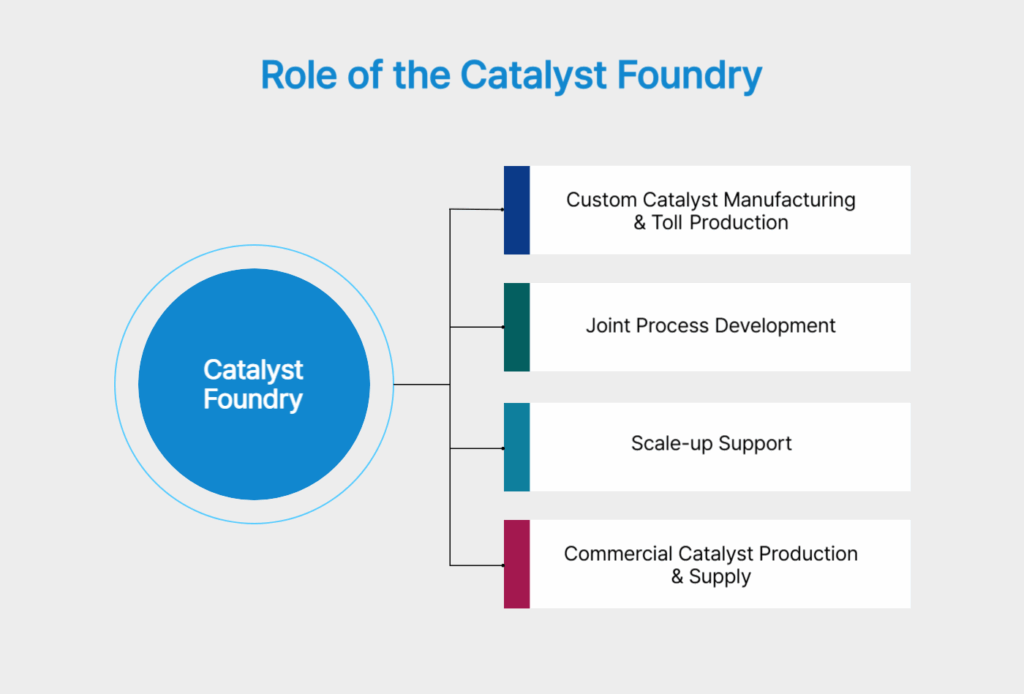
A catalyst foundry supports the full spectrum of production, from contract manufacturing and process co-development to commercial-scale production and supply. It serves as a manufacturing partner that connects lab-developed technologies to real industrial applications.
Four Core Capabilities of Heesung Catalysts Foundry
Catalyst commercialization requires deep understanding of manufacturing processes and scale-up experience, as real industrial conditions differ significantly from laboratory environments.
Based on extensive experience in both R&D and commercial production, Heesung Catalysts Foundry goes beyond contract manufacturing to help customers successfully apply their technologies in real processes.
- Contract catalyst processing and manufacturing collaboration
- Joint development of catalyst manufacturing processes
- Pilot production and scale-up support
- Commercial catalyst production and supply
1) Over 40 Years of R&D and Manufacturing Experience
With more than four decades of experience, Heesung Catalysts supports process design and scale-up to ensure that lab-developed technologies maintain performance and quality in mass production environments.
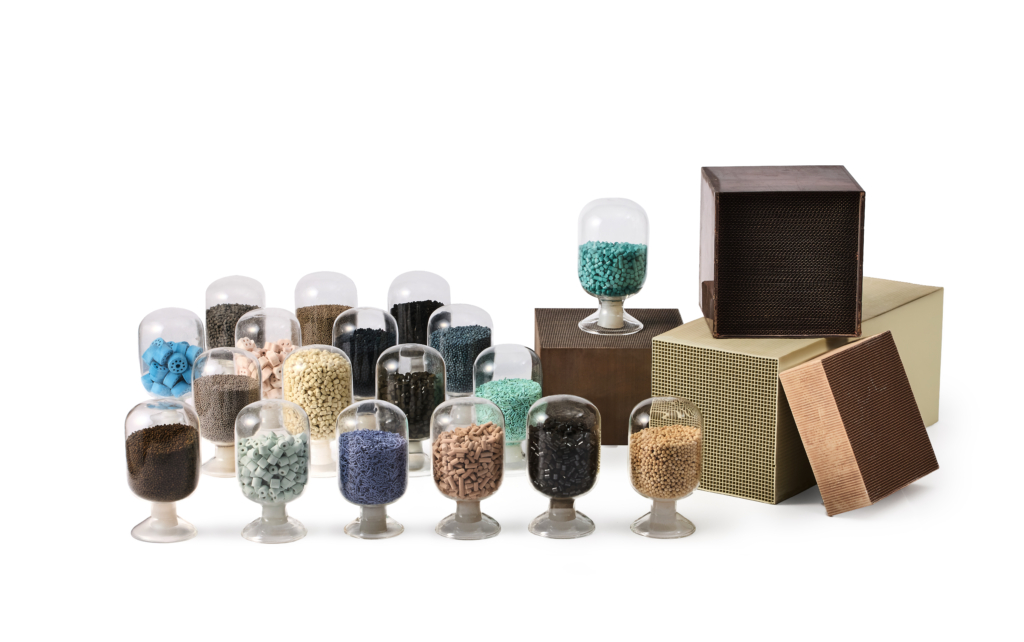
2) Advanced Quality Control with 200+ Analytical Instruments
Heesung Catalysts operates around 200 analytical instruments to evaluate catalysts and raw materials.
Techniques such as BET(Brunauer–Emmett–Teller), XRD(X-ray Diffraction), ICP(Inductively Coupled Plasma), and SEM(Scanning Electron Microscope) are used to analyze surface area, structure, and metal distribution, ensuring consistent quality and minimizing batch-to-batch variation. This enables stable catalyst performance in customers’ processes.
3) Commercial Production Infrastructure
Heesung Catalysts is equipped with a comprehensive production system that supports everything from pilot-scale manufacturing to full commercial production, backed by a wide range of process equipment and manufacturing infrastructure.
By covering the entire production process—including catalyst synthesis, shaping, and post-treatment—we can adapt to various catalyst types and process conditions, working closely with customers to ensure their technologies perform reliably in real production environments.
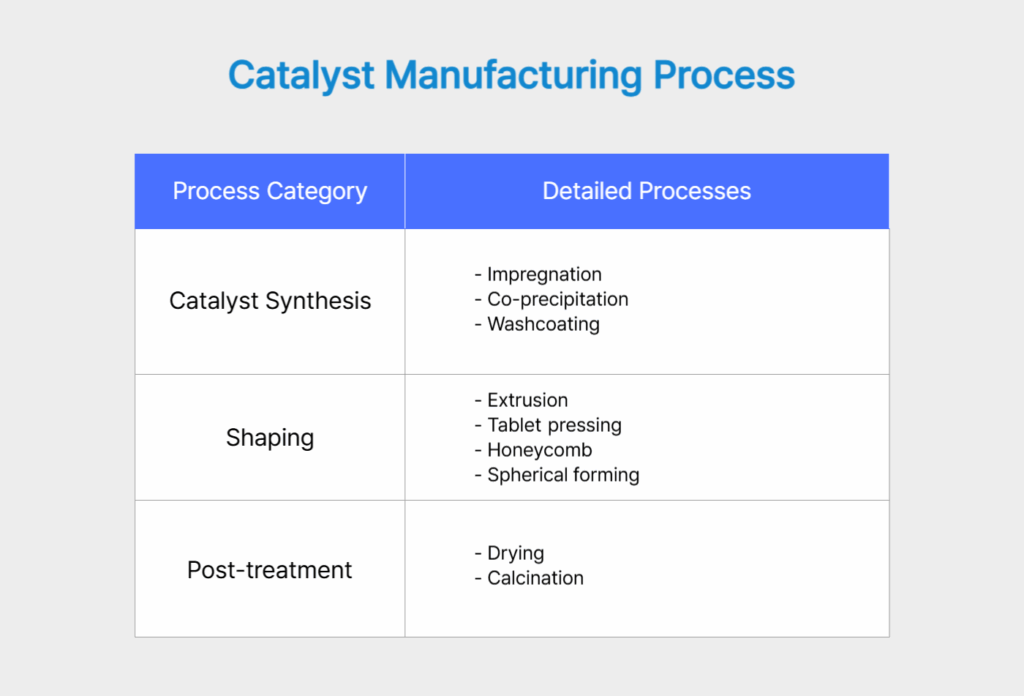
4) Raw Material Sourcing and Production Readiness
Stable procurement of raw materials such as metal precursors and supports is essential for catalyst production. Heesung Catalysts secures supply stability through extensive sourcing and management experience.
In addition, we ensure compliance with chemical regulations and environmental requirements, enabling smooth and reliable production operations.
Expanding into Battery and Energy Materials
The process expertise built through catalyst manufacturing extends naturally to advanced materials such as battery and energy materials.
These production processes also involve critical steps—such as metal dispersion, structural control, and heat treatment—that directly impact material properties, making a deep understanding of both materials and processes essential.
Building on its manufacturing know-how and production infrastructure, Heesung Catalysts is expanding its capabilities into battery and energy materials production. From process evaluation and pilot-scale production to full commercial manufacturing, we work closely with customers across every stage, helping ensure that their technologies perform reliably in real production environments.
A Manufacturing Partner for Successful Commercialization
Heesung Catalysts goes beyond developing its own catalyst products to actively support the commercialization of customer technologies through foundry collaboration.
For more details, visit the Catalyst Foundry page. If you are interested in foundry collaboration, contract processing, manufacturing partnerships, or commercial production, you can submit an inquiry for consultation.

FAQ
Q1. What is a catalyst foundry?
A catalyst foundry is a collaborative manufacturing model that supports catalyst commercialization, including contract production, process co-development, scale-up, and commercial manufacturing. It bridges lab-developed technologies with real industrial processes.
Q2. Why are scale-up and commercial production important?
Lab-scale performance often does not translate directly to industrial environments. Scale-up and commercial production ensure stable performance and consistent quality under real process conditions.
Q3. What should be considered when selecting a manufacturing partner?
Key factors include manufacturing experience, quality control capabilities, scale-up expertise, and the reliability of collaboration systems.
Q4. Why can catalyst manufacturing experience be applied to battery and energy materials?
Because both fields share core processes such as metal dispersion, shaping, and heat treatment, which directly influence material properties.
Q5. Who needs catalyst foundry collaboration?
Companies aiming to scale lab-developed technologies, lacking production infrastructure, or seeking to optimize existing manufacturing processes can benefit from foundry partnerships.
